
By George Williams
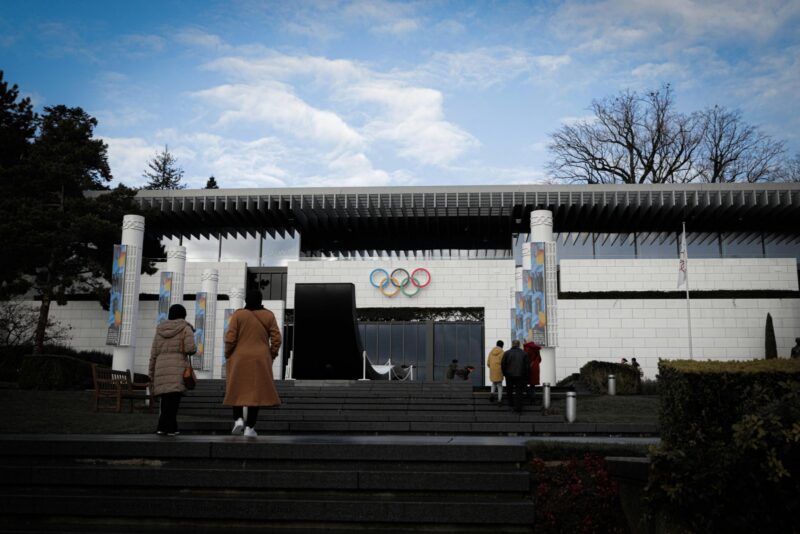
When you walk around Lausanne, Switzerland, you cannot help but reflect on the Olympics and what it means to equestrian sports. It’s impossible to not immediately realize the city’s historical presence in the Olympic movement. A visit to the Olympic Museum, overlooking beautiful Lake Geneva and the French Alps, only amplifies one’s reflection and reminds us of how intertwined equestrian sports are in the story of the Olympics. You also find yourself feeling a sense of pride that equestrian sports are part of the Olympics and how important that is, especially, from my perspective, for dressage.
The Olympics give publicity to all the sports included under their banner. They certainly can draw people in. They encourage greater accomplishments and recognize achievement. Perhaps most importantly, they inspire dreams. In North America, we have the NAYC based on the Olympic model. For all of the Americas, we have the Pan Am Games as a qualifier for the Olympics. Both play a significant aspirational role in the development of dressage in our part of the world.
However, you also cannot help but reflect on some of the challenges dressage, as well as jumping and eventing, face in remaining in the Olympic Games. I, for one, believe there are certain positives to the scrutiny that equestrian sports have been under over the last few years. In the overall picture, some of our reasons for the importance of being part of the Olympic movement can seem superficial.
This may sound odd coming from someone who believes dressage, along with jumping and eventing, belong in the Olympics and want them to stay there. We’ve been put in a position where we have to reevaluate our sport, especially as it relates to horse welfare and well-being. This is not a bad thing; I see it as not only necessary but as a good thing. I purposely did not just use the word exercise, for it must be more than that—it has to have a lasting impact.
I’ve been involved in dressage as an adult for a little over 50 years. A lot has changed in the horse world during that time. There have been many positives, particularly in the area of veterinary medicine. Overall, I believe there’s greater awareness of the importance of the care of our horses, including the value of turnout and how they are stabled. Of course, more needs to be done, especially when it comes to education.
What I call the business of horses has shifted over the years. Horse sales, higher prices, emphasis on winning at all costs, quick fixes, lack of availability of “formal” education, loss of riding schools and, in a far more general sense, expectations. These areas all have the strong potential for a negative impact on the sport.
I think we sometimes forget that winning a blue ribbon does not in itself mean that one is a good rider or horse person. If too much emphasis is put on competition, it can easily become damaging in many ways. We need to make sure that the fundamental goal is to create an environment where good, correct training is rewarded.
The age-old principles of dressage are still valid and good. Does that mean that historically they were always followed? Of course not. In my opinion, the word classical gets misused and abused, unless one is speaking of specific eras. Xenophon was alive during a period referred to as “Classical Antiquity” and as de La Guérinière died at the start of the classical period for music, I suppose one could argue that many of our principles are based on teachings and writings from classical periods.
I think it’s good that we’re being questioned to explain why we love horses and dressage. Some would say that it must be more than the joy it brings to us—that is too one-sided and we’re just being selfish. What about from our horses’ perspectives?
As equestrianism evolves, we are becoming more scientifically knowledgeable about how horses learn, how their nervous system works, their physiological needs, social and behavioral interactions, etc. We must be open to what is learned through scientific research because it is imperative that we apply what we learn to how we treat and train horses. The way I see it, this is all part of proving we’re worthy of being in the Olympics.

Sign up for our mailing list to stay up to date with all things Sidelines!