By Emily Hamel
Recently, I had the opportunity to lesson with one of the most respected and accomplished riders in the sport of eventing. A true legend—someone whose career has shaped the sport and influenced generations of riders. I went into the lesson excited, open-minded and genuinely grateful for the chance to ride under someone I have long admired.
As the lesson unfolded, however, I found myself quietly realizing something that can feel uncomfortable to admit in a sport that reveres tradition and accolades: While the instruction was undeniably knowledgeable, the teaching style simply wasn’t the right fit for me.
Nothing about the lesson was wrong. There were moments of insight, reminders of fundamentals and perspectives shaped by decades at the top of the sport. But as a rider, I could feel myself tightening rather than settling, thinking rather than riding. The words didn’t land the way I hoped they would. Instead of clarity, I felt static.
For a long time, many of us have believed that riding with the “best” automatically means riding better. If someone has the medals, championships and legacy, then the responsibility must be on us to absorb whatever is offered—no matter how it’s delivered. And if it doesn’t click, we quietly assume the shortcoming is ours.
But learning doesn’t work that way.
As riders, we all process information differently. Some thrive under pressure and directness. Others need room to experiment and feel their way through a problem. Some respond best to technical explanation; others to imagery or feel-based language. None of these approaches is superior—they are simply different.
Great teachers often teach the way they learned. That approach may resonate deeply with some riders and not at all with others. Recognizing that distinction doesn’t diminish a teacher’s greatness, nor does it reflect a lack of toughness or ambition in the student. It simply highlights the importance of fit.
This balance becomes especially important for amateur riders. Too many voices, each offering a different system or philosophy, can quickly become confusing. Horses thrive on consistency, and riders do too. Constantly changing direction can leave both feeling unsettled, unsure of what is “right,” and without a clear framework to rely on.
At the same time, limited exposure can make it difficult to recognize what truly works. Many riders only discover their preferred learning style by experiencing a few that don’t suit them. The goal isn’t to collect opinions, but to gain enough perspective to make an informed choice—then commit to a program that provides clarity, confidence and continuity.
In this particular lesson, I didn’t walk away with a dramatic breakthrough. What I did walk away with was clarity—about the environment in which I ride best, the communication that allows me to stay soft and effective for my horse, and the kind of instruction that supports long-term progress.
That understanding has only come with time.
Early in our careers, exposure matters. Riding with different clinicians can challenge habits, reveal holes in a system and force us to articulate what we believe about our own riding. Sometimes the most valuable lesson isn’t a new exercise, but a clearer sense of direction.
As riders progress—especially those managing upper-level horses—the relationship between rider and coach becomes increasingly important. Confidence, trust and communication are not luxuries; they are performance tools. Choosing the right teacher doesn’t mean choosing the easiest one, but it does mean choosing someone who challenges you in a way that keeps you receptive rather than defensive.
There is also an important distinction between respecting a trainer and training with them regularly. You can deeply admire someone’s career and contributions to the sport without needing them to be part of your inner circle. Acknowledging that difference is not criticism—it’s maturity.
The longer I spend in this sport, the more I believe growth isn’t about collecting lessons from the biggest names, but about building a support system that allows you and your horse to evolve together—one that understands your goals, your learning style and how you show up on both good days and hard ones.
That single lesson with a legend reminded me of something valuable—not because it transformed my riding overnight, but because it reinforced an important truth: Great teachers change the sport. The right teachers change you.
And learning the difference may be one of the most important lessons of all.
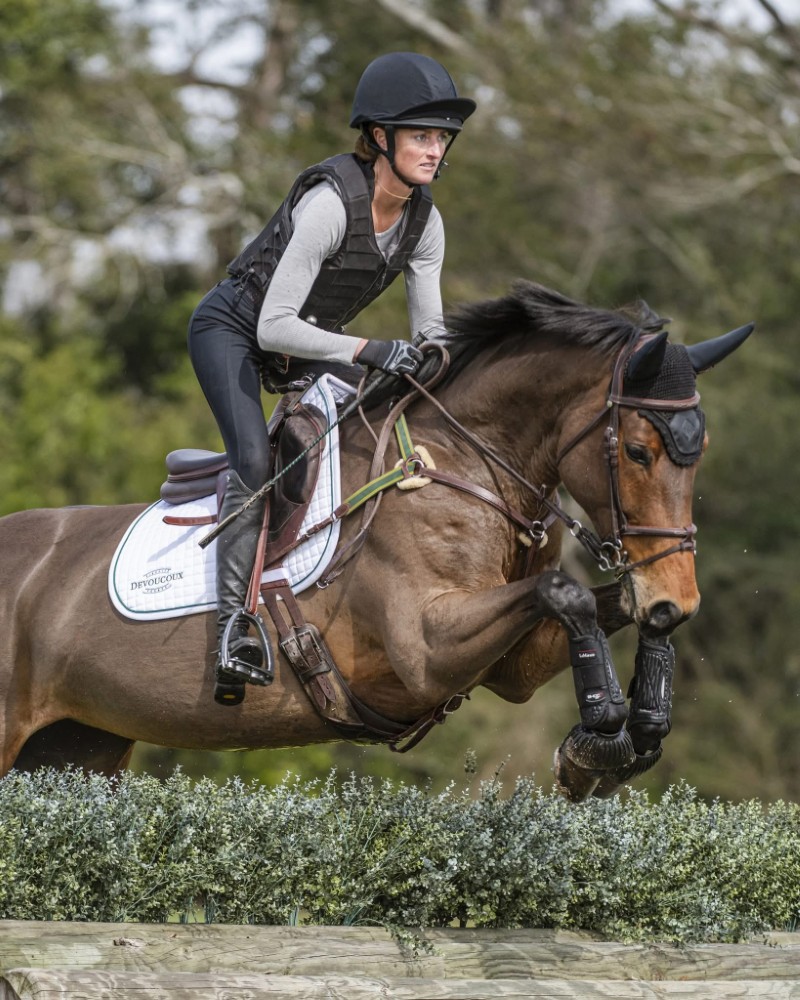
Photo courtesy of Devoucoux
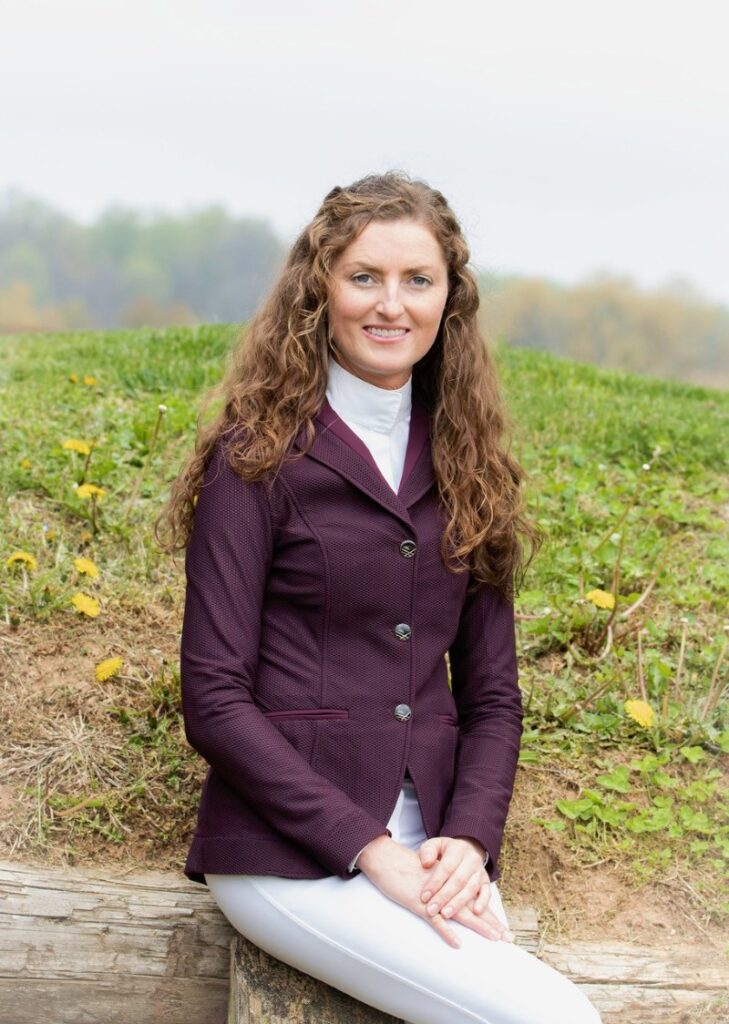
Emily Hamel discovered eventing when her 4-H club took a trip to the Kentucky Three-Day Event, where she decided she would do whatever it took to compete there one day. Since then, she has dedicated her life to eventing—coaching students of every level and producing several horses up to CCI4*. While head rider for Olympian Phillip Dutton’s True Prospect Farm, Emily founded her own Emily Hamel Eventing and met Corvett, aka Barry, her “horse of a lifetime.” Beginning with their five-star debut at Kentucky in 2021, Emily and Barry have completed 10 five-stars together—and made history in 2025 by becoming the first North American horse-and-rider combination to complete all six Northern Hemisphere five-star events. Emily is now based out of Good Fortunes Farm in Aiken,
South Carolina, where she’s developing a promising group of young horses.
Do you have a question you want Emily to answer? Send questions to .
Sign up for our mailing list to stay up to date with all things Sidelines!