
By Jessica Sforza
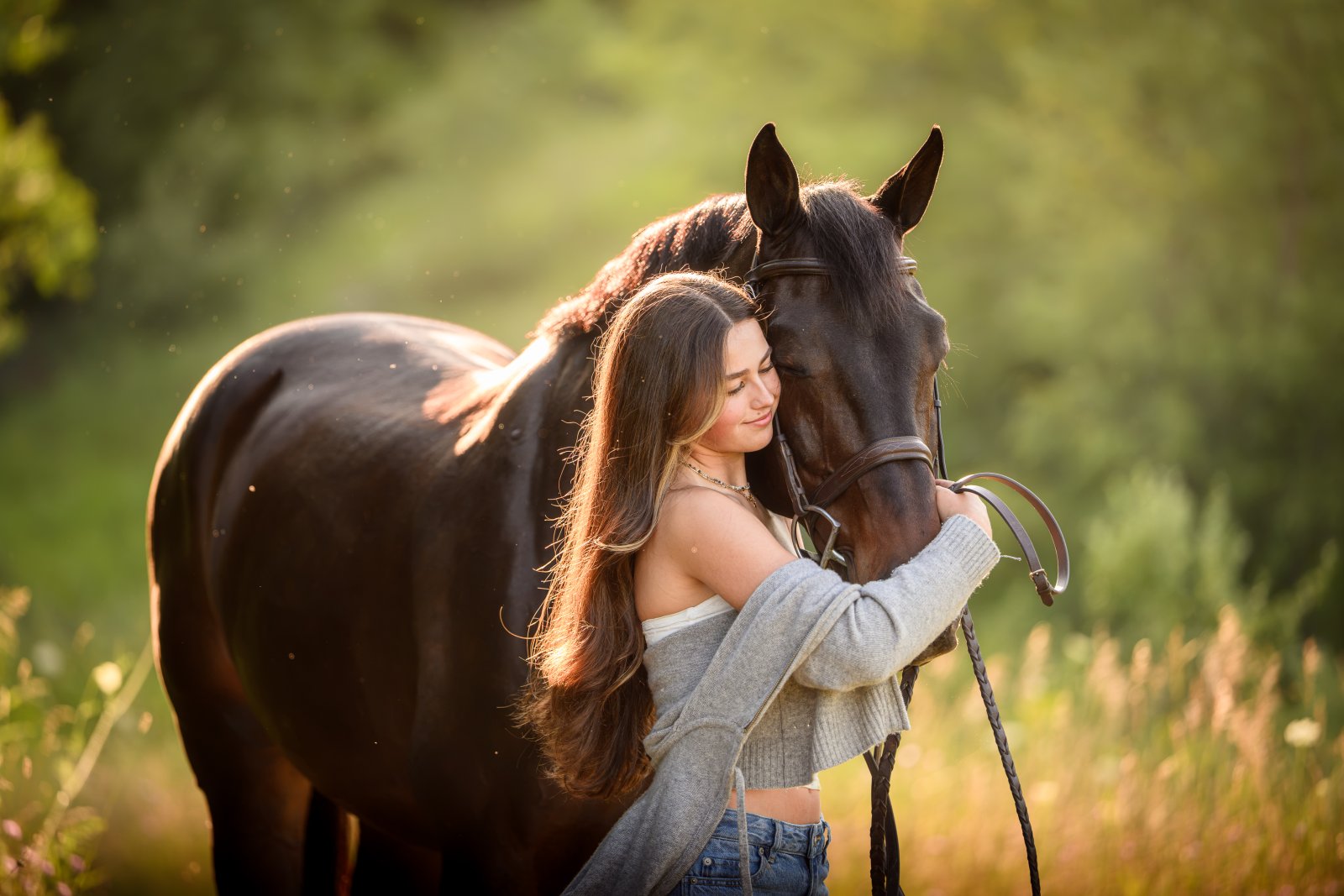
When she was in elementary school, Cecilia Cole’s introduction to horseback riding was no different from how most lifelong equestrians’ journeys start: being horse-obsessed from afar with parents who did not know the first thing about them. As a toddler, Ceci was fascinated by all things horses. She always wanted horse toys, and anytime her family drove past horses on the side of the road, she would beg to stop and see them. Unlike most equestrians, Ceci was diagnosed with a rare genetic disease around the same time she started expressing an interest in horses, making her parents skeptical about letting her ride at all.
They first realized something was off when they saw she had difficulty watching television during the day and reading at night. “I was either 3 or 4, and my parents started noticing things, like me having to get really close to a book if they were reading to me at nighttime,” Ceci remembered. “I’d want to see the pictures, and I’d bring the book right up to my face and move it all around to look at the pictures. Then, when watching TV, I would always move myself closer to the screen. So they were like, ‘Something’s not right here,’ and I started going to some eye doctors.”
The doctors in question discovered that Ceci was born with RDH12, which causes the degeneration of the retinas over time, eventually leading to complete blindness. Despite her horse obsession, it naturally took her parents a few years following her initial diagnosis to finally agree to let her ride at Winding River Quarter Horses in West Winfield, New York, when she was 9. They were very upfront with her first trainer, Joan Pearsall, about wanting to take things step by step to see how far Ceci could progress. Yet once she got into it, she completely fell in love with the sport, despite the challenges she faced at the beginning.
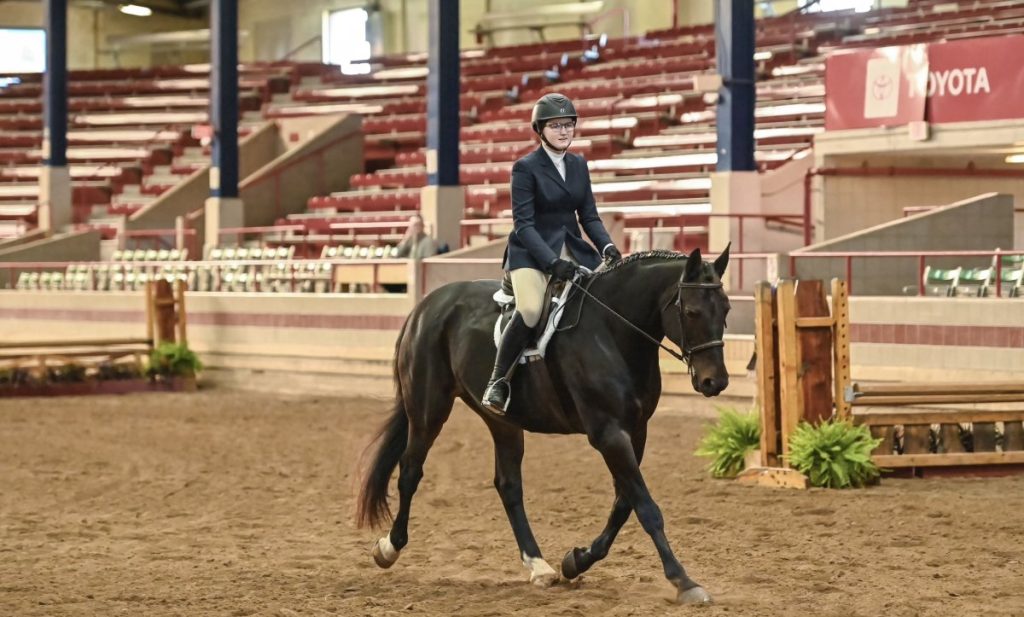
When she first started riding, Ceci had difficulty determining whether she was on the correct diagonal or lead. Instead of relying on her vision, she had to take things more slowly and learn to feel the horse's movement, developing the ability to recognize the correct diagonal and lead through feel rather than sight. Luckily, Joan took things slowly with Ceci, and she became more competitive as time went on, learning to jump by trying different techniques to ensure she could see the fences. Repetition was a huge part of how Ceci learned, and by practicing the same exercises over and over, they became second nature to her. This helped Ceci develop muscle memory, judge her turns and learn the general flow of a jumping course. Another exercise that helped her early on was holding her two-point position for several strides before the jump and continuing to hold it for several strides after landing. That allowed her to focus on finding the jump, staying balanced, and making sure she stayed out of the horse’s way while she was still learning.
“One thing that really helped me was that I was a very bold and confident young rider from the beginning,” Ceci said. “I wasn’t afraid to try new things, go a little faster or jump bigger fences when my trainer asked. I’ve always trusted the horses I’ve been able to ride, and I think that confidence played a big role in my progress. Joan also explained every course and exercise clearly before I rode it, which helped me know what to expect.”
Once she could confidently ride around a full crossrail course, Ceci was ready for her first horse show in 2016. About a year after she first started riding, she competed in a walk-trot class at a local schooling show, which led to her eventual move up to hunter-jumper classes when she was 12. Even at shows, the routine that she grew accustomed to at home stayed the same. During schooling, she would go into the ring, locate each jump, look for colors or decorations that would help them stand out, memorize where everything was, and then rely on that mental map when she was on deck for her round.
“It’s always been so important for me to get into the ring before competing, whether that’s during a schooling session or by watching another rider go first,” Ceci explained. “Because of my vision, I needed to figure out exactly where the jumps were. Most of the time, both back then and even now, when I turn toward a jump, I don’t always see it right away. If it’s painted a bright color or has decorations that stand out, it’s easier, but many jumps blend into the background for me. Likewise, if I’m standing at the in-gate before my round at a show, I usually can’t see where all of the jumps are. I can tell you the course I’m about to ride because I’ve seen and memorized it, but I can’t visually pick out each jump from across the arena or the track I should take.”
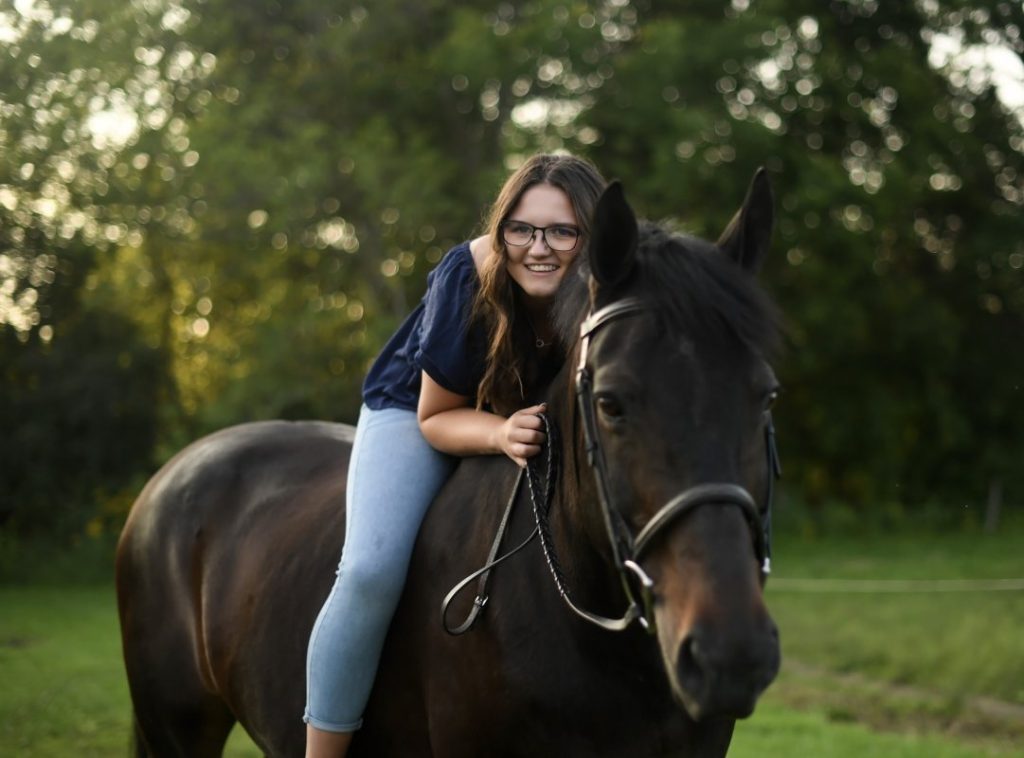
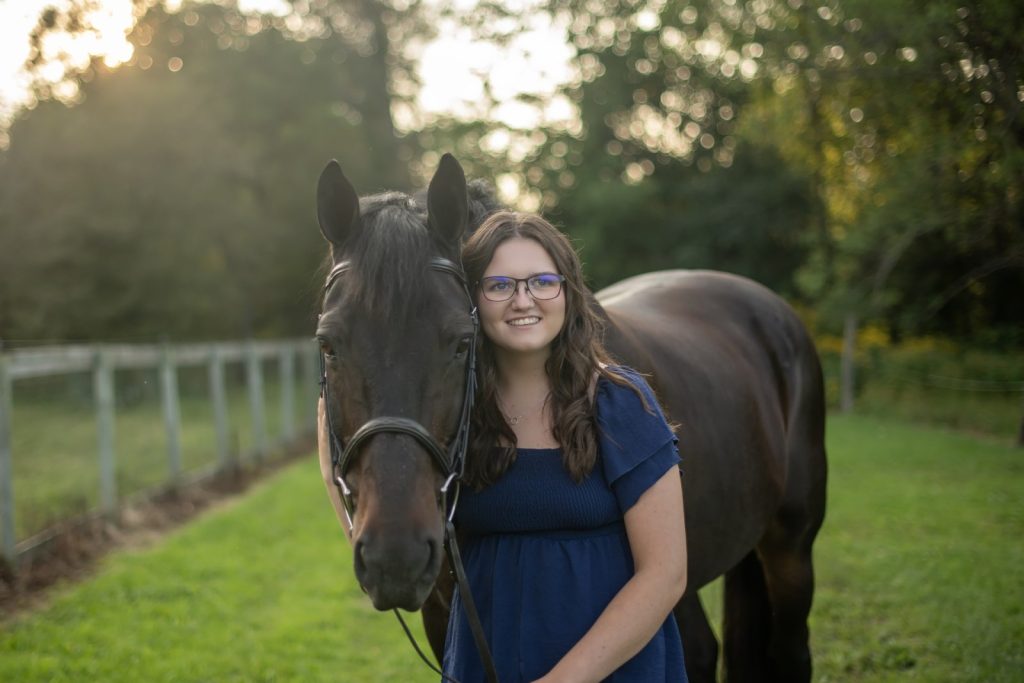
Not long after she started jumping competitively, Ceci got the opportunity to lease her first horse, a dark bay draft cross gelding called Navarre, when she was almost 14. She first met Navarre when he was being leased by an adult amateur at her barn. His owner, Alissa Tucciarone, was away at college and did not have time to ride him, which is why he came to Winding River Quarter Horses in the first place. However, when the original leaser decided to purchase a horse of her own, Ceci took over his lease in December 2019.
“Navarre was a good citizen,” Ceci reminisced. “He was always very good with any mistakes I would make. He was very willing. I could point him at any jump, and he’d go over it no problem. I like to say all the time, too, horses definitely see more than I do, so I could always tell when he was looking at something or a little spooked by something, even if I couldn’t see it myself. But he was just perfect. No matter what was going on around him, he was always steady and dependable.”
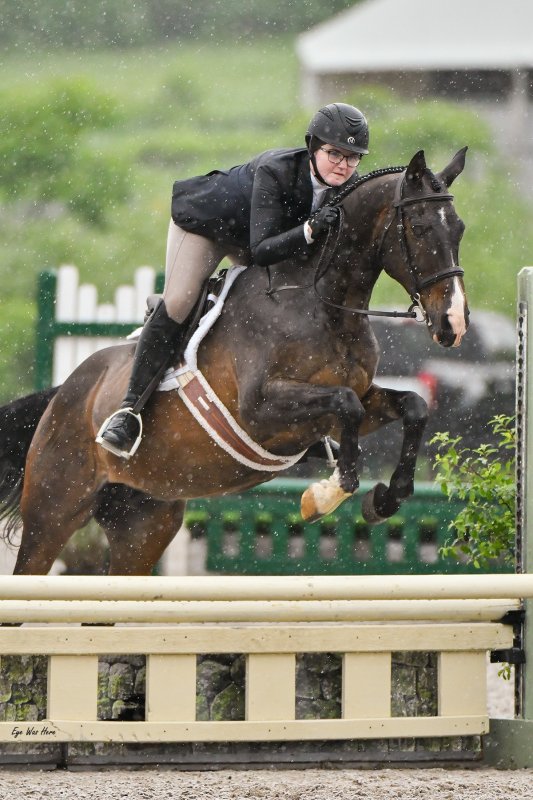
When Joan ended up retiring when Ceci was 15, she and Navarre moved to West Wind Equestrian Facility in Rome, New York, to continue training with Tricia McNamara. Things took an unfortunate turn for Navarre when he came up lame with a soft tissue injury in April 2023 and completely changed Ceci’s plans for the summer, but he still taught her a valuable lesson in the process. The pair had been working hard toward moving up and being competitive in the 2’6” division, but instead of showing, Ceci spent months hand-walking, icing his leg, cold-hosing and eventually bringing Navarre back under saddle. By September, he was feeling great again, and they were able to finish out their season with some nice shows.
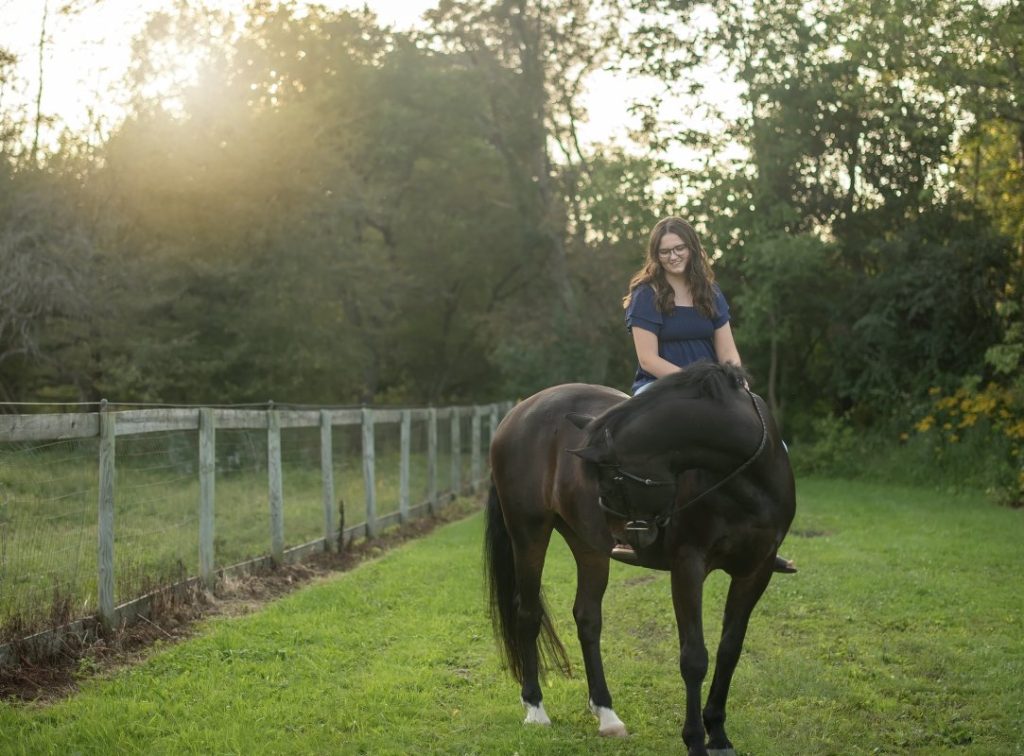
“That injury ended up teaching me so much,” Ceci remarked. “Spending all that time caring for him on the ground strengthened our partnership and reminded me that horsemanship is about so much more than riding. Navarre wasn’t just my horse; he was my best friend. Everyone at the barn used to say how much he loved me, and I’d like to believe that was true. He always met me at the gate when I went to catch him from the field, and he would do anything I asked of him.”
While Ceci still rides with Tricia today, her partnership with Navarre ended in August 2024 when she began her freshman year at Centenary University in Hackettstown, New Jersey. Ceci credits Navarre with giving her the ability to get on any horse at school or at an IHSA competition and be calm and relaxed. She noted that it takes a lot to get her nervous or frazzled in the saddle now, and she is able to continue going around the ring even if something unpleasant happens.
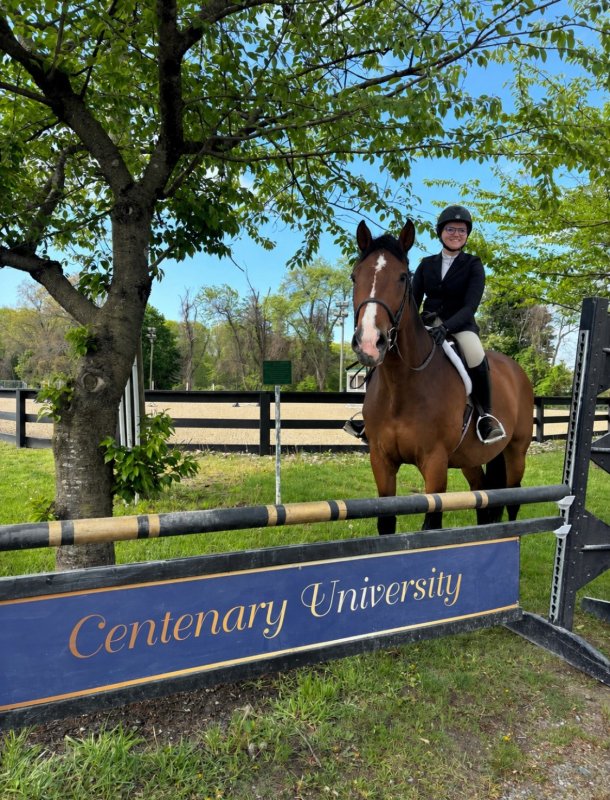
Before settling on Centenary, Ceci had a list of non-negotiables when deciding where she wanted to go to school. She knew going in that she wanted to keep riding and be an equine studies major, and toured many universities and looked at a lot of different barns. After a long period of deliberation, Centenary became the clear winner after Ceci attended a prospective riding day with the coaches.
“I fell in love with the program, the horses and the coaches, for sure,” Ceci gushed. “This is kind of a niche one, but I needed a campus that had a bright indoor arena. You go in so many arenas and they’re dark, and that’s where I struggle the most. Centenary has a very nice, white and airy indoor arena, so it’s perfect for me.”
The summer before she officially became a Cyclone, Ceci went to Centenary for an advising day and met with the equine department director to see who she would need to speak to about her visual impairment. She was directed to Heather Clark, who became Ceci's first riding instructor at Centenary and one of her IHSA coaches. Ceci briefly explained to Heather what was going on and had to fill out paperwork so the whole staff could be informed of her condition. Everyone on her team was very welcoming when Ceci joined the program and told them about her limitations.
“There’s been a few times I’ve had to tell someone, ‘Hey, I need help with something,’ or, ‘Hey, can we do something differently?’” Ceci recalled. “I know what I can see, and I’m very good about vocalizing if I need something, and the team has always been great to support me. I’ve been very lucky, for sure.”
Now entering her junior year, Ceci competes in the Limit division of IHSA and rides on Centenary's Hunter-Jumper team, representing the university at many competitions throughout the school year. Even after all this time, the original routine she established with Joan as a child before jumping a course hasn’t changed much. Ceci still prefers to school a course or watch other riders before her class so she can memorize their track and mentally map out where each jump is so she knows exactly where she needs to go. What has changed is Ceci’s ability to get a better sense of where the jumps are likely to be, after noticing common patterns in courses—especially in the hunter ring. Through it all, Ceci has always felt Trisha and her trainers at school have gone above and beyond to support her, ensuring she feels as prepared as possible before she walks into the ring.
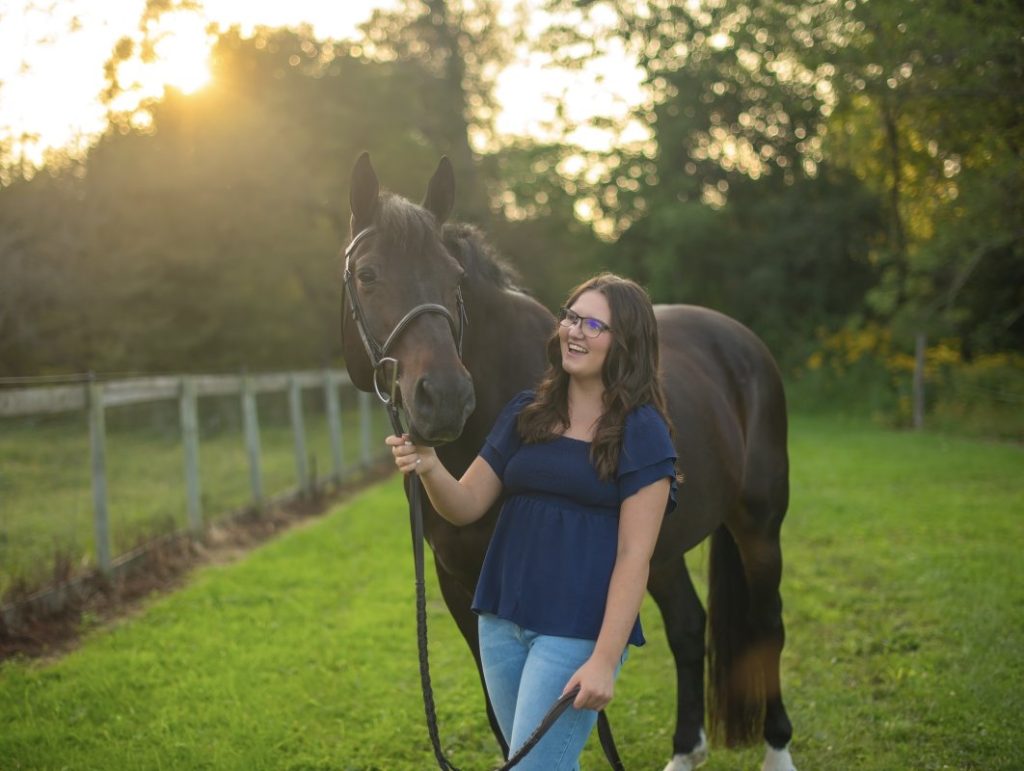
Ceci’s journey hasn’t been a walk in the park, but she’s found that people have always been very kind about her situation, especially when she was struggling in school growing up. She never wanted to stand out in a negative way, but she did have to come to terms with the fact that she needed to do things differently from her peers in order to learn.
“I think that was a big struggle for me,” she said. “During elementary and middle school, I would always get pulled out like a couple of times a week because I was being taught Braille. I was always very embarrassed about it because it was just hard to deal with, missing class and having people know I’m different. I also always had to sit in the front of the room, because obviously I can’t see in the back, but I never wanted to be the center of attention.”
Realizing people didn’t care about her disability and the insecurities she had about it were just in her head was difficult. Nevertheless, once Ceci was finally there, it made her feel so much better about her situation. There was never a scenario where she was bullied, and the biggest obstacle she’s had to deal with is the rare occasion in a warmup ring at a horse show where she gets too close to someone or something. It might be a problem in the moment, but it never festers. She always apologizes or explains the situation, and everyone is quick to move on from there.
Ceci’s visual impairment has undoubtedly made things more challenging at times, but it has shaped her perspective and made her even more determined to pursue the things she is passionate about.
She is one of Sidelines Magazine’s current marketing and editorial interns, where she’s had the opportunity to connect with the equine industry and see how much goes into sharing equestrian stories behind-the-scenes. Writing her first online exclusive on para dressage rider Hannah Kingsley has made her even more excited about the path she’s on. After graduation, she hopes to continue working professionally within the equestrian industry by combining her love for horses with writing and media. As far as riding plans go, Ceci would love to go to an AA-rated show down in Florida and continue learning as much as she can about riding different horses at different levels.
Looking back, Ceci believes patience, consistency, repetition and learning to trust both her horse and her own preparation were the biggest factors in helping her become the rider and person she is today. Thanks to her radical resilience, she has been able to achieve everything she’s set her mind to and has refused to let her vision be an obstacle in her life.
Sign up for our mailing list to stay up to date with all things Sidelines!