By Diana Bezdedeanu
Portraits by Kacy Brown
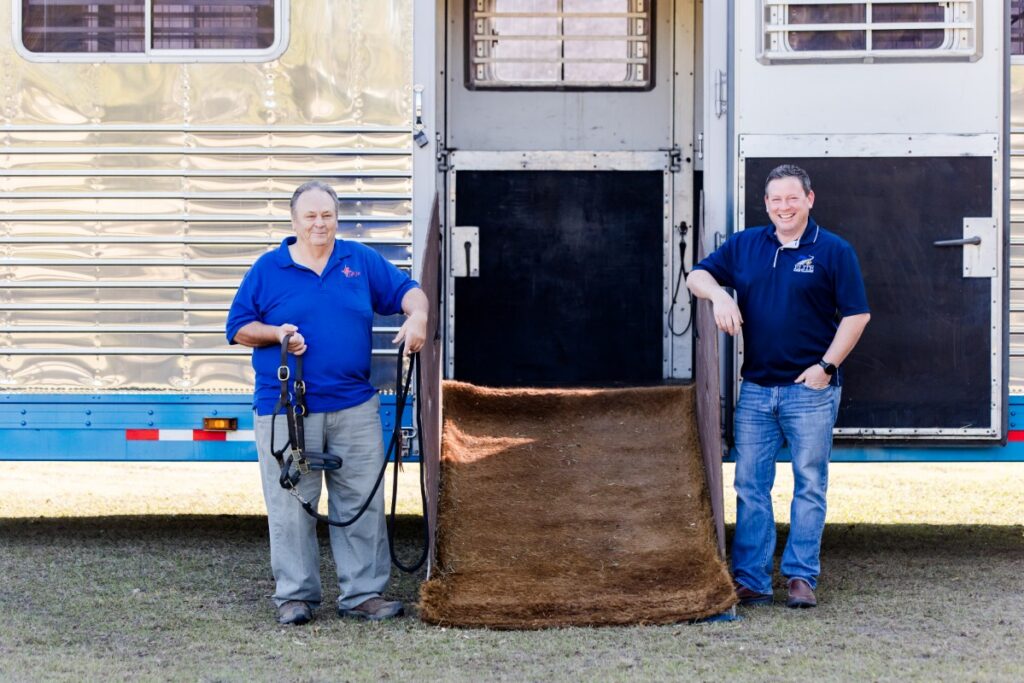
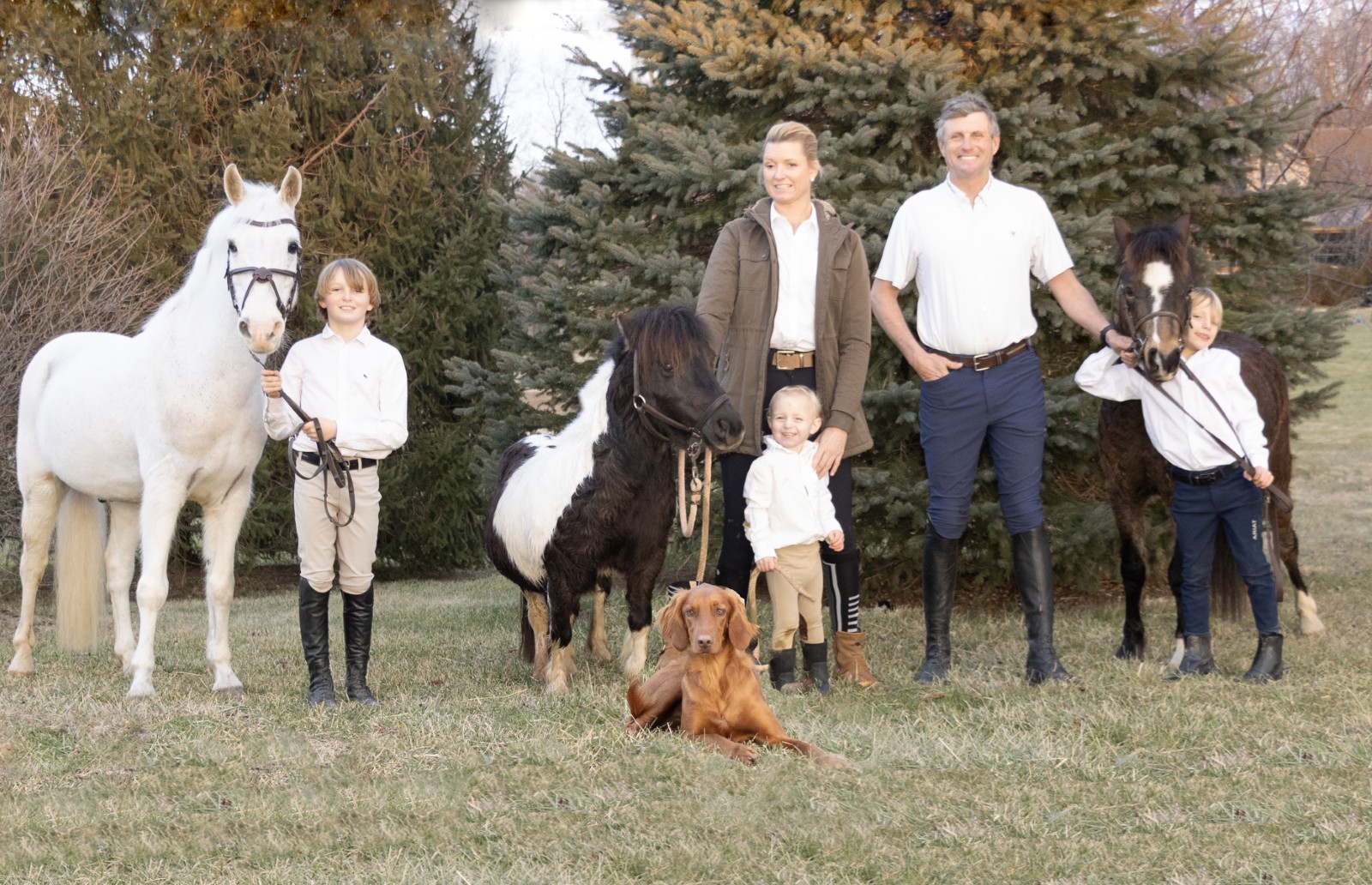
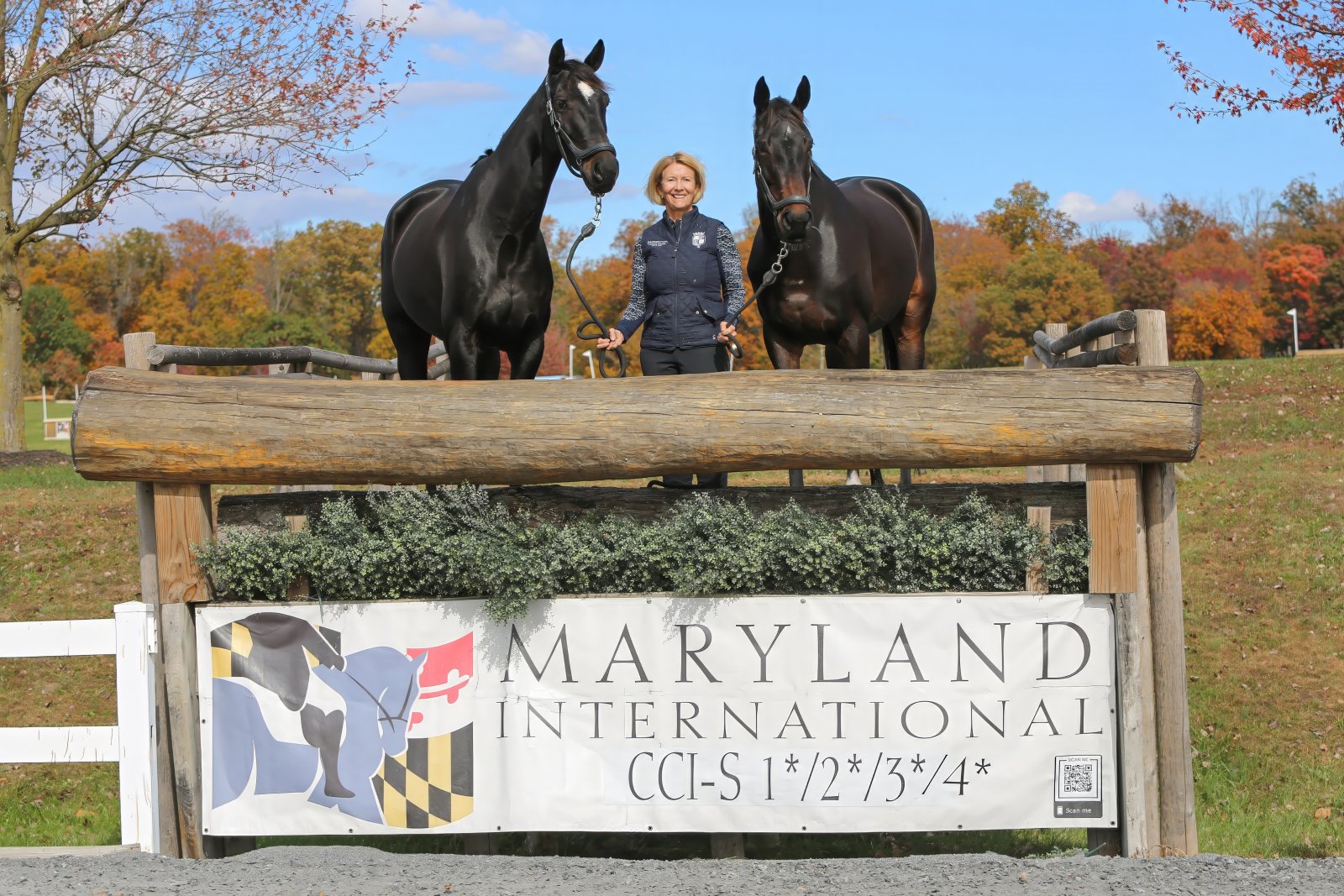
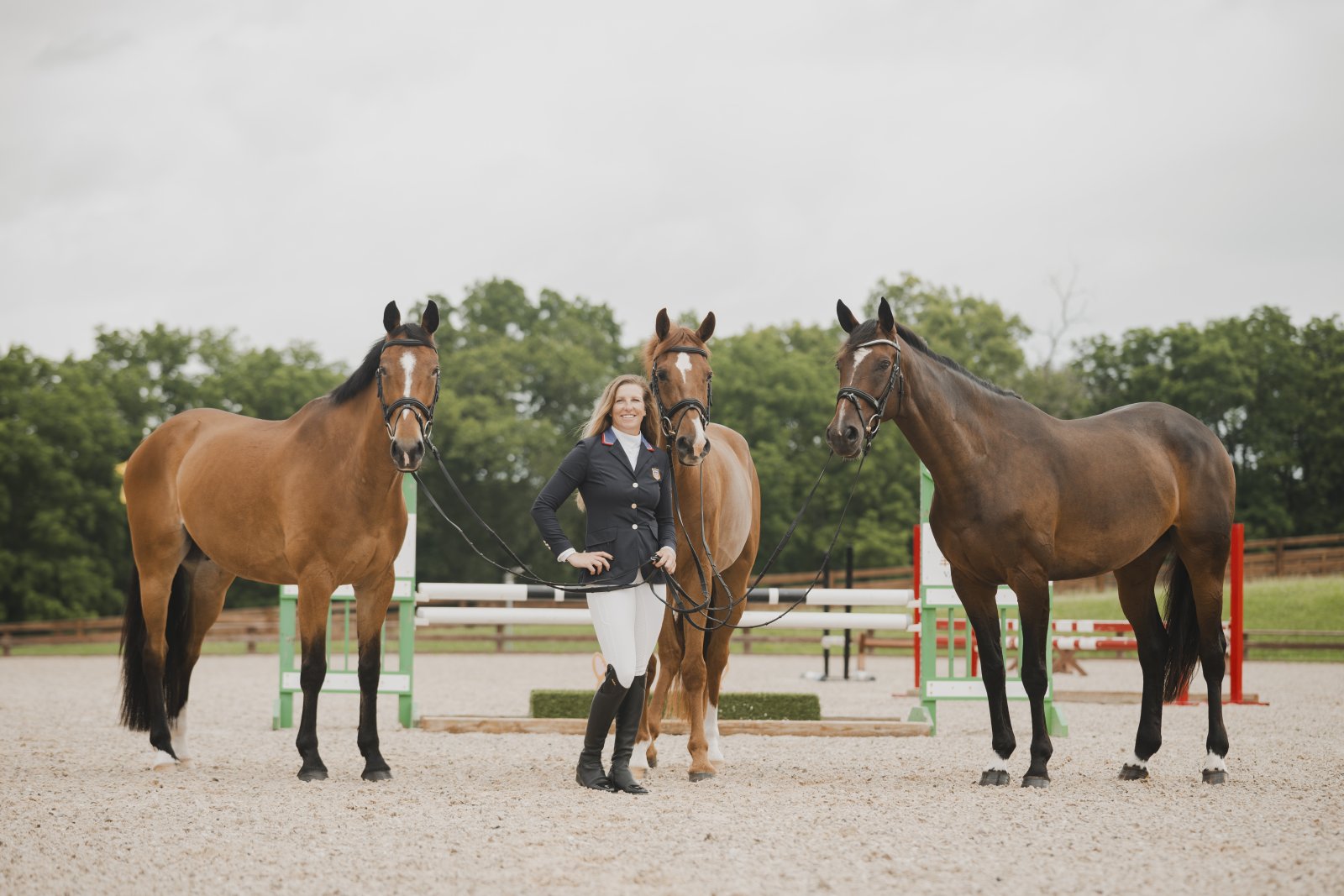
On paper, Terry Konkle of Light Star Horse Transportation and Jim Welsh of Elite Horse Transport are a stark contrast: two men living on opposite coasts of the United States, separated by age and vastly different origins. Terry is a seasoned professional with five decades of equestrian experience who co-manages a sprawling 60-acre ranch in Gilroy, California, with his wife, Tina. Jim utilizes his four decades of equestrian experience to manage a 30-acre equine retirement and breeding farm in Lexington, Kentucky.
Yet for nearly two decades, Terry and Jim have formed a reliable alliance in the horse shipping industry. In a business where ‘competitor’ is often the default label, these two have chosen to use the word ‘collaborator’ instead. Their partnership is built on a foundation of shared values: uncompromising horse sense, constant communication and the notion that you can’t transport a horse unless you know how to properly handle one and care deeply for their safety.
“I believe that if you’re truly secure in what you do, you can easily work alongside other professionals,” Terry said. “In my experience, it’s usually the up-and-comers who feel like they need to knock someone else down to climb the next rung.”
California Innovation
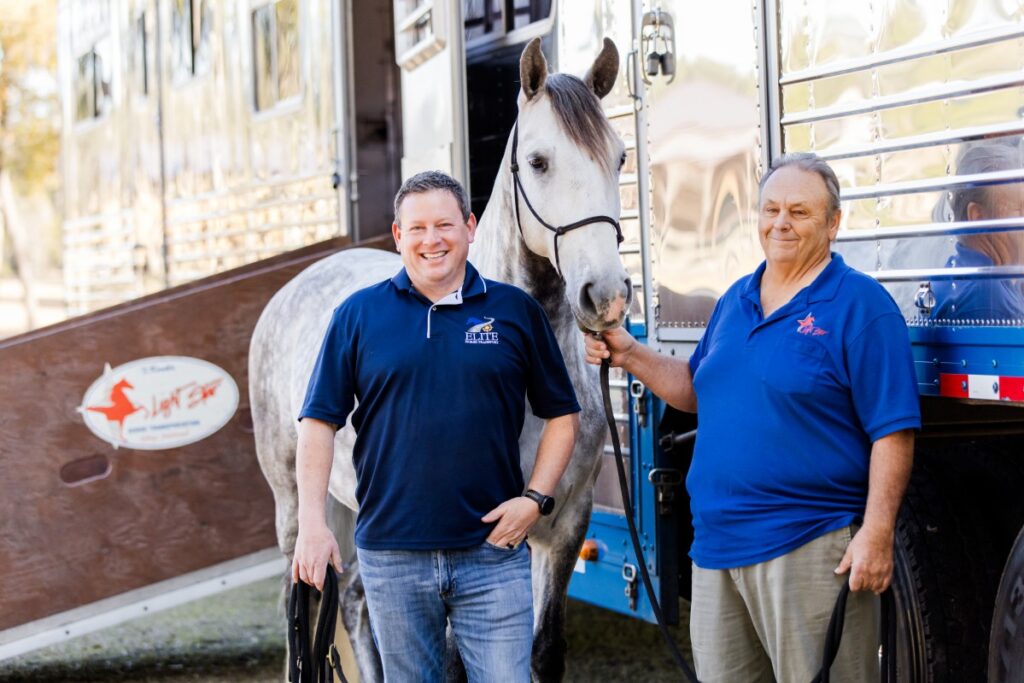
For Terry, horses are a multi-generational legacy. His lineage traces back to a great-grandfather who raised Arabians in Finland—once famously photographed with the Czar of Russia—before the family fled communism. “My grandfather was whisked out of the country at midnight with just the shirt on his back,” Terry recalled. “He wound up a carpenter here in the U.S. and my mom grew up hearing his horse stories. She had ‘horse fever,’ and the only way for her to be around them was to take me to riding lessons when I was 4 years old.”
Terry’s equestrian career skyrocketed early; he tried everything from eventing to show jumping and had more than a dozen national champions before he was 18 years old. In his 20s, he earned four ‘R’ judging cards for the American Horse Shows Association (now US Equestrian). Additionally, he was elected to be the Chapter One (California, Arizona and Nevada) chairman of the United Professional Horseman’s Association (UPHA) and wound up being elected the second vice president on the UPHA national board. His expertise led him to Woodside, California, where he became the assistant trainer for Robert Lewis and later the last colt trainer for Mrs. William P. Roth. “Mrs. Roth was the Grand Dame of the horse world—the idol of people like Sally Wheeler,” he said. “I bought my ranch in Gilroy in 1988 with the belief that quality always sells—quality horses, quality work, quality care.”
It was a 1997 collaboration with the University of California, Davis that changed Terry’s approach to horse transport forever. “Two veterinarians were doing a study on shipping fever,” Terry shared. “They hired me to haul 15 horses around the Central Valley for 24 hours in 115-degree heat. Every four hours, we’d stop so they could pull blood, check atmospheric testers and weigh the horses on digital scales.” The study compared horses that were cross-tied versus those in box stalls. “We proved what we already knew: horses did so much better when they were loose and could get their heads down. When a horse is tied up, they can’t clear their breathing passageways. The dust and chaff stay in their lungs.”
This research led Terry to innovate the “California Box Stall”—a stall-and-a-half configuration that allows a horse to remain loose, eat off the ground and maintain its own balance without the prohibitive cost of a full-size box. Today, Terry’s custom-built trailers are marvels of engineering, featuring NASA-inspired new way air-ride suspension and disc brakes. “I told the manufacturer I wanted to be there for the engineering,” Terry said. “I needed to know how to service this stuff myself if I’m ever stuck on the side of the road.
“Anyone can go out and buy equipment,” Terry continued. “But the level of engineering matters.” He recalled learning that the cost to replicate one of his Kentucky-built trailers—without a truck—would exceed half a million dollars. “They’re engineered to last, and top-level quality.” To Terry, that investment is about responsibility, not prestige. “We’re hauling horses worth millions of dollars,” he said. “But more importantly, we’re hauling someone’s family. That’s why we don’t want freight drivers. We want horsemen who can drive—and drivers who understand horses.”
Learning Proper Horse Care
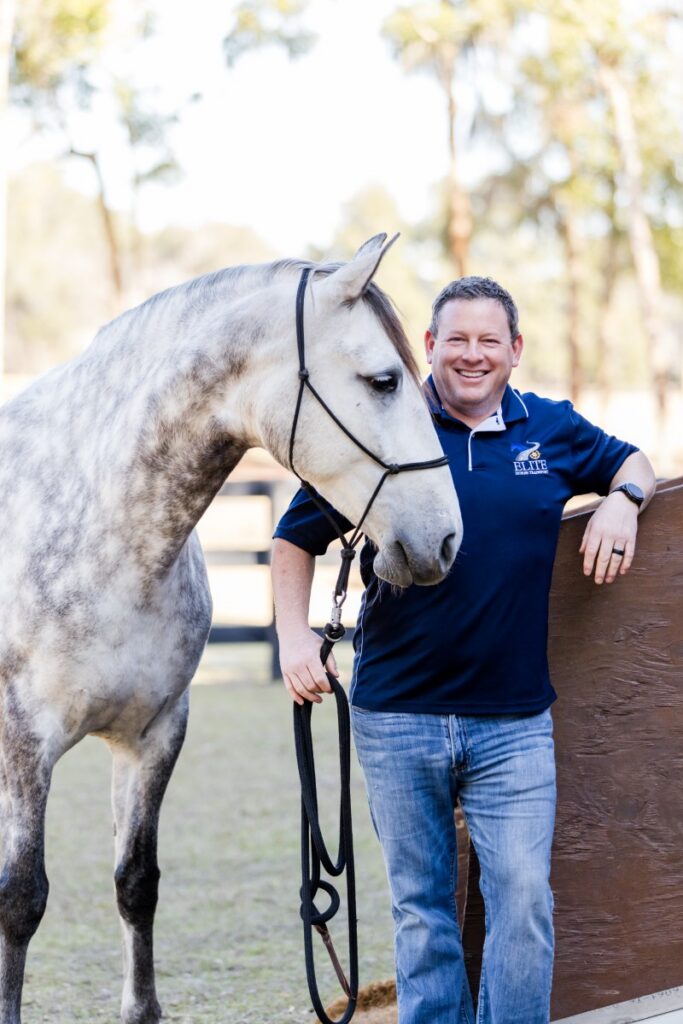
While Terry’s equestrian foundation was built on the Arabian show circuit, Jim’s was born in the precision-oriented world of dressage and combined driving. Growing up in Tenafly, New Jersey, just a stone’s throw away from New York City, Jim began riding at age 12 at the Overpeck Riding Center in Leonia, New Jersey. He trained under Heidi Ericksen, a dressage rider who would go on to be an alternate for the 1988 Olympics. As a Junior, Jim competed in the Young Riders program, an experience that exposed him early to high-level travel and the critical importance of proper horse care on the road—giving him a unique perspective on the needs of sensitive equine athletes. “I went on to groom for Heidi, and I also groomed for world champion drivers Chester Weber and Jimmy Fairclough,” he said.
Upon leaving the University of Louisville where he studied marketing, Jim took a detour into the New York City finance world, specializing in environmental operational due diligence for massive trucking and waste-management firms. It was here that he learned the “un-glamorous” side of the business: insurance premiums, tire wear and the intricate mechanics of a rolling fleet.
But the events of September 11, 2001, turned out to be the catalyst for his return to horses. “After a tragic event like 9/11, I realized I wanted to follow my true passion working with horses,” Jim said. “I started riding with Heidi again and eventually took a position with High Life Farms in Orlando, Florida, handling their imported stallions. After awhile, I called Tim Dutta of The Dutta Corporation, who shipped our horses when I was showing. He hired me and I started driving a gooseneck and doing quarantine releases. Within eight months, I was hooked on equine transportation and logistics. Before long, I invested in my first rig and Elite Horse Transport was born.”
Jim’s Cold Spring Run facility became the Kentucky base for Elite Horse Transport and allowed him to work with horses full time and breed a few select sport horses each year. When Jim is on the road, his wife, Vanessa, oversees the farm and the horses, while he manages the logistics and communications for Elite Horse Transport.
For more than two decades, Jim’s travels have taken him up and down the East Coast and kept him in touch with the horse show world. Jim is committed to the sport and Elite Horse Transport has consistently supported the sport as a sponsor at Dressage at Devon, the Wellington International annual jumping circuit, the annual Gold Coast and Wellington Classic Dressage circuit, the Young Horse Championships and other US Equestrian shows, among others. “Giving back to the sport that contributes to Elite’s success is important to me,” Jim explained at the recent USEF Annual Meeting. “I want our clients to know that we share a love of horses and a commitment to horse sport.”
Two Horsemen, One Philosophy
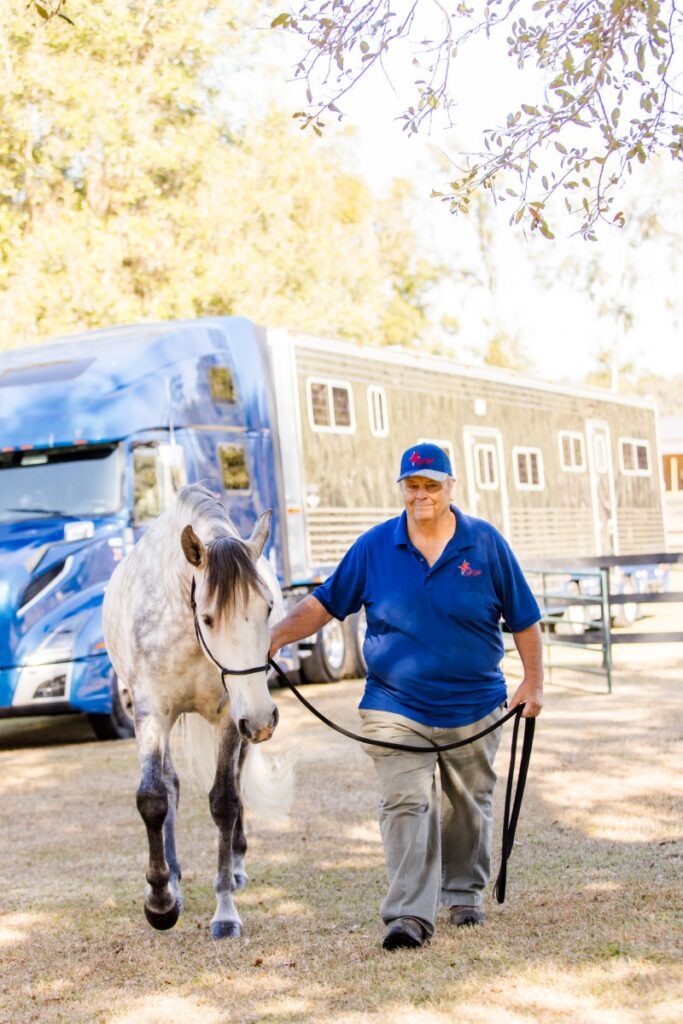
Despite their different paths, Terry and Jim are remarkably aligned. Both are horsemen first and business owners second, shaped by decades in barns long before they sat behind the wheel of a truck. Both maintain farms with breeding programs and retirees, and both insist on knowing every detail of their equipment, routes and the horses in their care.
Their primary difference is that Jim is hands-on as a regular driver on the East Coast, while Terry focuses more on fleet and financial management and overseeing his crew—though he is quick to note that he will “get in a truck any day, any time, when the need arises.” Rather than creating friction, those distinctions allow their partnership to function seamlessly.
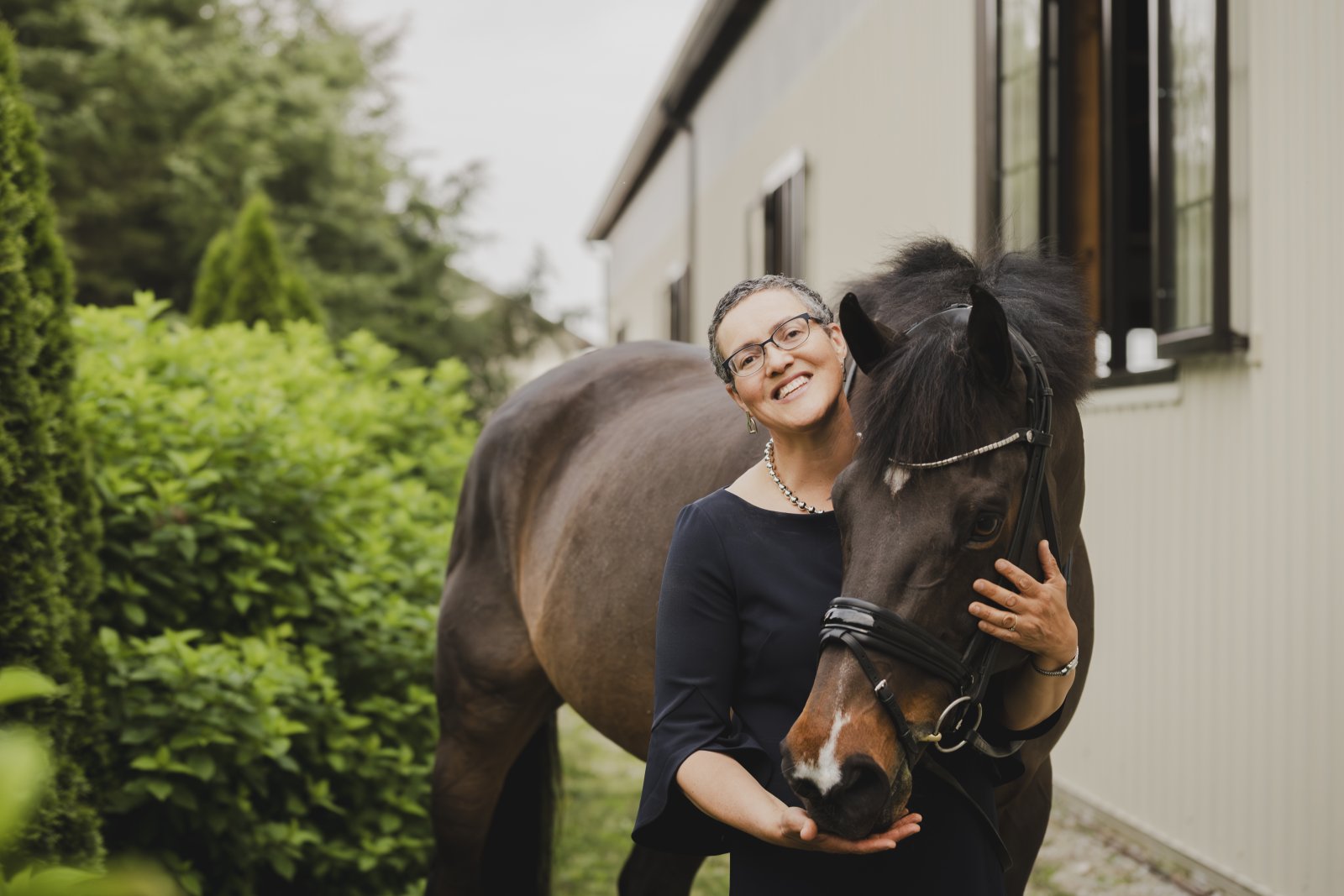
That partnership is supported by a well-coordinated back-end operation managed by Judi Baumann, Terry’s office manager and a lifelong horsewoman who has competed across multiple breeds, most prominently Quarter Horses. Based in Kentucky, Judi’s job is to ensure these intricate movements happen without a wasted mile. “My role is to make sense of it all,” Judi explained. “I organize trips based on the straightest route possible. If you don’t have organization, horses experience too much time on the truck. I always think of the very first horse loaded—from the moment we handle them to the moment they get delivered, that clock is ticking.”
Their alliance allows both companies to offer a concierge level of service. “If someone calls me from Caribou, Maine, wanting to ship to San Diego, I don’t just say ‘no’ because it’s not on my route,” Judi said. “I call Jim. We work together to complete a route to fit the customer’s needs. It’s full transparency—the customer knows exactly who is hauling their horse and why we trust them.”
Setting the Standard
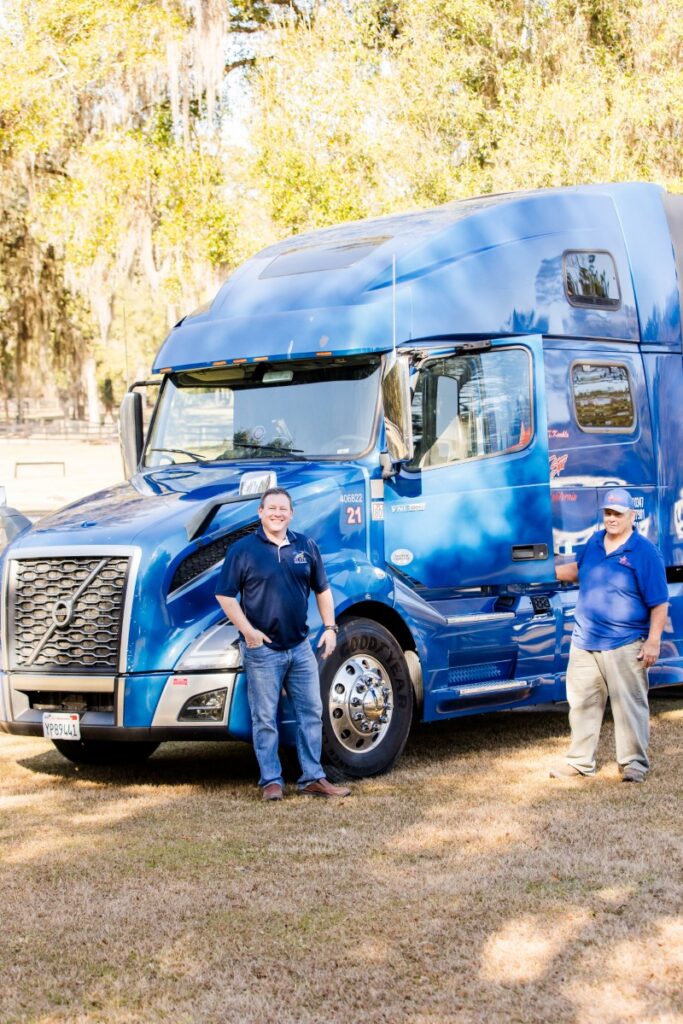
Both Terry and Jim are members of the National Horse Carriers Association (NHCA), an organization with standards so rigorous that many companies fail the application process. “It’s the most prestigious protocol of the industry,” Judi said. “They look at your equipment, your insurance and your reputation. If you’re a member, the customer knows you’re operating at a higher level. It protects the horse owner from the Facebook shippers who might have an old gooseneck with no air-ride suspension. I tell people, imagine your head is tied to a wall in an airplane for six days. That’s what it’s like for a horse in the wrong hands.” Terry and Jim often use the NHCA as a way to interline loads, ensuring that a horse is never handed off to a stranger. “If I give a load to Terry, I know he has good drivers and equipment that is regulated by the DOT,” Jim said. “We give each other the right of first refusal. It’s not a competition; it’s about making sure the horse gets the same service I would give them.”
Terry’s focus remains on maintaining a quality-driven company rather than becoming a “Walmart of shipping.” Jim is settling into a phase shaped by family priorities as his teenage children prepare to head off to college this year. He continues to manage a fleet of five drivers. “Most of my clients have been with me for decades,” Jim said. “Watching kids who I shipped for when they were young riders grow up to be professionals running their own barns, that’s what really makes me happy.” Still, both are candid about the challenges facing the industry, from rising insurance costs to increasing equipment prices and a shrinking pool of skilled drivers.
Whether transporting a million-dollar warmblood to Wellington, a top equine athlete to the Kentucky Three-Day Event or moving a 25-year-old retired school pony to a new home, Terry and Jim operate by the same guiding principle. “We don’t take shortcuts,” Terry said. “We do it right because that’s what the horse deserves.”
Follow both on Facebook @LightStarHorseTransportation and @EliteHorseTransportLLC
Thanks to Linda Parelli of HappyHorseHappyLife.com for the use of her farm for the photo shoot.
Sign up for our mailing list to stay up to date with all things Sidelines!