By Sarah Welk Baynum
Photos by Sara Farrell
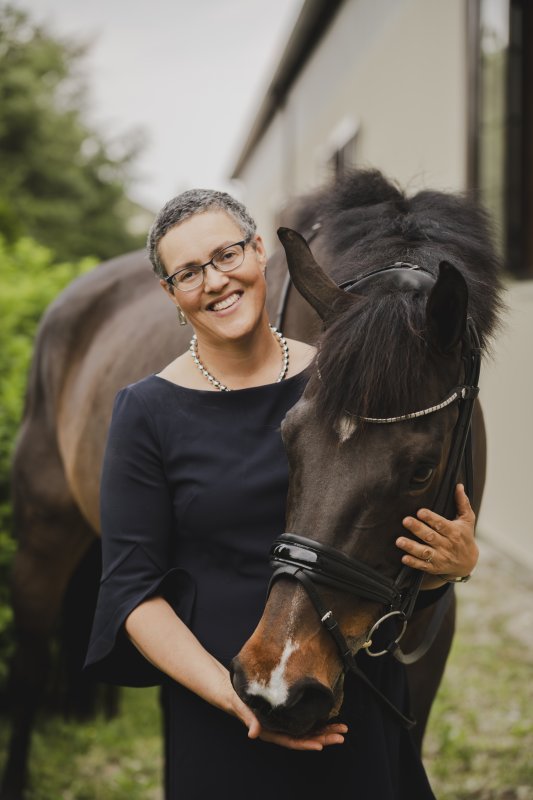
Horses have shaped and sustained Anastasia Curwood through every chapter of her life.
Along the way, she became an eventer-turned-dressage competitor, a historian, an author who writes about people in American history who might otherwise have been forgotten, and a co-founder of one of the most visible inclusion movements in modern horse sports. But Anastasia’s story begins long before any of those roles—with a child who suddenly could not stop noticing horses.
Anastasia did not come from a horse family, but a book her parents gave her as a gift changed everything. “I have always loved animals, so my parents gave me a children’s science book for Christmas when I was 9,” Anastasia said. “I read the whole thing, and the last section was about horses. I remember thinking, What are these magical creatures? How have I never noticed them before? Suddenly, I loved them, and I wanted one.”
Once Anastasia noticed horses, she started seeing them everywhere. “I remember being in the car with my dad and pointing out horses we passed,” Anastasia said. “I kept saying things like, ‘Look at that cream-colored horse—I want one like that!”
But growing up in Cambridge, Massachusetts, as the daughter of a journalist and a nurse, Anastasia had no connection to the horse world. “Luckily, my dad knew a colleague whose daughter rode at a local barn and that’s where I signed up for my first riding lessons around 1984, the spring of my 9-year-old year.”
As a biracial child with a Black father, stepping into the horse world felt unfamiliar for her family. Anastasia’s interest in horses, however, was rooted deeper in her blood than they realized. “At the time, my dad didn’t know of anyone in his family who had anything to do with horses,” Anastasia said. “But later, we found out my great-great-grandfather, who was born in Kentucky, had been a clocker at a racetrack in Ohio.”
After three years of riding lessons, Anastasia moved to a hunter-jumper barn, where she took the next step in her riding development. “That was the first time I had a horse to go ride several times a week because I leased a pony. I also started showing more,” she said.
Anastasia finally made her dream of owning a horse come true in high school. “I got an Appaloosa mare that had been showing on the Appaloosa circuit in the hunter classes,” she said. “I also joined Pony Club, and like many Pony Clubs at the time, the focus was on eventing. I turned my Appaloosa show horse into an eventer. She stopped at fences sometimes, but I didn’t mind—I was having a good time. What was actually scary was she would rush fences. I can see now that she didn’t have a lot of training, but I had a wonderful Pony Club instructor who really got the best out of us.”
By the time Anastasia left for college, she had earned her C3 rating in Pony Club and felt like a competitive rider. “I went to Bryn Mawr College near the Devon Horse Show and kept up weekly lessons,” Anastasia said. “I rode at Radnor Hunt Stables, volunteered as an outrider one year, and even went out with the Brandywine Hounds through a foxhunting barn. I had some outstanding experiences there!”
Then, toward the end of her college career, Anastasia experienced a decisive moment—an unexpected turning point that changed everything. “I got very sick my junior year and had to stay home for a semester,” Anastasia said. “I found out I had Cushing’s disease. I had a benign tumor that was affecting my endocrine system, and I had surgery to remove it. Fortunately, I fully recovered, but it kept me home in Boston for a while.”
While recovering, she enrolled as a non-degree student at Harvard to keep up with her coursework, and once she felt better, she returned to a familiar place from her childhood.
“I started riding at my old trainer Lainey Johnson’s farm in the Boston suburbs,” Anastasia said. “She always had extra horses that needed to be worked and would ask me to ride them. I rode some very nice horses and competed on a few of them. I still benefit from the foundation I learned from Lainey and her well-trained horses.”
Like many academically minded young riders, Anastasia once considered a traditional horse-related career during college. “I considered going to vet school,” Anastasia said. “But I took a couple of prerequisite courses and realized I didn’t like them. What I loved were my humanities classes—history and literature.”
Anastasia graduated from Bryn Mawr as a history major with an Africana Studies minor. “I decided to go to graduate school for history at Princeton,” she said. “I wanted to be an educator and researcher, like my professors at Bryn Mawr—I loved that environment.”
Her grandmother’s influence also shaped her career path. “My father’s mother was a Black woman who became a college professor in the late 1950s,” Anastasia said. “She financed the purchase of my first horse, and my father told me that if I wanted to be a horsewoman, being a college professor would give me a flexible schedule and means to continue being an equestrian. I got both my first horse and my career path thanks to my grandmother.”
After graduate school, Anastasia continued to ride whenever she could, but didn’t have a horse of her own. She later spent two years back in the Boston area as a visiting faculty member at Boston College. During that time, she leased a horse and met her now-spouse, Carol.
They eventually moved to Nashville, Tennessee—an area that allowed her to become a horse owner once again. “The minute I got my first tenure-track job, I bought a horse,” Anastasia said.
Then, a chance connection on the Chronicle of the Horse forums led her to a significant horse in her riding career. “A friend I met on there told me her horse, Cat Burglar—his barn name was Taco—was available for lease,” Anastasia said. “He was an excellent Preliminary-level eventing horse, but had suffered a serious injury and we weren’t sure what his future would be. I leased him and then bought him a year later because we had such a great partnership.”
Anastasia competed with Taco for about seven years. “He never had a cross-country jumping penalty on his record,” Anastasia said. “He was a Preliminary-level horse, and I was a Novice-level rider at the time, but we ended up competing together through Training level. He took such good care of me—I learned so much from him. I also started showing him in straight dressage shows and got the best scores of my life on that Thoroughbred. His last competition was in 2013 when we won a Training level horse trials at Poplar Place.”
Anastasia was later offered a job at the University of Kentucky, and now lives on a farm in South Woodford County, deep in Kentucky horse country, with a name inspired by some of the very special horses from her past and present. “We call it Bay Stone Farm because when we bought it, I had three very special bay horses in my life—Taco, Glen and Biggie—and the house is partly made of stone,” Anastasia said. “I was lucky to get hired by the University of Kentucky in 2014, and getting to live here in horse country has really been a dream come true.”
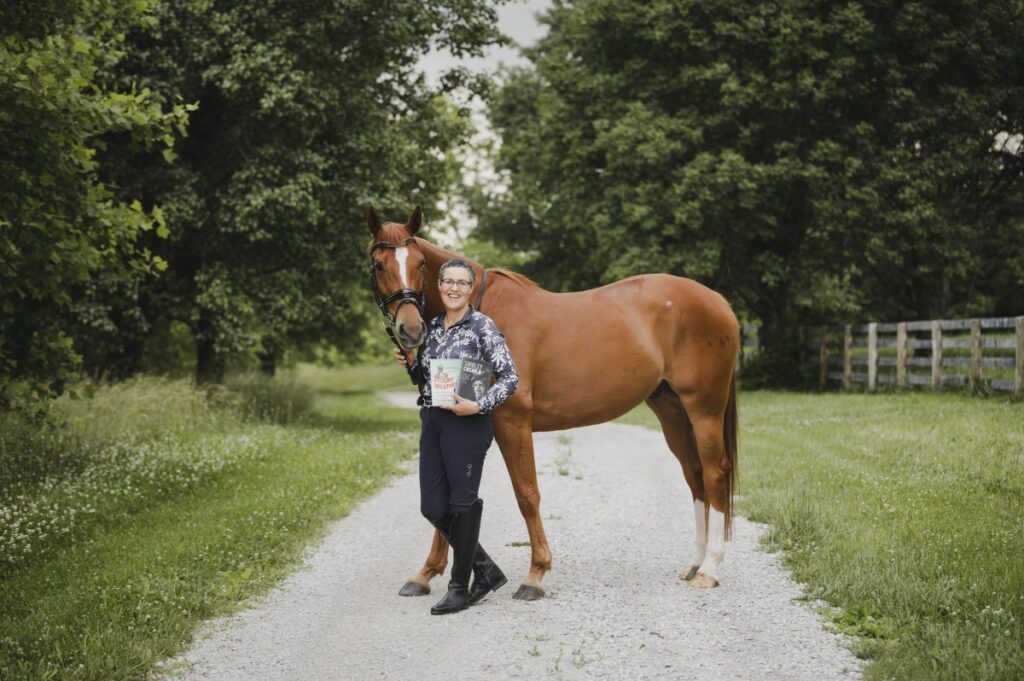
When Taco retired, Anastasia continued eventing with her other horses—but soon realized something had changed. “I was actually miserable at competitions now,” she said. “I had a fall and was injured during a lesson, and just realized I didn’t want to jump anymore—even the Novice fences suddenly looked too big.”
Anastasia shifted her focus entirely to dressage, a decision that led to a partnership that carried her through Prix St. Georges and earned her USDF Silver Medal. “I had a Thoroughbred named Biggie, and the collection was hard for him, but we still made it through Second Level,” Anastasia said.
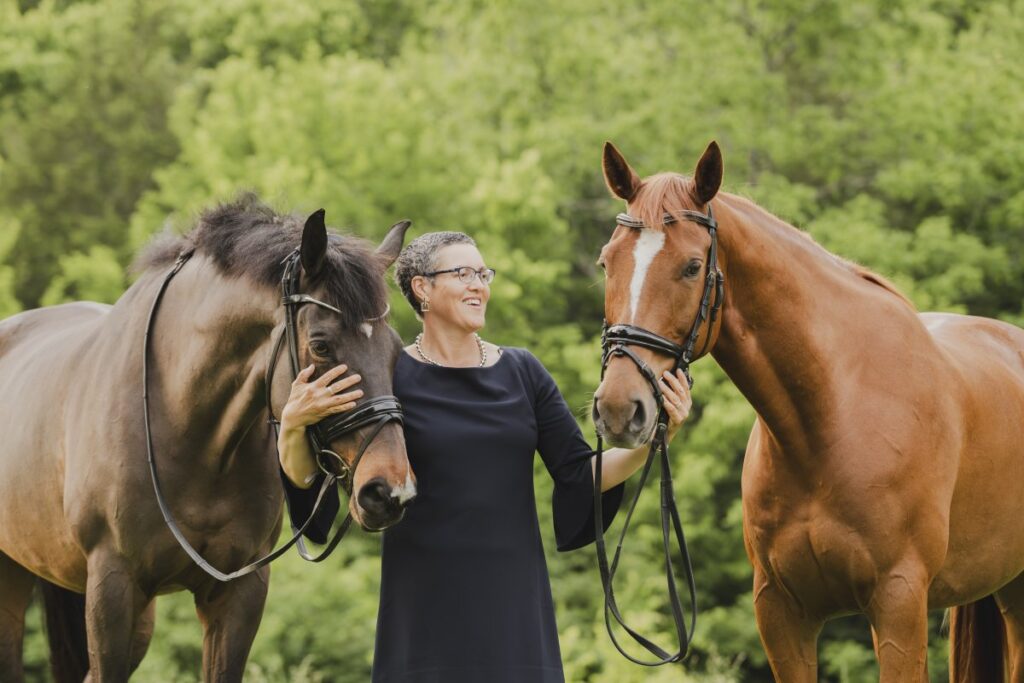
Then, during the pandemic, a new boarder moved into the barn with an upper-level horse Anastasia immediately recognized from her volunteer days in eventing. “I realized it was Loughan Glen, a team horse who had been to multiple five-stars and the Rio Olympics with Clark Montgomery,” Anastasia said. “He was in his late teens, and I remembered him because of his beautiful amber eye and his old-soul presence. I still remember the smile on my face when I trotted him for the first time after his owner, Kelsie Bricker, suggested I ride him. I thought, This is what connection feels like! As Kelsie traveled more for work, I started leasing him, and together we grew in our dressage training, learning pirouettes and tempi changes. He’s retired from showing now, but I still ride him around my farm.”
Today, Anastasia is developing a 7-year-old Warmblood named Rockstar Noble Dancer, known as Prince around the barn, and applies what she learned from Glen. “I learned so much about collection and connection from Glen, and that’s really the key to being successful in dressage,” Anastasia said. “When I first got this horse, it was a shock to go from a made horse to a young one who is still figuring out his own strength. My instructors tell me, ‘Ride him like you would ride Glen.’ That mindset changes everything because I now know what that connection feels like. Last year, we qualified for regionals at First Level with a freestyle, but he injured his stifle, so we didn’t get to go. We’ll probably do First Level freestyle again this year and maybe try Second Level, but only if he’s ready.”
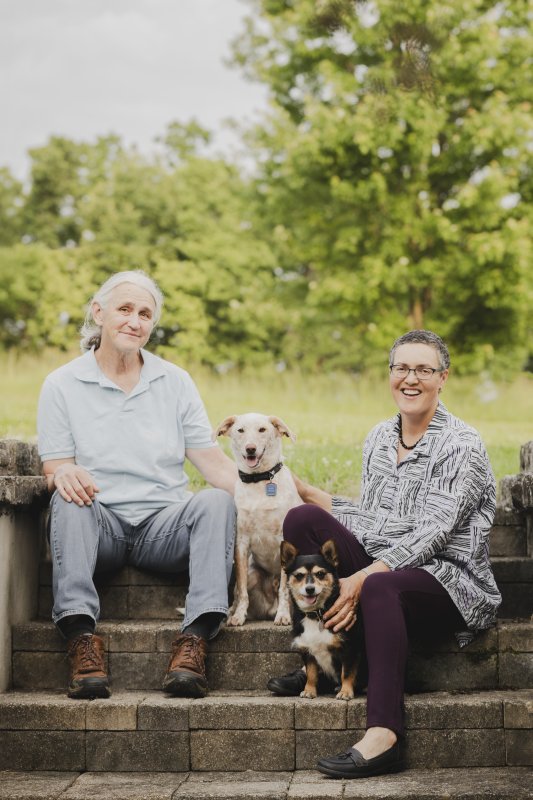
Anastasia’s work as a historian naturally led her to authorship, beginning with a deep exploration of Black American life during the early 20th century.
“My first book looked at the cultural, intellectual and social history of Black marriages during the Jazz Age and Great Depression,” Anastasia said. “I realized my own grandparents were part of that Great Migration generation, and I became curious about it—what made their experiences unique and what made them part of broader historical patterns. What I found was that Black couples were dealing with the same things all couples deal with—money, work, children, partnership—but without the luxury of making mistakes because of the harsh judgments placed on them. I wanted to show the humanity of Black Americans in that era.”
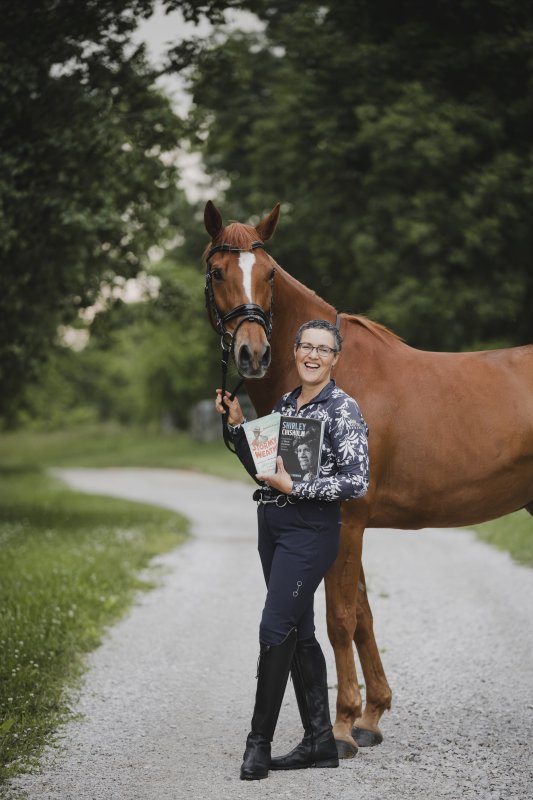
That exploration led Anastasia toward writing her second book—a biography that took her 15 years to complete. “I realized there was no serious scholarly biography of Shirley Chisholm, the first Black congresswoman and the first Black candidate for a major party’s presidential nomination,” Anastasia said. “I remembered seeing a photo of my parents with her when I was a child, and they told me, ‘That’s Shirley Chisholm. She ran for president—and you can too.’ Writing her biography forced me to think about the narrative arc of a person’s life and what we can learn from it. She was an incredible leader, but she was also human—you don’t have to be perfect to be a hero. That project was incredibly gratifying.”
Living in Kentucky’s Bluegrass region, Anastasia is reminded that Black horsemen and horsewomen helped build the very foundation of the industry. “People often think Black horsemen were only grooms, but they were doing everything,” Anastasia said. “They were breaking and training horses, teaching riders, handling veterinary care, nutrition, breeding, and even making pedigree decisions. The first Kentucky Derby winner was trained and ridden by Black horsemen, and in the first decades of the Derby, Black jockeys won about half the races. They had the knowledge and the talent—they helped build this industry.”
Their deep history of equestrianism, however, is often not well known today. “Around the turn of the 20th century, when segregation really took hold, Black people were pushed out of the sport as jockeys and trainers, even though they had been central to it,” Anastasia said. “But Black riders still found ways to stay involved. There were all-Black horse shows during World War II because riders were excluded from other shows. We have always been part of the horse sports community. I live on land that Black horsemen once farmed, and I’ve met some of their descendants, which feels very full circle for me.”
In 2020, Anastasia helped turn a moment of national reflection into lasting action within the horse industry. “I have very nearly always been the only Black person in the barn or at competitions,” Anastasia said. “After George Floyd, there was a window of time when organizations were talking about equality, and Black equestrians found each other online. My longtime friend Heather Gillette and I realized we could create something that would bring allies together and raise the visibility of equestrians of color. That’s how Strides for Equality Equestrians started.”
What began as a conversation between old friends quickly grew into scholarships, camps and a growing support network for riders across the country. “It started with modest donations to community-access equine programs and quickly grew into an all-expenses-paid scholarship called Ever So Sweet, offered in partnership with Sara Kozumplik and Edy Rameika. Recipients spend several months training at an upper-level eventing barn,” Anastasia said. “Then we added camps—four days of intensive riding, lessons and lectures. It’s created a real community of riders and volunteers. People have really stepped up to make it happen, and it’s been incredibly gratifying to watch it grow.”
For more information, visit stridesforequality.org or follow on Instagram @stridesforequality
Photos by Sara Farrell, threeredheadsandamoose.com
Sign up for our mailing list to stay up to date with all things Sidelines!