By Shya Beth
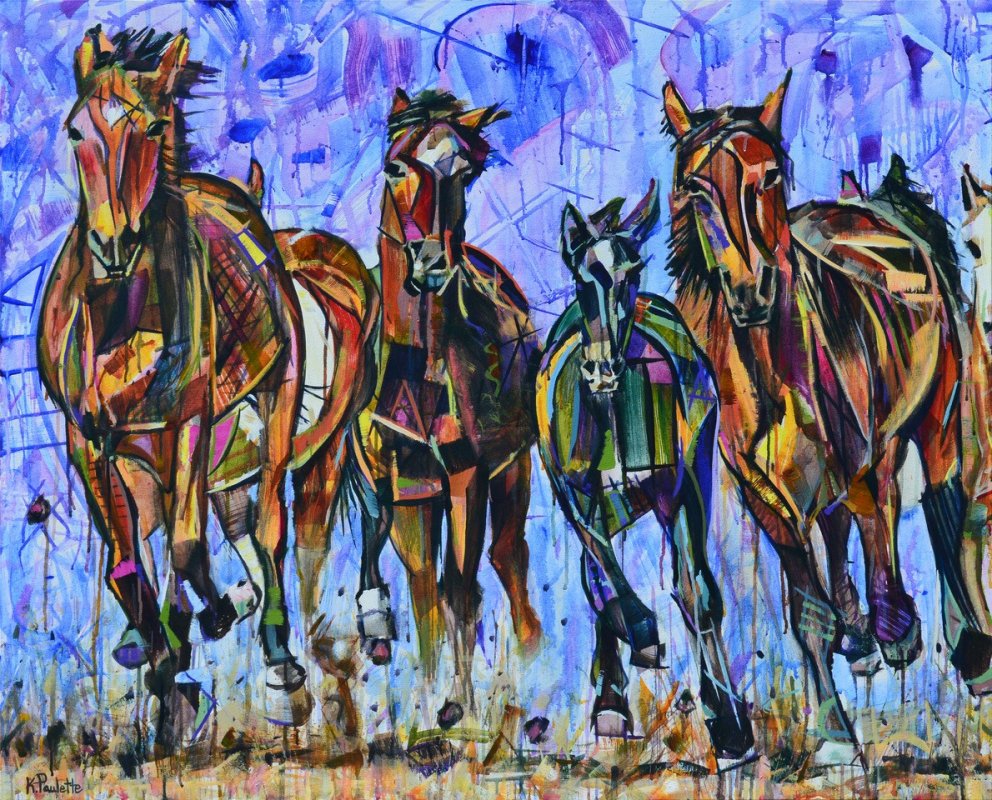
From the outside, Kent Paulette’s paintings feel untamed: alive with movement, texture and emotion that seem to surge beyond the canvas. His horses are not posed or restrained; they arrive mid-motion, carrying wind, water and instinct with them. For Kent, painting has never been optional. It has been a necessity—an instinctual response to existence itself.
Kent is entirely self-taught, a path that demanded early trust in intuition rather than instruction. Beginning in his teenage years, painting became an emotional outlet and a way to explore ideas he couldn’t articulate with words. “In the brushstrokes,” he said, “I can see what I’ve been feeling and thinking.”
Early on, one of Kent’s biggest challenges was learning not to over-control the outcome. Like life, painting resists force. Frustration and anxiety in daily life began shaping a process that pushed back against those tendencies. Over time, he developed a style that left behind precision and emphasized surrender to the process.
Today, preparation matters as much as execution. Before painting, Kent connects with nature, often heading to the mountain creek near his North Carolina studio. He works listening to music, avoiding conversation, and allowing the painting to reveal itself. Rather than starting with a fixed vision, he looks forward to discovering what the work wants to become.
A major turning point came in 2015 for Kent. The year began with “Free Like the Wind,” a horse painting that showed a new creative direction, followed by weeks of sledding and memories of solitary hours spent body surfing in the ocean the year before. Those physical, immersive experiences began reshaping how Kent approached movement and energy on canvas, and helped shape his new horse paintings.
That same year, a collector purchased 24 of his paintings, including four featuring horses, filling an entire home with his work. Soon after, Kent painted “Galloping Sunlight” and a portrait of Taylor Swift, which started the new era of his work. It was also during this time that he developed what would become a defining technique of his process: his “creek washes.”
Each morning before beginning a new painting, Kent hikes to the creek. He immerses his hands and face in the water—sometimes in the dead of winter—then collects water from different currents. Fast-moving water, slow-moving pools, bubbling springs are each gathered separately and mixed directly with acrylic paint. The water is used intuitively, staining the canvas and revealing the textures beneath.
The year closed with another milestone when country music star Eric Church purchased four paintings at Kent’s gallery in Banner Elk, North Carolina, including “Quantum Entanglement” and a portrait of Frank Sinatra.
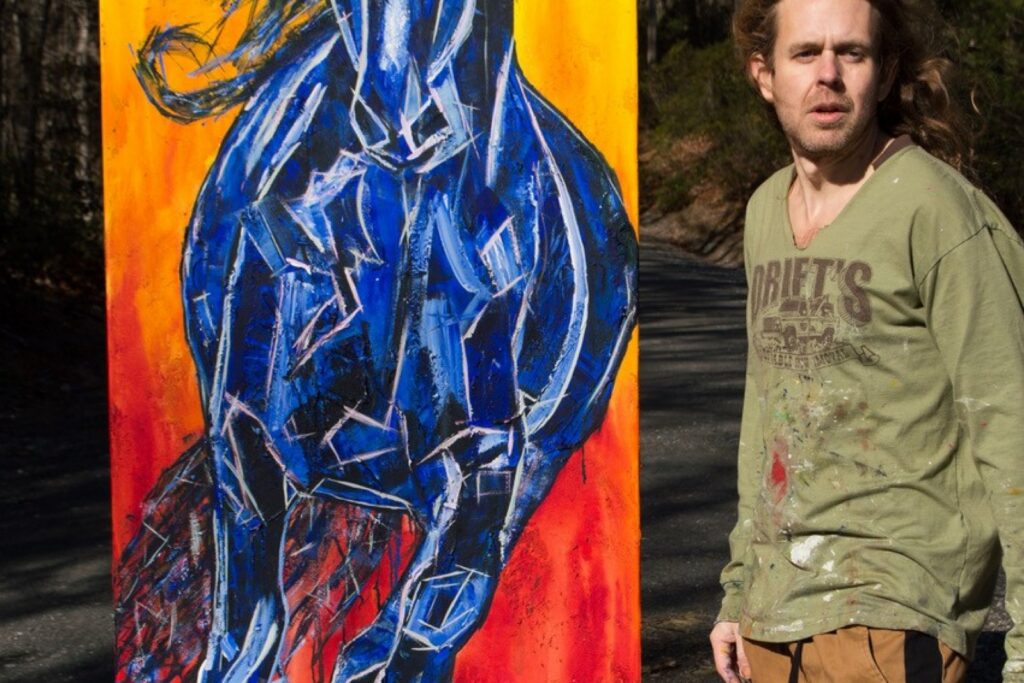
Horse experiences throughout his childhood left an imprint, and the excitement of attending horse races in Lexington, Kentucky, only enhanced his view of their speed and power. Now living in a rural mountain community, he regularly sees horses grazing in neighboring fields and those quiet yet powerful presences continue to inspire his work.
He began painting horses in the early 2000s, drawn to their scale and intensity. In 2009, he completed “Thunderstomp,” the largest painting he had ever made at the time. “I could feel, and almost hear, the power coming from the horse,” he recalled.
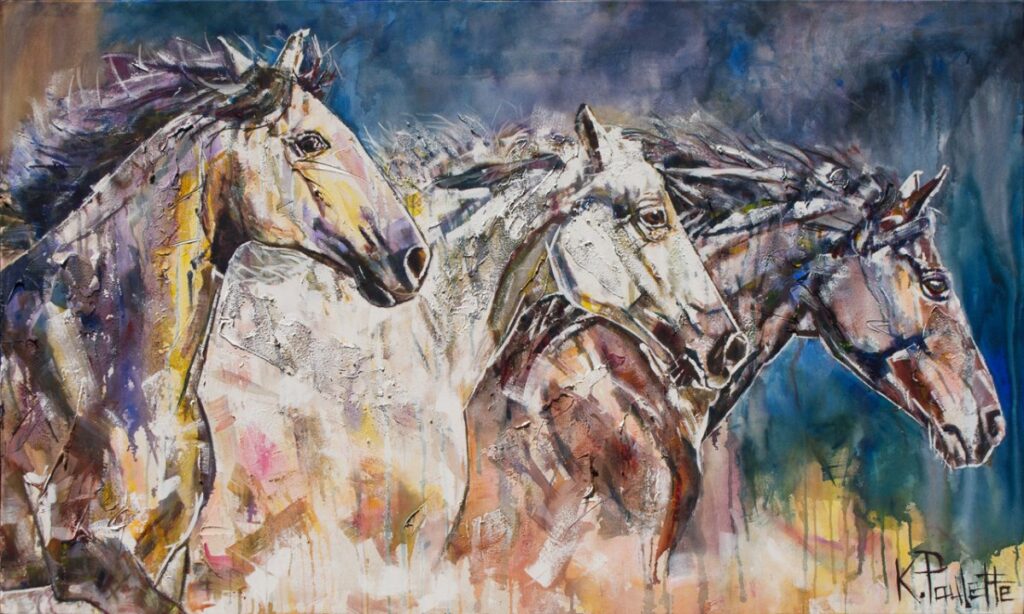
Since then, his horse paintings have found homes across the United States, from Kentucky and Wyoming to Colorado, Tennessee and Florida, including large-scale commissions and seven-foot-tall custom works. But sales are secondary to connection. Kent is drawn to horses for their wildness, their sensitivity and their mystery. “Their reaction to existence mirrors my own,” he said. “I feel a sense of camaraderie with them.”
Viewers often feel a strong emotional pull when standing in front of his horse paintings. Kent believes horses communicate freedom, perseverance and hope in a way few other subjects can. Those qualities echo through titles like “Songs in the Wind,” “A Shaman’s Dream,” “At the Speed of Love” and “Spirit Tribe.” In group compositions, the dynamics between horses, the shared energy of the herd, become part of the narrative.
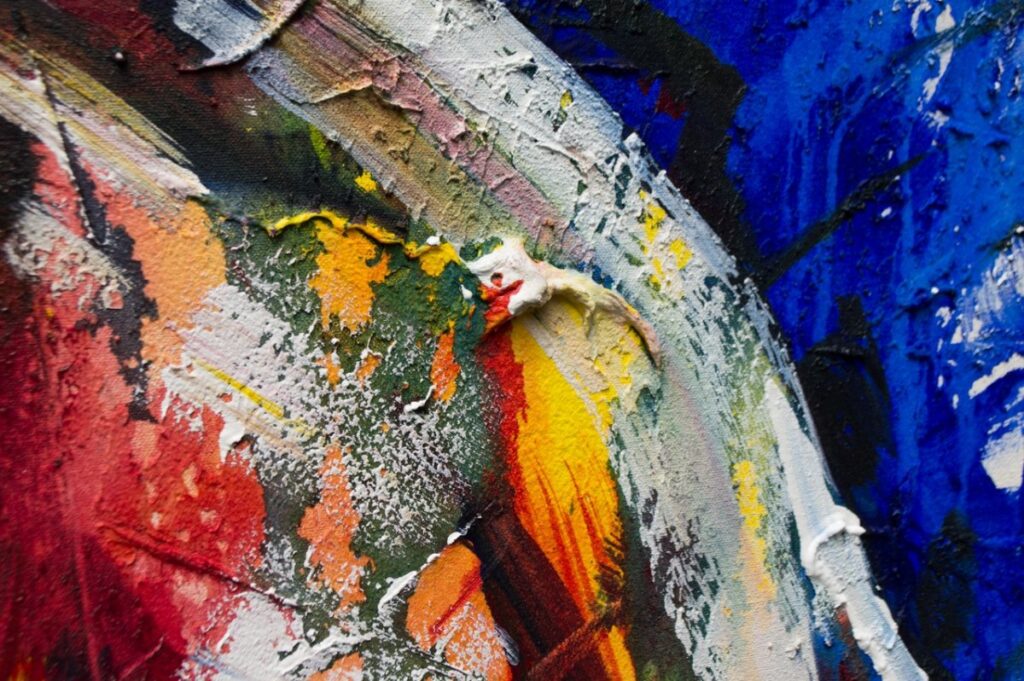
Kent’s process is physical and music-driven. He begins each painting by applying thick texture with an oversized palette knife while listening to post-punk music. This stage is fast and aggressive, locking wild energy into the surface. No matter what happens later, that underlying intensity remains.
As the painting develops, his soundtrack shifts to 1970s Afrobeat, jazz and experimental electronica, encouraging movement and large, expressive brushstrokes. Classic rock makes frequent appearances, sustaining the physical momentum, especially on large canvases. Kent then builds his paintings using only the three primary colors plus white, mixing everything by hand. When “creek washes” are applied, the water flows unpredictably over the textured surface, and then chance becomes essential. Unexpected moments often become the most alive parts of the painting. “I rely on instinct to adapt,” he said. “If I tried to control it too much, the horse wouldn’t breathe.”
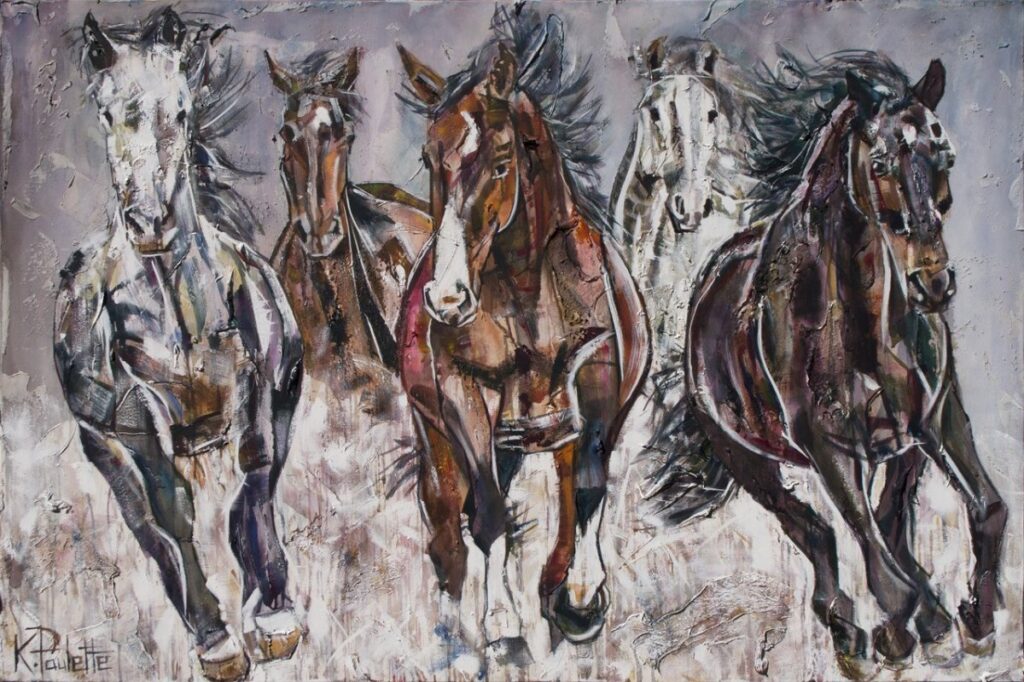
Deciding when a painting is finished is less about logic than listening. Once, while painting live at a fundraiser for a horse retirement sanctuary, Kent told an onlooker that he would finish the piece when it started to rain. Thunder rolled in shortly after. He signed the painting, and it was auctioned on the spot.
That openness to timing, nature and a little magic remains central to his work. Some finished paintings may appear less literal, but those same moments often make them feel more like horses. Accepting that balance has shaped not only Kent’s art but his approach to life as well.
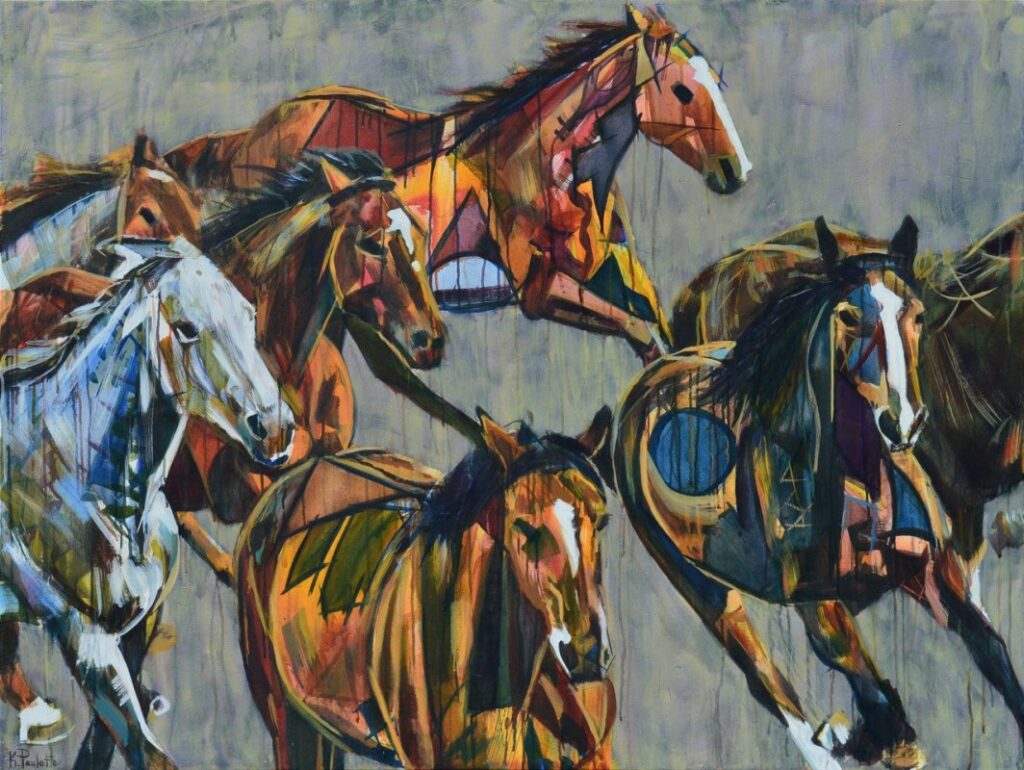
As his audience continues to grow, Kent is embracing larger-scale projects, including an eight-foot-wide horse painting for a villa in Dubai currently in the works. Kent regularly donates paintings to horse rescue fundraisers and gifts works to local nurses and firefighters as a way of saying thank you and supporting their causes.
While running horses have long dominated his work, Kent is interested in painting horses at rest, exploring their quieter moments while also experimenting with pushing abstraction further, trusting instinct to lead without knowing exactly where it will land.
For Kent, that uncertainty is essential. Like the horses he paints, his work lives between power and sensitivity and is guided by movement and the willingness to let go.
For more information, visit kentpaulette.com
Sign up for our mailing list to stay up to date with all things Sidelines!