
By Annelise Klepper
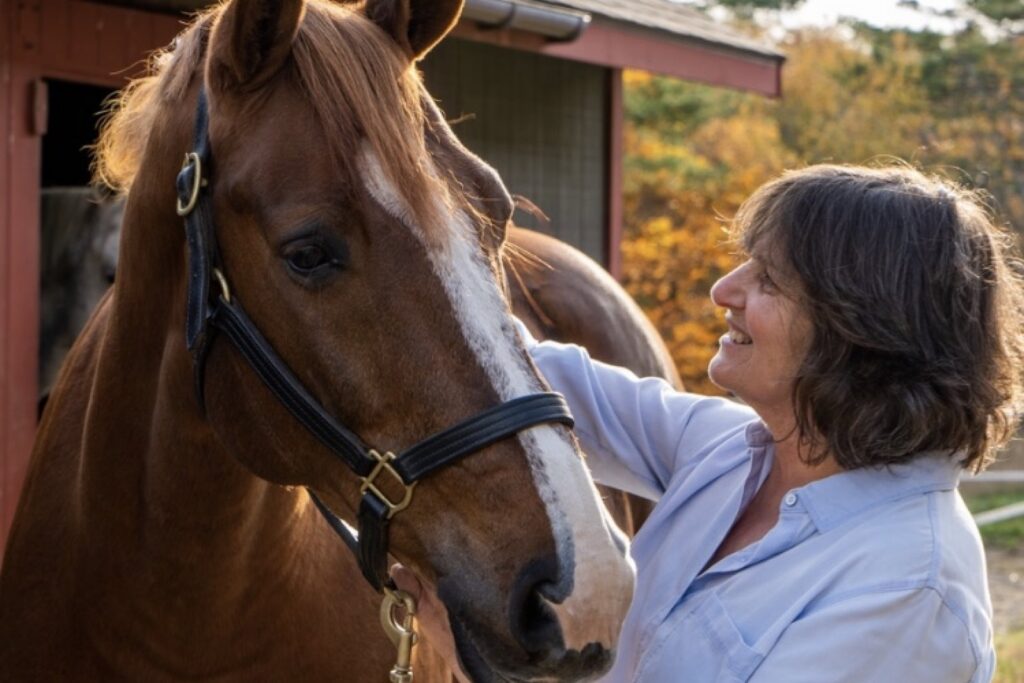
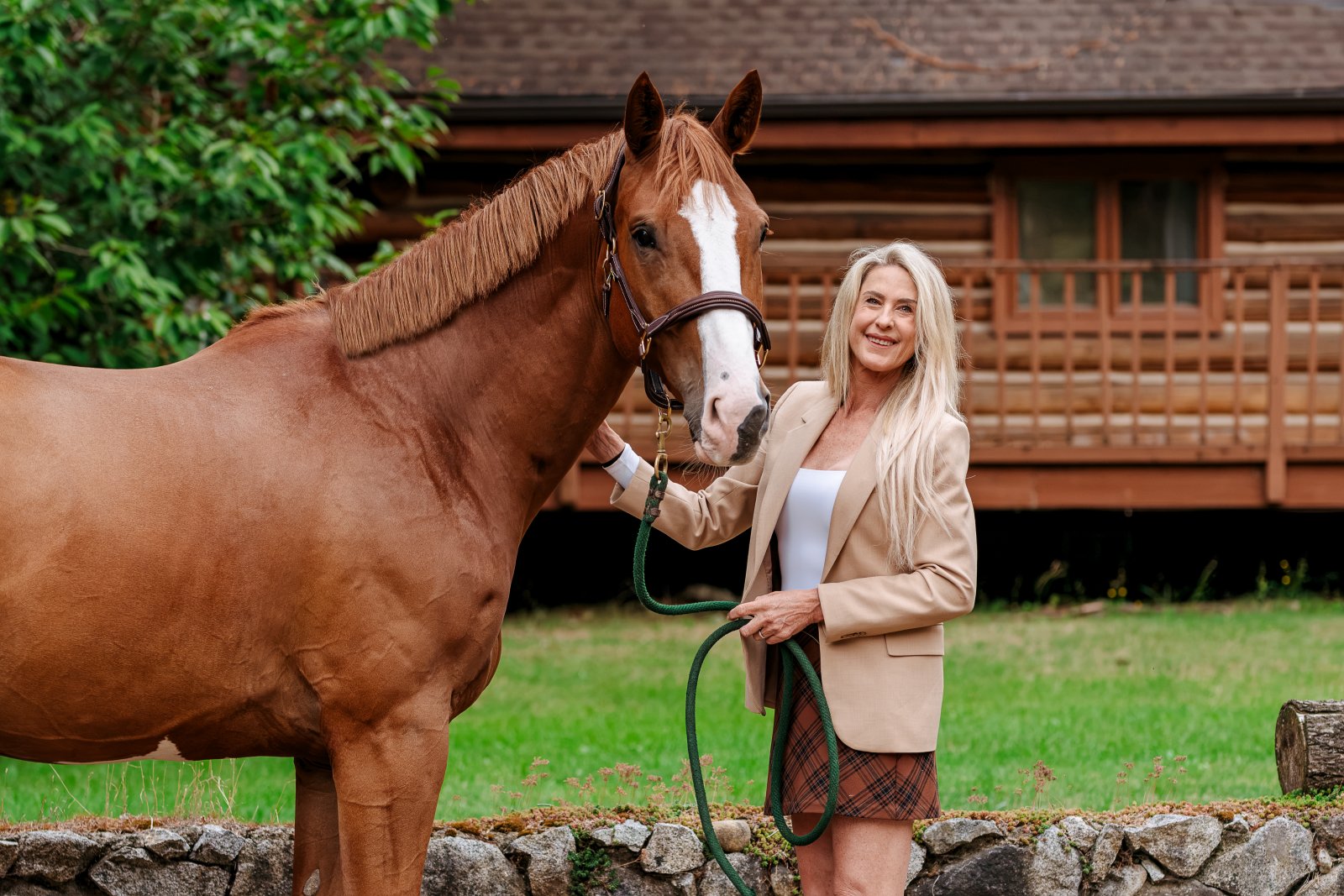
Jo-Ann Wilson never could have guessed that a chance encounter with Jack Meagher, U.S. Olympic eventing equine sports massage therapist who also worked with the highest-level athletes in the NFL and Olympics and even Muhammad Ali, would lead to a career in equine body work. At the time, Jo-Ann was at the top of her field, working 70 hours a week as the director of children and adolescent programs at a major Harvard teaching hospital.
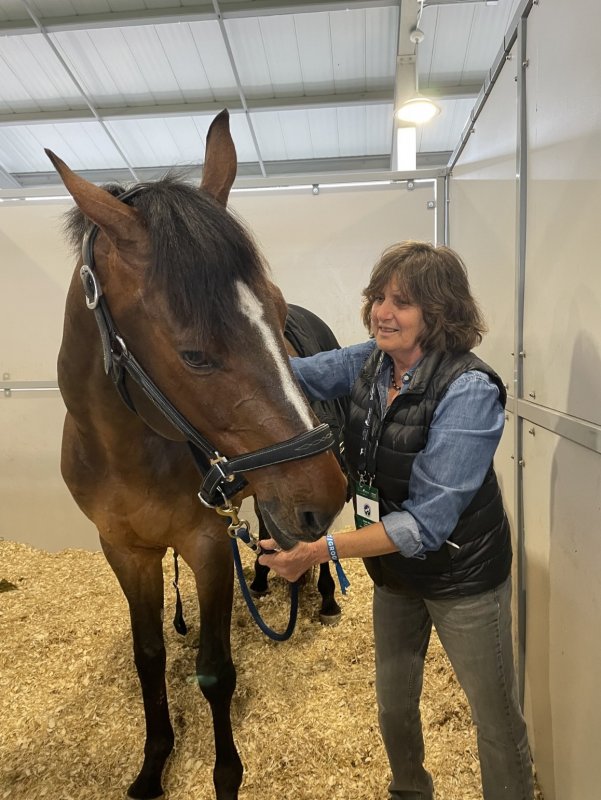
Following the recommendation of a friend, Jo-Ann called Jack to work on her horse. “When I came back out to ride, I was like, ‘Oh my gosh, this horse feels brilliant.’ I called him, and he talked with me, and then I met him. Right after the first session, he completely restored my horse’s ease and freedom of motion.” She was so impressed by the outcome that she wanted to explore equine massage further.
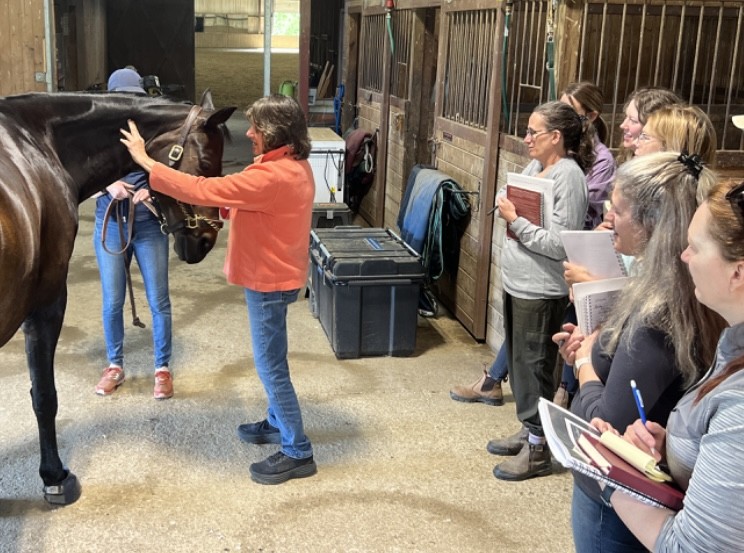
Jo-Ann resigned from her job—“Everyone thought I was insane!” she remembered. She became a licensed human massage therapist, learned the ins and outs of muscle structure and anatomy, and then began studying under Jack. Jo-Ann eventually became his associate and partner, forming Wilson Meagher Sports Therapy together. Building off the foundation of her late business partner, Jo-Ann used her expertise as a rider and medical professional to develop a research-backed, industry-shifting method for treating horses across all disciplines and breeds.
Tell us a bit about equine massage and your journey developing this method. Between Jack’s work and my work, we have 70 years of doing this. I was the principal investigator of a research grant, conducted with the staff from the leading motion laboratory at Harvard University’s Department of Comparative Zoology, so we have science supporting the massage. When Jack passed away in 2005, I was there at his bedside. He said to me, “Jo-Ann, can you do me a favor?” I said, “Yeah, sure, Jack. What is it?” He said, “Will you spread my method throughout the world for me?” It was so profound. So that’s where I am today. I produced a DVD and training videos, and ultimately developed a certification school program. I recently wrote a book, “Keeping Horses At Their Best: A Hands-On Guide to Equine Sportsmassage” that combines Jack’s foundational work with my work to offer readers the opportunity to learn how to work on their own horses to eliminate muscle tightness. I lived up to his request and I honored what he did, because he basically brought sports massage into the equine world.
Walk us through what a typical session looks like.A typical session includes three ways to take in information for an assessment. One is a visual observation. I do gait analysis immediately. I watch a horse walk about 75 feet in a straight line away from me and then back toward me.
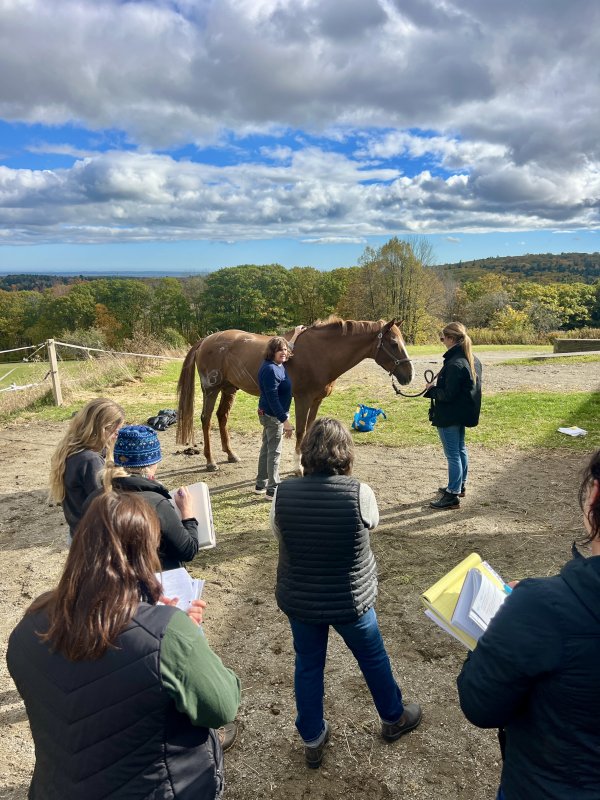
You get the best view of muscle function at the walk. The slower a horse moves, the more muscle he has to use. I’m looking at resistance in motion: Does he look shorter in the left hind? Does his body drift, say, to the right? Does he hold his head and neck in one direction? Is he not free? Is it harder for him to move one limb over another? Is he more labored?
Then the second assessment is to listen. What does the rider tell you? What does the owner or the trainer tell you about the horse? For example, a rider may say the horse is harder bending left, or the horse switches behind, or the horse won’t pick up the correct lead.
Then the third assessment is kinesthetic—feeling with my hands. I palpate the muscles to determine tightness in the specific areas. Basically, what I’m doing is assessing restrictions in motion that are caused by muscle tightness.
Can you give an example?Just the other day, a rider said the horse’s back was really tight, and the horse was traveling with his head up, sort of hollowing his back, and not coming through. The rider was going to have further diagnostics done on his back. I applied the sports massage. Within one minute, the horse’s back was soft and pliable. The rider couldn’t believe it.
How do you make decisions in your bodywork sessions?It’s the results that help you evaluate what you’re doing. If I get immediate results and then the rider rides the horse and the horse feels great, then it was just simple muscle tightness. What was the cause? It could be anything. It could be imbalanced hooves. It could be overtraining. It could be exercise-induced; they did too much one day.
If the tightness doesn’t come out, then it tells you it’s not exercise-induced. It’s a more complicated issue. You just keep it simple. If the horse feels better and the muscle becomes pliable and soft, then you know that’s the right treatment. I always say the correct treatment should relieve the horse in two sessions, and if it’s not better, it’s not the right treatment. Maybe shift gears to a veterinary evaluation, or a farrier or dentist. You’d be surprised. It could be TMJ or a hock issue. Basically, the tightness could be secondary and reflecting a deeper structural issue. It’s a problem-solving process.
What is the most common issue you see across disciplines?I work with all disciplines of horses, from pleasure to barrel racing to five-star eventing to Olympic dressage, whatever it is. The common issue I see across the board is tightness in the neck, because all disciplines require the horse to use his neck in specific movements.
What is a standout moment in your career?I was the USA Olympic Eventing Team Sports Therapist/Physio for all the horses and riders at the 2000 Olympic Games in Sydney, Australia. David O’Connor won the individual gold medal riding Custom Made, and the U.S. team won the bronze medal. I was so honored, ecstatic and privileged to be a strong part of the support staff for the entire team. I was mostly so proud of the riders and horses for their world-stage accomplishments!
What are some challenges you have faced as a woman in this space?It was tough. A man went around to barns and literally told people that women are not strong enough to do this job. Another man undercut me by charging less. Neither man was successful in undermining me! My response was: If women needed strength, they wouldn’t be able to ride these 1,000- to 1,500-pound animals. You have to be somewhat strong, but you wouldn’t be able to ride these animals if strength were the whole story.
What advice would you give to a young woman wanting to follow a similar path?The way I grew up, and what I was told by my parents, is that you can do anything in life, within reason. Don’t let fear stand in your way. I’ve always felt that. You have to believe. If you want something, you apply yourself. You find a good mentor. You have to have discipline and motivation, but you have to believe in yourself, and you have to have a good teacher, one who’s going to support you and not put you down.
Follow Jo-Ann on Instagram @joannwilson_equinetherapy or visit sportsmassageinc.com
Sign up for our mailing list to stay up to date with all things Sidelines!