
By Diana Bezdedeanu
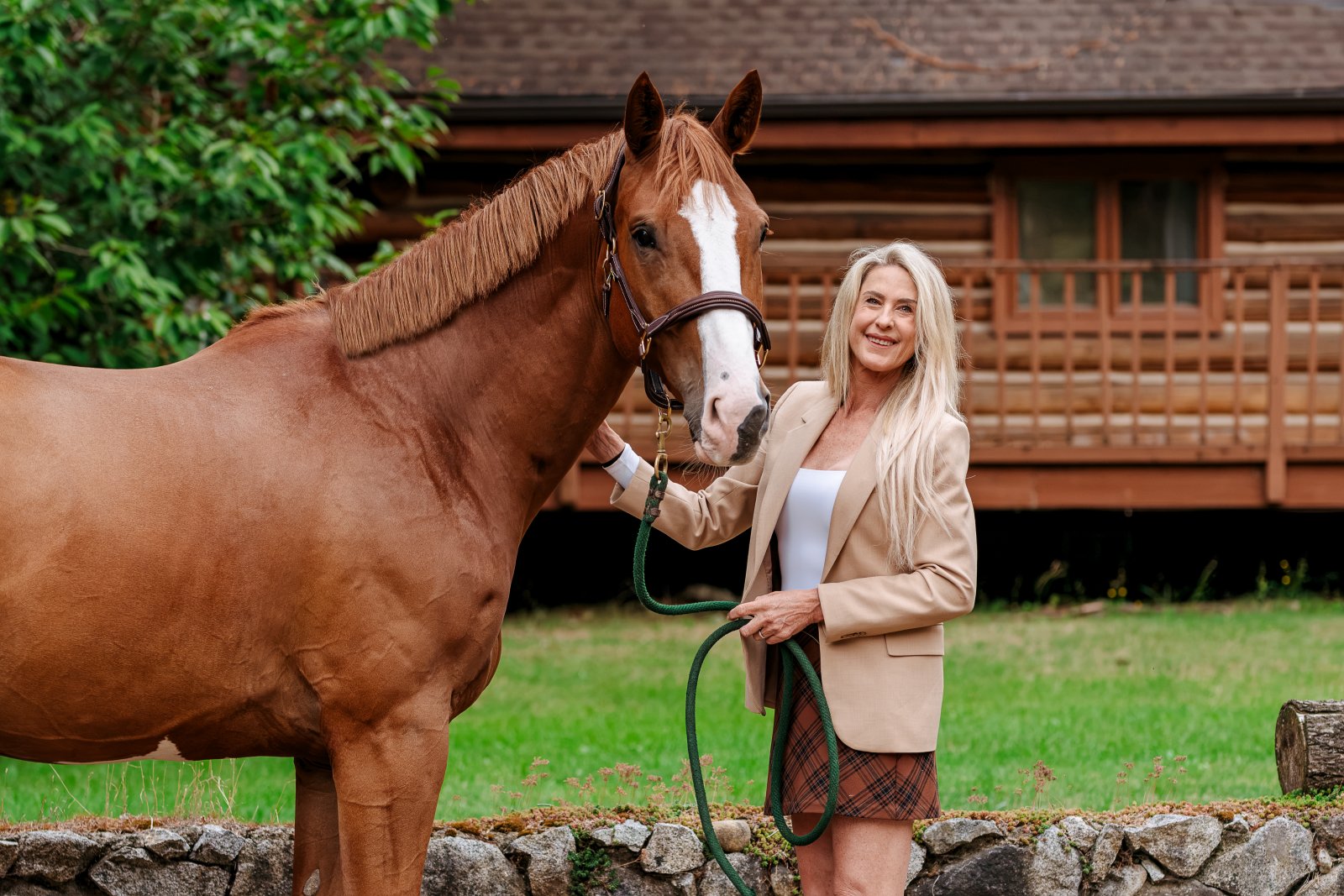
Portraits by Addie Beguelin
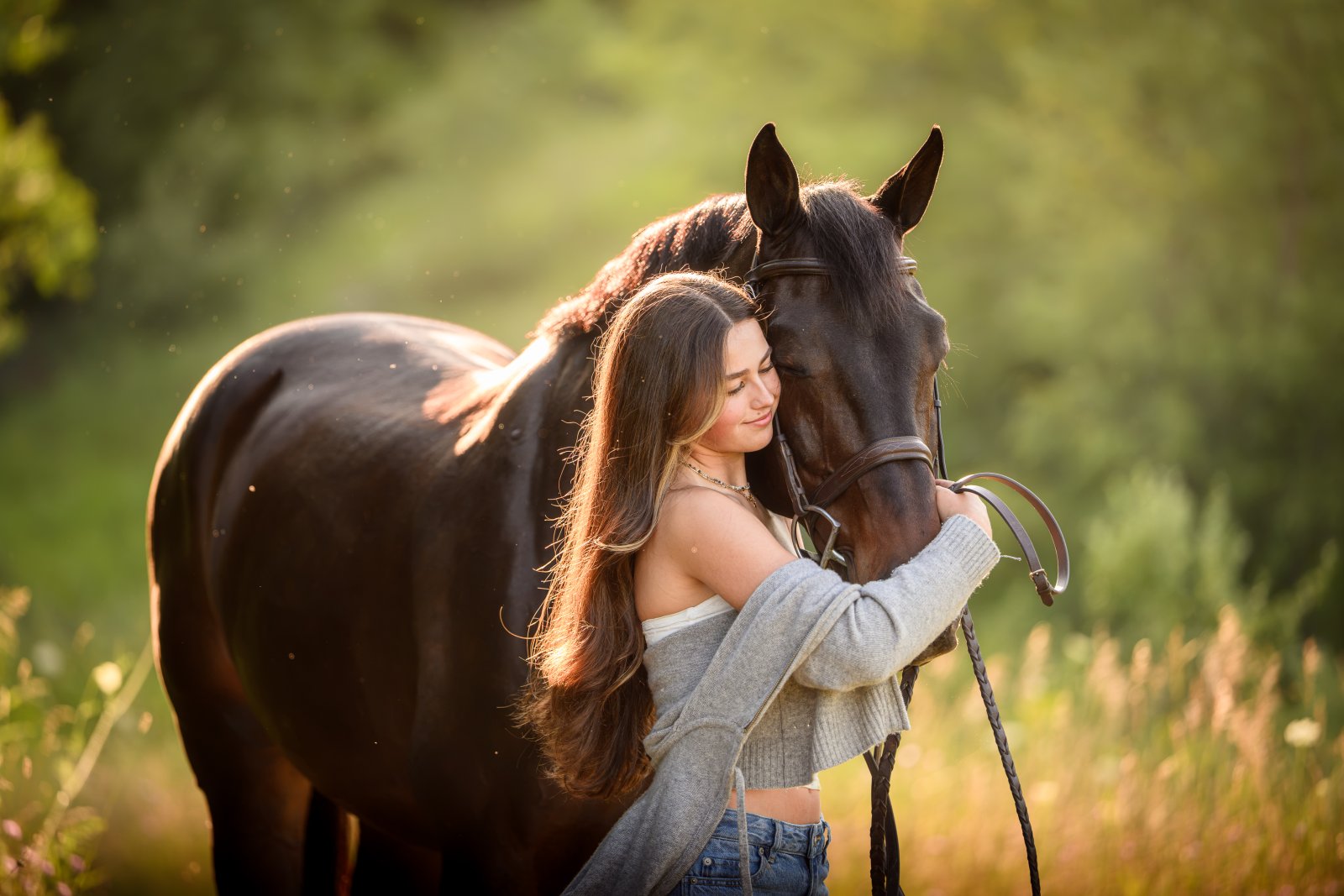
Ariana Cyr’s love for horses began far from the polished show rings she’d one day know—on a small campground pony that sparked a lifelong obsession. “I was probably 4,” the 29-year-old professional recalled with a smile. “I begged my mom to let me take lessons and wouldn’t stop asking until she finally gave in.”
Raised in Northborough, Massachusetts, Ariana didn’t come from a wealthy or well-connected equestrian family. Her parents, both hardworking nurses, taught her the value of grit early on. “I didn’t grow up riding with anybody super well-known,” she said. “I just found my way into 4-H and IEA, competing regularly at Fieldstone and Saddle Rowe.” Most local programs were hunter-jumper focused, and Ariana was instantly hooked. “I’m addicted to jumping—as we all are—but even more so, I love everything that happens on the ground.”
At 18, a seemingly harmless fall left Ariana with two broken legs and months in a wheelchair. “I almost lost my right leg,” she shared. “But as soon as I could, I was back on a horse.” Determined to stay close to the animals she loved, Ariana continued her equine business management studies online while rehabbing and working in barns. A stint out west with Arabian show horses enhanced her patience, communication and natural development skills—“everything I felt was missing in the hunters,” she joked.
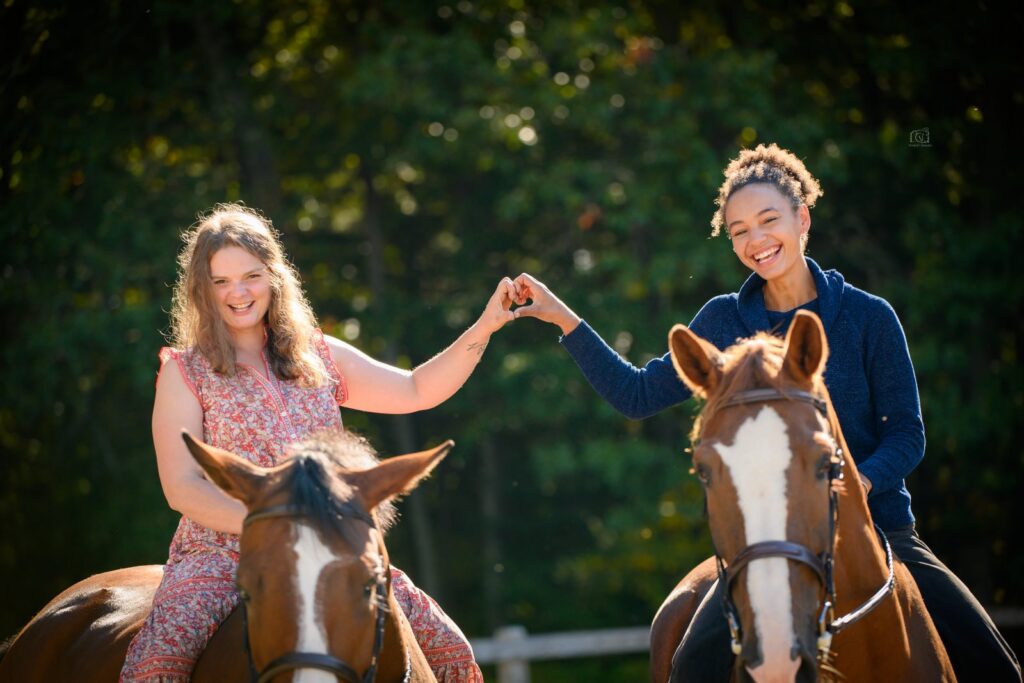
In 2019, while working at a barn in Medfield, Massachusetts, Ariana met Kassandra Cousseillant. “We just clicked,” Ariana said. “We were so like-minded about how horses should be trained and treated.”
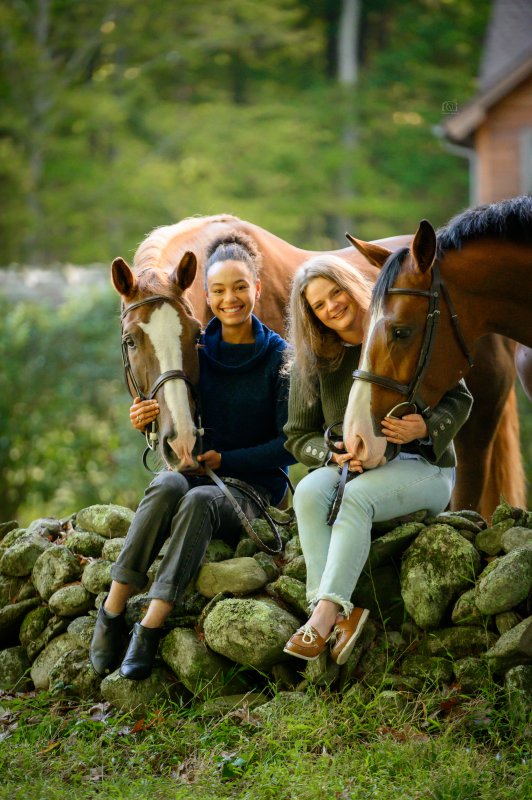
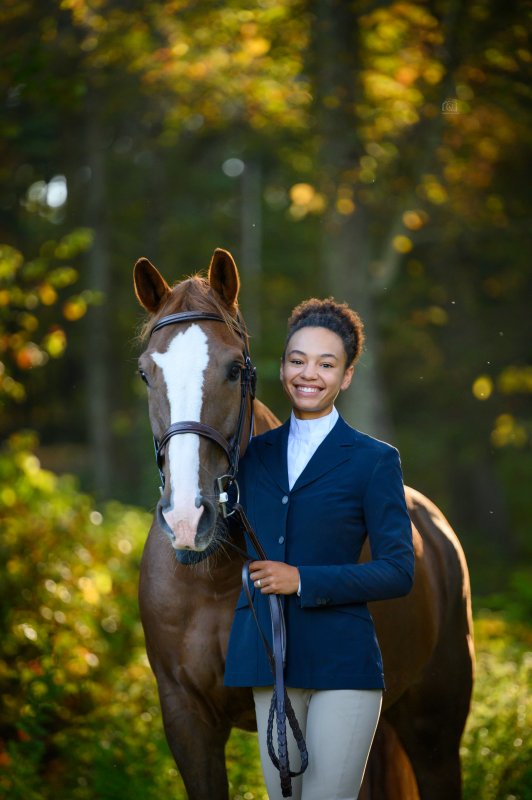
From a young age, Kassandra grappled with the challenges of being a minority in a predominantly white sport, navigating everything from hair comments to subtle assumptions about her place in the barn. The daughter of a Haitian father and an American mother, she often stood out among her peers in ways that went beyond riding style or skill. “As a kid and young Junior, it was very hard to look around and see that nobody looked like me,” she said. “On IEA teams, if I needed to put my hair up in my helmet, I’d go to my mom’s car so I didn’t have to hear comments like, ‘Your hair is so crazy. Can I touch it?’”
Kassandra’s mother was her steadfast ally in the barn, while her father came to understand and respect her dedication over time. Still, Kassandra often felt pressure to perform, worried her abilities might be judged through the lens of her appearance. “I felt like I needed to be as good as possible so people couldn’t write me off because of what I look like,” she said. Now, at 25 years old, that pressure has turned into pride. “There are more Black equestrians in the hunter-jumper discipline now, which is amazing. We belong in this space too.”
Kassandra was encouraged early on toward the equitation ring. “I’ve always been told I have the ideal rider’s build,” she said, “So I was put on the equitation track pretty young. But I’m a sensitive person, and I had trouble managing the pressure.” When she got her horse Aidan, a hunter, her focus shifted. “We tried the equitation stuff a little, but he’d do one rollback and be like, ‘That jump came up way too fast, Mom!’”
When Ariana and Kassandra met, Kassandra was the only hunter rider at her barn, figuring things out on her own. After Ariana shared her love for the hunters, Kassandra was thrilled to finally have a kindred spirit. “Aidan shaped how I thought about horses—he’s very sensitive, and I always felt protective of his emotions. He’d let me know if something didn’t feel right, and I’d adapt to help him feel more confident and comfortable.”
That connection sparked a deeper mission. “I realized I wanted to do this with more horses—help them feel the way Aidan does,” Kassandra said. When she moved Aidan to a barn with a run-out, he was a completely different horse. “I learned firsthand that turnout makes a huge difference. Ariana helped me through the tougher parts, too, like stepping down for him when he needed it. During the COVID-19 pandemic, my mom said, ‘Let’s import a youngster—see what you guys can do!’”
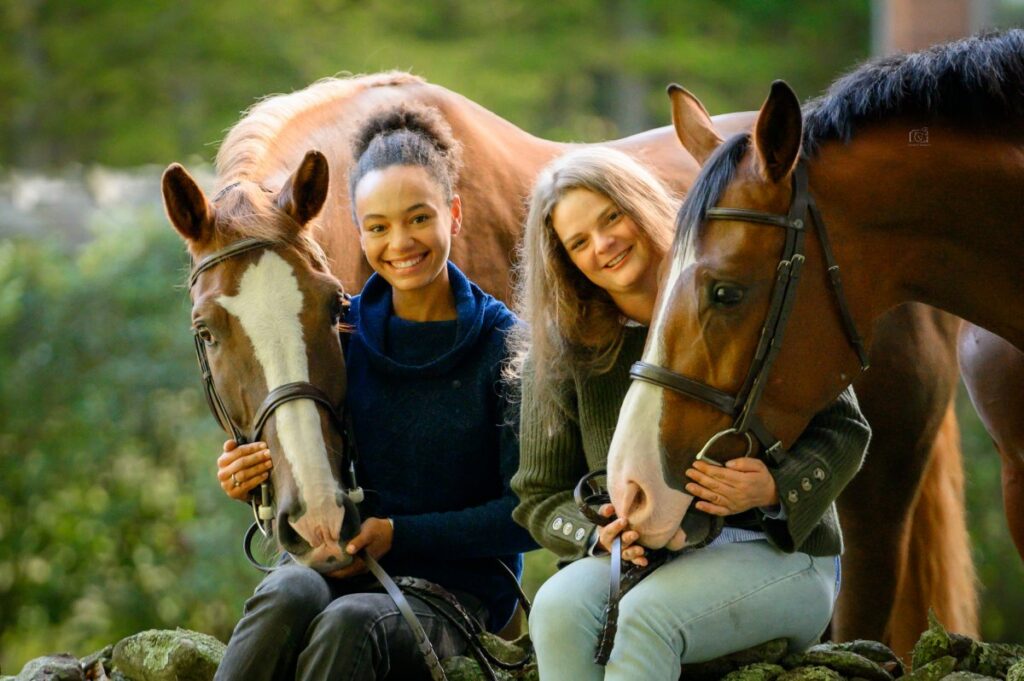
That horse—BRF Brando, aka Beau—arrived from Germany in the spring of 2021, and with him, Black Rock Farm was born. From the start, Ariana handled the operational side—managing the barn, coordinating with the vet and farrier—while Kassandra focused on the horses’ day-to-day care. “She’s always been incredible in the barn,” Ariana said. “She knows every horse inside and out—it’s like she’s inside their brain. We all try to be, but she just has that natural instinct.”
Together, Ariana and Kassandra established a program that embodies their shared values: patience, empathy and long-term development. Their philosophy is rooted in communication and understanding, treating each horse as an individual rather than simply a competitor. “We hold on to our horses longer than most sales programs because we ultimately want them to find the perfect home,” Kassandra explained. “We like to know the horse really well, so we can provide what they need. If they’re happy, we know they’re ready for their next chapter.”
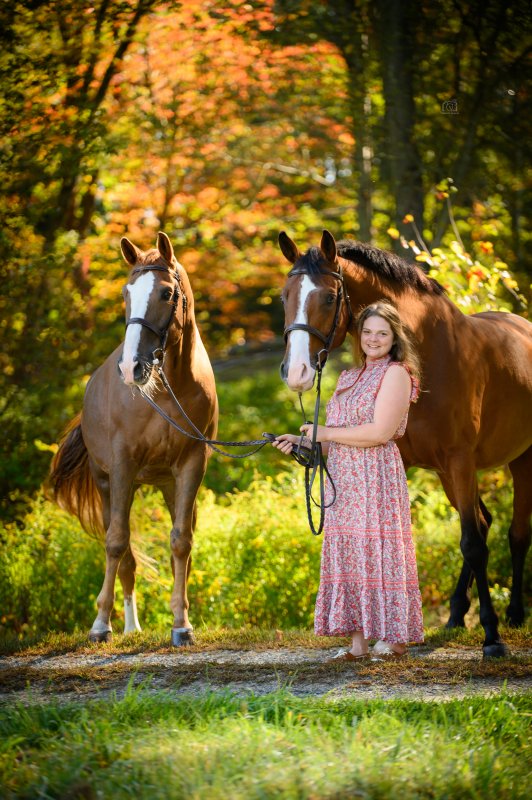
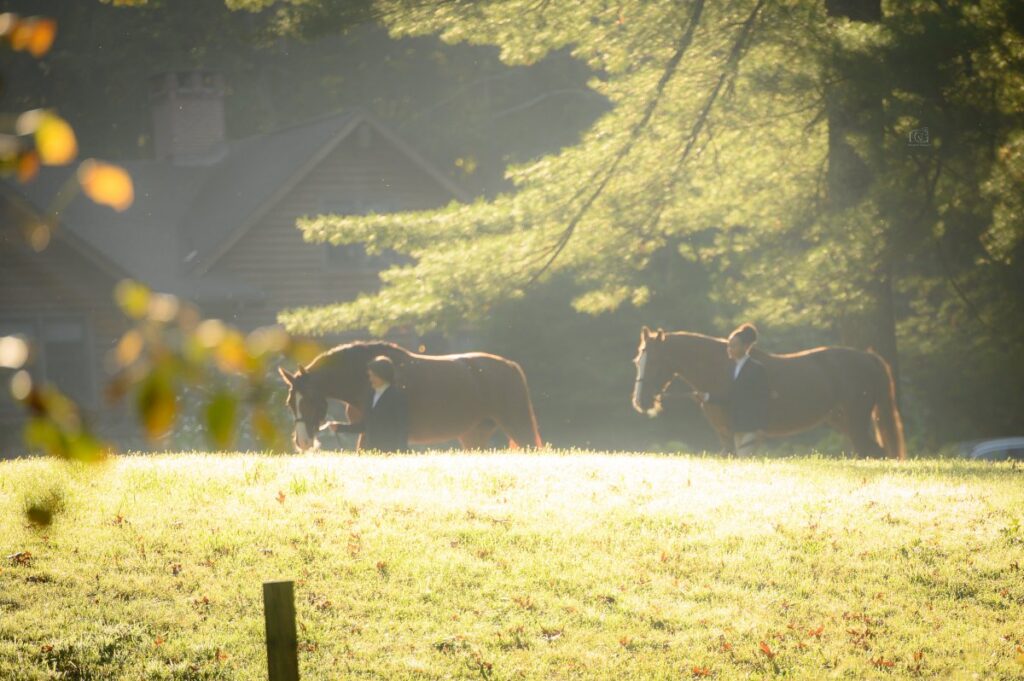
Finding a permanent home for their business proved challenging in Massachusetts, but in December 2021, Kassandra’s mother stumbled upon a 115-acre property in Putnam, Connecticut. The barn was mostly empty, the property a blank canvas. They slowly transformed it into a full facility, with eight stalls and ample turnout space, while remaining hands-on in every aspect of daily care.
“We do things a little differently,” Ariana explained. “Our horses are so young that progress is stepwise—three steps forward, two back, a break, then forward again. It’s slow, methodical, and not quite as glamorous as many programs that we admire.”
At Black Rock, Ariana and Kassandra are unapologetically old school. “The horse world has strayed too far from some traditional practices,” Ariana said. “When we’re not at shows, our horses are outside a lot. Most have run-outs, and the ones that don’t are out 18 to 20 hours a day. In nicer weather, sometimes 24 hours. The rule is more out than in. Turnout makes a huge difference in temperament.”
Ariana emphasized that progress isn’t always measurable by ribbons or lead changes. “Clients often want hard evidence, like horse-show results or automatic lead changes. We define success differently—a horse that walks calmly onto a wash rack, loads on a trailer without stress and maintains an even temperament day after day. Those markers are less tangible, but they’re fundamental.”
“We pump the brakes when we see a young horse jumping perfectly in a show,” Kassandra added. “We ask, ‘What’s happening behind the scenes? Are we protecting this horse for longevity?’ Our biggest goal is the horse’s long-term well-being. With Aidan, I wish I had known more as a Junior—he could have had two or three extra years of a happy, healthy career. Now, for the talented young horses in our barn, we’re careful not to bring them to peak too soon. Confidence, comfort and longevity always come first.”
Ariana admits that building her own program from scratch hasn’t been easy. “I took a break from the hunter-jumper world when I first went Pro, and honestly, that held me back in my confidence as a trainer. When I stepped back in, I was constantly comparing myself to other Professionals my age and feeling behind. People care far too much about USEF records—where trainers have shown, what they’ve won, what horses they’ve had. They don’t look behind the scenes. That’s me—I take pride in the careful, thoughtful development of my horses, not my accolades. The past two years have been a roller coaster for me, confidence-wise, seeing the top of the hunter sport. But I’m proud and happy because I know I’m doing right by my horses.”
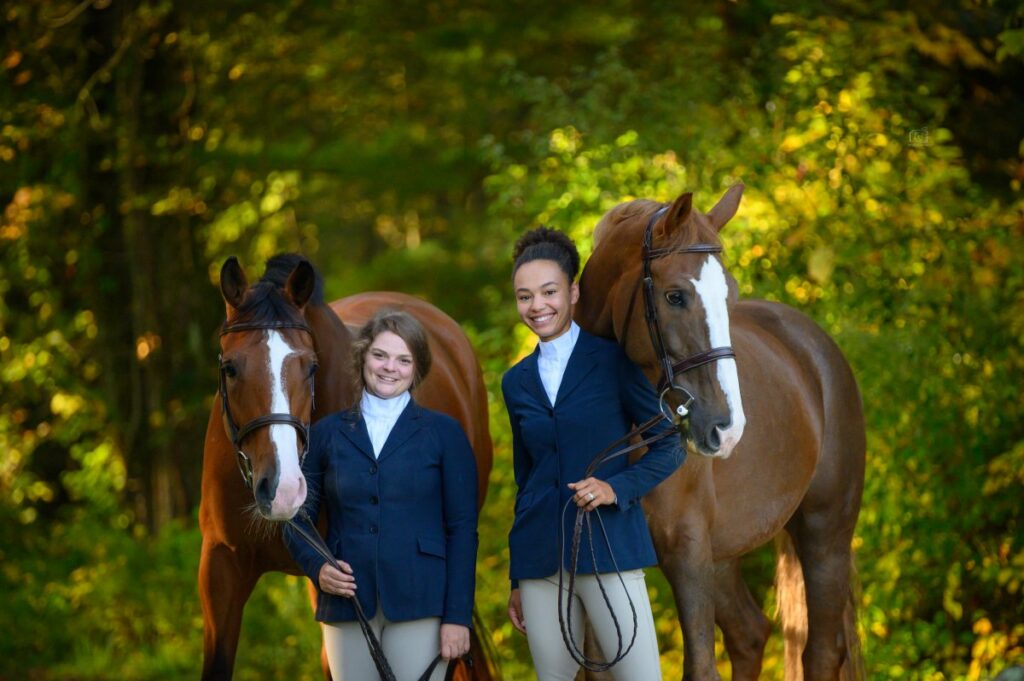
Ariana also shared that the lack of peer support in the early stages of building a business was isolating. “As a ‘non-well-known’ Pro, the support from other Professionals can sometimes be non-existent. I do have a good trainer friend, Ali Lepore, who owns CloverHill Equestrian Center in Berlin, Massachusetts. She shares her students with me for bigger shows, while her focus is more grassroots. That collaboration has been amazing. But for a long time, I didn’t have anyone to turn to for advice.”
Despite the challenges, Ariana’s love for the horses keeps her in the business. “I could have zero dollars in my bank account every day, and I’d still be happy because I look out the window and see our horses,” she said. “My childhood dreams came true—literally.”
Black Rock Farm currently houses a blend of retired, personal and client-owned horses. Aidan and his pony companion, Ice, now enjoy well-earned retirement, while Kassandra’s current show partner, BRF Rockwell—known around the barn as Norman—has quite literally grown into himself. “When he first came over from England, he was such an ugly duckling,” Ariana said. “When we pulled him out of the field, he was still growing and figuring himself out.”
Their patience paid off. After a quiet winter off due to the lack of an indoor arena, Norman returned to work in March—and by April, he and Kassandra had already qualified for the National Horse Show Adult Equitation Final. The pair went on to finish in the top 24 of the NHS Adult Eq Championships, 22–35 division, at the Kentucky Horse Park in 2025.
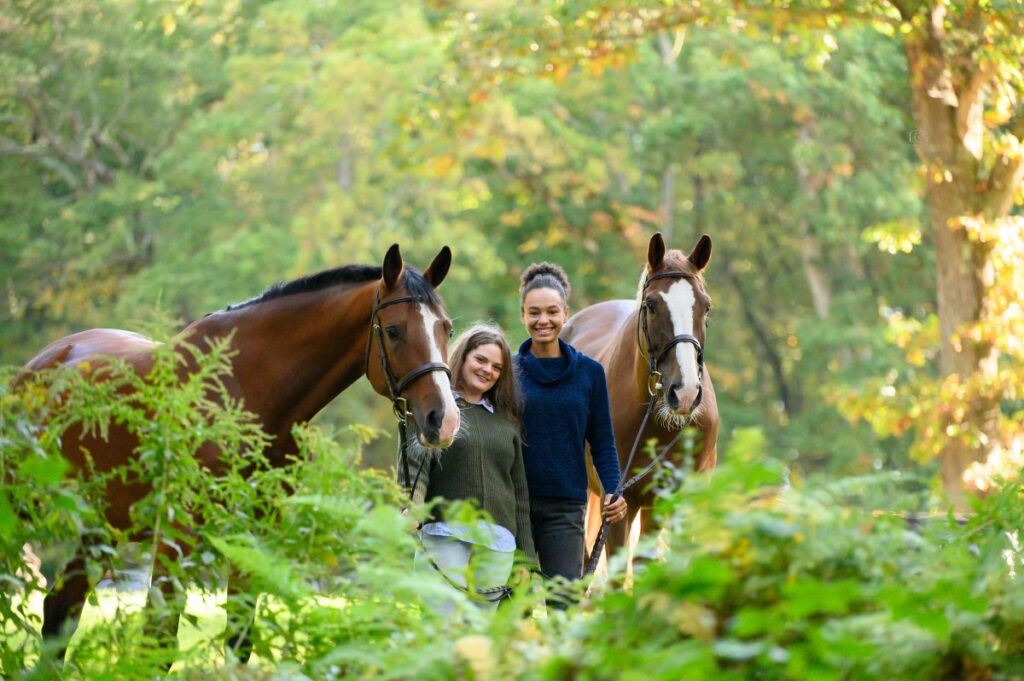
Beyond their personal horses, Black Rock Farm’s stalls are filled with a carefully curated mix of developing and client-owned mounts, each brought along at their own pace. Nico, affectionately dubbed their “rescue import,” arrived with physical and mental baggage and has been slowly rediscovering his confidence under the duo’s patient guidance.
Two client imports—BRF Calena E, aka Nina, and BRF Grand Sonata, or Sonny—have become fixtures at the farm. Nina, a German import from last winter, shows exceptional promise but is being brought along gradually to preserve her confidence and longevity. Sonny, who returned to Black Rock after recovering from neck surgery, has flourished under their care. “His owner always said he was happiest here,” Ariana noted, adding that the farm’s generous turnout and relaxed environment made all the difference. That individualized approach extends to every horse, including a young hunter prospect owned by a Boston-based client who visits each weekend. The pair’s shared belief in slow, thoughtful development has made the partnership a natural fit.
At its core, Black Rock Farm reflects Ariana and Kassandra’s shared vision: a low-pressure environment where horses are understood and developed thoughtfully. “Success always follows a happy horse,” Ariana concluded. “If they’re happy, everything else comes.”
Follow Black Rock Farm @blackrock.farm on Instagram & Facebook
Photos by Addie Beguelin, starlitimages.com
Sign up for our mailing list to stay up to date with all things Sidelines!