
By Diana Bezdedeanu
Portraits by Elliott Ralph
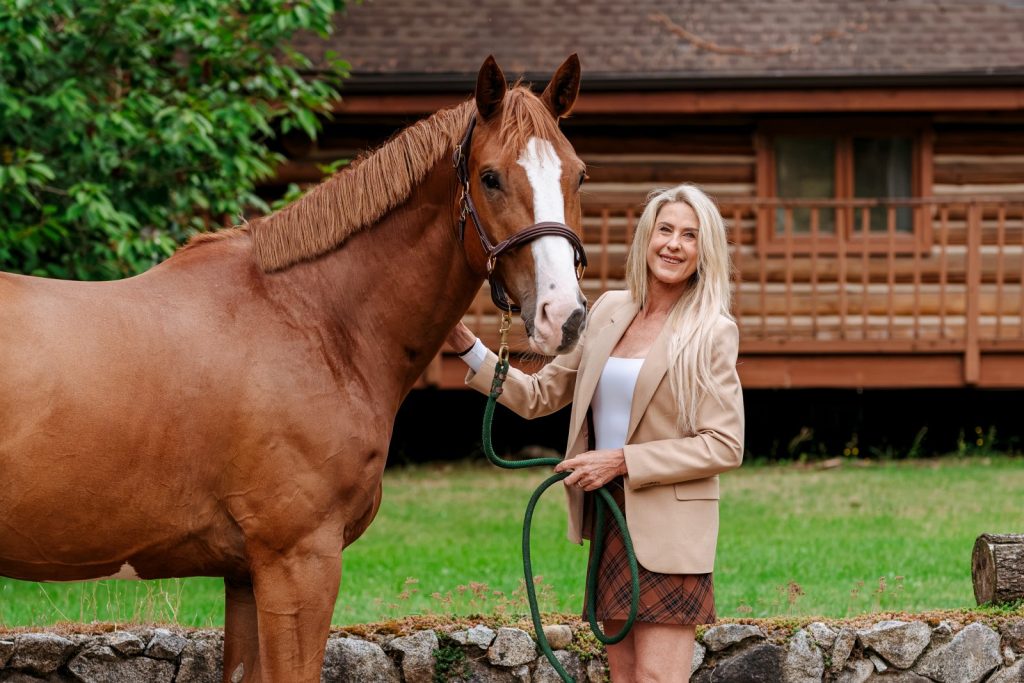
Karen O’Neal could barely walk when she approached the start box at the 2026 Defender Kentucky Three-Day Event. A week after clinching the CCI4*-S win at Twin Rivers, an accident while training a young horse left her with a crushed tibia and multiple shattered ribs. For most riders, a debut CCI5*-L would have been out of the question. But Karen iced her injuries and refused to scratch.
"I went into Kentucky pretty beat up, to say the least," Karen admitted. "I was hoping each day that my leg would feel a little bit better. I got through dressage in quite a bit of pain, and then I kept icing to prep for cross-country.” When Saturday morning rolled around, she chose to ride. "I said to my team, ‘We’re going to give it a go. The adrenaline might kick in. If I feel anything bad or unsafe, I’ll pull up.’”
While she ultimately pulled Clooney 14 after he backed off the first water jump, just making it to the Kentucky Horse Park after injury proved her legendary grit. Entirely self-made and fiercely independent, competing at Kentucky fulfilled a more than 40-year-long dream, after completing her first international event as part of Young Riders. “Clooney clearly knew I wasn't 100%," Karen continued. “I didn’t have the leg or the core to support him the way he needed, and I knew right then that I had to pull up. It was absolutely a bummer. But it was the right thing to do for the horse."
Karen's independent approach to the sport was forged early. Born into a horse-centric family in California, she was riding before she could form memories and competed in her first show by age 3. Because she was exceptionally tall, she was entirely self-sufficient by age 4—tacking up her own pony and scrambling to keep pace with her teenage siblings. By 7, she was spending every other weekend riding a string of family ponies across gymkhana, jumping and Western classes.

This multidisciplinary foundation evolved into formal training at age 8, when Karen split her weekends between eventing and hunter-jumpers. Her natural talent caught the eye of George Morris, but because her family couldn’t afford premier equitation mounts, she became the ultimate catch-rider. Karen navigated medal finals on client horses, rode her aunt's cutting horses and created her own event horse who doubled as a working hunter. At 14, she had won the Area 10 Preliminary Eventing Championship and earned her Pony Club "B" rating. "I’ve never had a horse come to me that has been made," Karen said. "I brought my top horse up to the four-star level with hardly any lessons."
When high school ended, Karen turned down multiple college volleyball scholarships without a second thought. "I always knew I wanted to be a horse trainer," she said. "I had been working as a trainer since I was 16, so I just went right into it.”
To fund that dream, she took medical transcription courses at a local community college on the side. After marrying young, Karen moved to Sisters, Oregon, where she built her first training business. Though she maintained her love for the show-jumping ring, the wide-open spaces of the Pacific Northwest allowed her to return to the eventing world, producing four horses from scratch up to the Advanced level. Eventually, Karen moved north to the Seattle area. After a divorce, she remarried and established her current base in the Snoqualmie Valley.
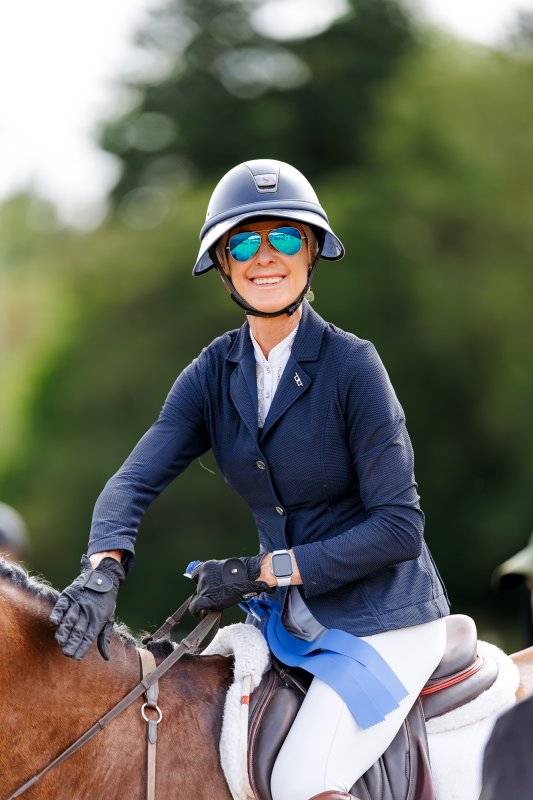
Today, she balances a few short-term vacation rentals with her husband while working as a freelance trainer across the Pacific Northwest. It was in this chapter of her life that her path crossed with Clooney 14. Karen was helping her longtime client and close friend, Annika Asling, search for a safe mount to ride at the Preliminary level. Operating on a modest budget, they weren't planning a European buying trip, so Karen spent hours vetting sales videos. "I am very, very picky from a video, especially if we’re not going to go try the horse in person," Karen explained. "I said no to dozens of them. Then I saw Clooney. I instantly looked at him and said, ‘Get that one. There is something special about him.’"
Clooney was an unbroke 3-year-old, located through a contact at a small breeder's property in Germany. They took the gamble and shipped him across the Atlantic. Karen backed the young Westphalian gelding and rode him through the lower levels. Later, when Annika stepped back to focus on her growing family, she handed the reins over completely. "He can spook pretty hard, and it can be a little scary when that happens," Karen said. "I think that made her a bit nervous, especially once she started having kids. So she told me, ‘You take the ride.’"
What makes Clooney remarkable is his dual personality. While he is a powerhouse capable of answering upper-level technical questions, he retains the gentle soul of a backyard pet. "He is the kindest, sweetest animal," Karen said. "Annika's children crawl all over him. She can push a stroller right up next to him and he will just stand there perfectly safe. It’s incredibly rare for an upper-level event horse to double as a family pet. And he does the Grand Prix and Hunter Derbies with me too."
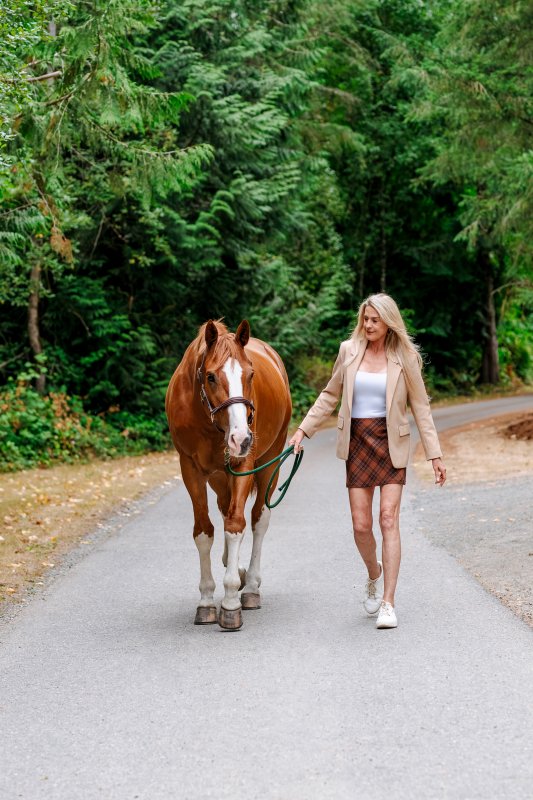
Training an upper-level warmblood out of a backyard comes with specific hurdles. Unlike the off-the-track Thoroughbreds Karen rode earlier in her career—like her former Advanced mare True Avenue, a $500 track find who was a cross-country machine—Clooney requires a complex fitness routine. "True Avenue gave me the most confidence because I don't think I ever had a cross-country penalty on her; we made the time almost every single time we left the start box," Karen said. "But Clooney is a warmblood, and he is very tricky to get fit. That has been one of the hardest things I’ve had to learn. I don't want to ride a horse into the ground every day just to get his wind up, so finding that balance of how much break we can take, and how much conditioning he needs is a constant puzzle. When I go to ride him, there are often loose cows [Annika’s family brings in a herd of cattle each year] roaming around the backyard while I try to train. I have to set my own fences, pack my own footing and just figure it out. It’s primitive, but we made a four-star horse out of it."
At the end of last year, the pair captured a victory in the CCI4*-L at Galway Downs, securing their qualification for Kentucky. The setback at Kentucky hasn't slowed Karen down, though it has sharpened her focus. Her next major target is the CCI4*-L at Rebecca Farm in Montana this summer, an event she chose intentionally based on close observations of her horse's physiology. "I brought Clooney to Rebecca Farm quite a few times and he definitely doesn’t have as much stamina there as he does at sea level," Karen said. "The altitude takes a massive toll on him in the long format, which is a factor people talk about constantly with human athletes, but rarely discuss with horses. You have to listen to what they are telling you."
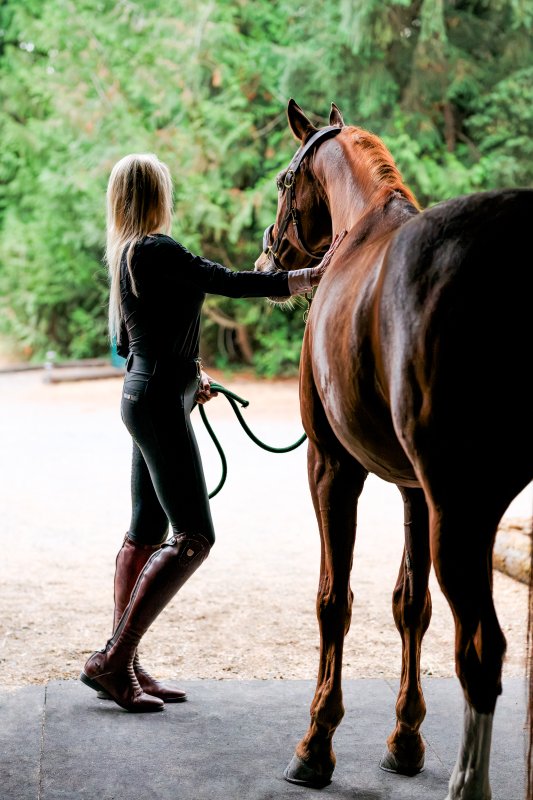
Listening to the horse is the cornerstone of Karen's training program, which she operates alongside her daughter. Their logistical footprint is staggering: this past winter, they traveled to California with 28 client horses. At a recent event at Aspen Farms—a venue Karen has competed at since its very first show—their team brought 35 horses. To manage a client base that large, Karen relies on a teaching philosophy that her students describe as hard but fair. “I want everyone to do well, and because of that, I am never going to tell a student ‘Oh, that was good’ when it wasn't," Karen said. "I’m going to push them until they get it right. They are paying me for my expertise, so I’m going to do the absolute best job I can. Throughout the years, I’ve had to experiment to figure out how different people learn, because nobody teaches you how to teach when you become a professional."
Part of that education involves stripping away emotional clutter and superstitions. Karen doesn't believe in lucky charms or rigid show-day routines, choosing instead a hyper-focused pragmatism. Her only ritual is a personal double-check of her equipment. "I will adjust my saddle maybe three times before I get on," she said. "It doesn’t matter if Annika or one of my highly trusted grooms got him ready—I go around and personally readjust everything. I check their feet myself to make sure they are picked clean and that the studs are exactly what they need to be for the ground. It stems from growing up with old-school trainers who taught me that you—and only you—are responsible for the animal under you. You can never blame your mom or your groom if your bridle is on backwards."
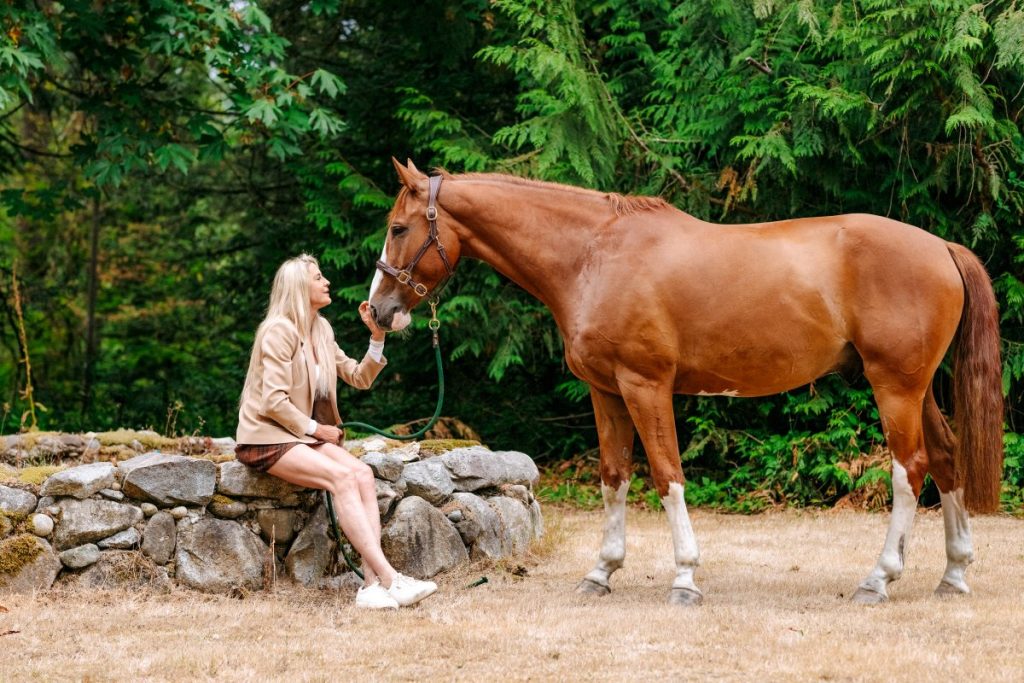
The sport of eventing has shifted greatly since Karen first stepped into it as a teenager. She has watched Thoroughbreds give way to warmbloods, the dressage phase skyrocket in technical importance, and safety standards evolve. She has even embraced the modern digital landscape, utilizing virtual platforms to teach remote lessons. Perhaps the most profound evolution in Karen's life, though, is her definition of success. In an industry notorious for burnout, she has built an intentional wall between the barn and her personal life. When the boots come off, she practices yoga daily, takes high-intensity spin classes with her daughter, hikes and mountain bikes through the Snoqualmie wilderness, and goes camping with her husband. She has three children—two grown sons and her daughter.
"For a long time, when my kids were little, I sacrificed spending time with them to try to be at the very top of the sport," Karen said. "Being a professional rider takes a massive amount of time away from your family and looking back, I used to carry that regret. But I’ve gotten better as I’ve gotten older. I’ve realized that I don’t have to ride every single day of my life to maintain my identity. I can step away and enjoy life. Horses are incredibly important, but they are not everything."
As she looks toward the future—with plans to head to South Carolina or Florida this coming winter to escape the Washington freeze, and a supportive husband encouraging her to import a few young German horses of her own to develop—Karen isn't chasing anyone else's standard of excellence. "Just because someone is doing a five-star doesn't mean they are a better rider than someone who is doing Training level," Karen concluded. "It’s just a reflection of where you happen to be in the process. We all have an immense amount to learn about these animals. The secret is never blaming the horse, being fair to them and enjoying the process of training them to be the absolute best version of whatever they are meant to be."
Follow Karen on Instagram @karenonealeventing or visit karenoneal.com
Photos by Elliott Ralph Photogaphy, Instagram @elliottralphphotography, unless noted otherwise
Sign up for our mailing list to stay up to date with all things Sidelines!