
October is Breast Cancer Awareness Month, but the habits that actually protect you matter long after the pink ribbons come down. As the fall show season ramps up, the women who make this industry run—riders, trainers, grooms, barn managers, vets, moms juggling all of the above—are busier than ever. Between early departures for the show grounds, back-to-back client rides and a schedule that rarely leaves room for a doctor's appointment, it's easy to let your own health slide down the list. That's exactly why it's worth pausing for a reminder: about 1 in 8 women in the U.S. will be diagnosed with breast cancer in her lifetime, and early detection remains the single biggest factor in a good outcome. Catching something early takes far less time than a lesson, a lunge session, or a hack around the property—and it could make all the difference.
Between early mornings at the barn and late nights at the show, it's easy for women in this industry to take care of everyone and everything before they take care of themselves. The good news: Staying on top of your breast health at home is simpler than you may have been taught.
If you grew up hearing that you should do a formal, step-by-step breast self-exam every month, the guidance has changed. Major U.S. medical organizations—including the U.S. Preventive Services Task Force, the American College of Obstetricians and Gynecologists and the American Cancer Society—no longer recommend routine structured self-exams for women at average risk. Studies found that monthly, method-based self-exams didn't lower breast cancer deaths, and they led to more false alarms and unnecessary biopsies.

What has replaced it is called breast self-awareness. Rather than following a rigid monthly routine, the goal is simply to know what's normal for you—how your breasts usually look and feel—so you notice when something changes. You can build that familiarity in everyday moments, like in the shower or while getting dressed. Some asymmetry and changes across your cycle are normal; what matters is anything that's new or different for you.
What to watch for: a new lump or thickening in the breast or armpit, nipple discharge, changes in the skin such as dimpling, redness, or puckering, a change in size or shape, or new or persistent pain. Self-awareness doesn't replace a clinical exam or a mammogram, but if you notice any of these changes, don't wait it out—call your provider.

Breast self-awareness and mammograms work together, not one instead of the other. A mammogram can find cancers long before they can be felt, which is why Dr. Jill Hechtman, OB-GYN with Ringside Health, recommends that women begin screening mammograms at age 40 and have one every year. While some guidelines allow screening every other year, annual mammograms give you the best chance of catching a cancer at its earliest, most treatable stage. Women with a family history of breast or ovarian cancer, a known genetic risk, dense breast tissue or other risk factors may need to start earlier or add other types of imaging—which is exactly the kind of conversation worth having with your OB-GYN, rather than guessing on your own. If you're not yet at mammogram age, an annual woman’s wellness visit with a clinical breast exam is still an important part of catching changes early and understanding your personal risk profile.

Yes. This is one of the most common questions we hear, especially from women with dense breast tissue who have been told they need a breast ultrasound. An ultrasound is a valuable tool: It can see through dense tissue more clearly and is excellent at telling whether a lump is a fluid-filled cyst or a solid mass. But it is an add-on to a mammogram, not a replacement for one.
The key reason is calcifications. These are tiny specks of calcium in the breast tissue, and certain patterns of them can be the very earliest sign of breast cancer—sometimes the only sign, appearing before any lump forms. Mammograms are very good at picking up these calcifications, while ultrasound often misses them. Each test sees things the other can't, so if your provider recommends an ultrasound, keep your yearly mammogram on the calendar too.

If you've never had one, or it's been a while, it's normal to feel a little nervous about the machine itself. Dr. Jill Hechtman recently walked through exactly what a mammogram looks and feels like in a short video on Ringside Health's Instagram—showing the equipment, the process and why it's far less intimidating than most women expect. It's worth the two minutes: watch here.
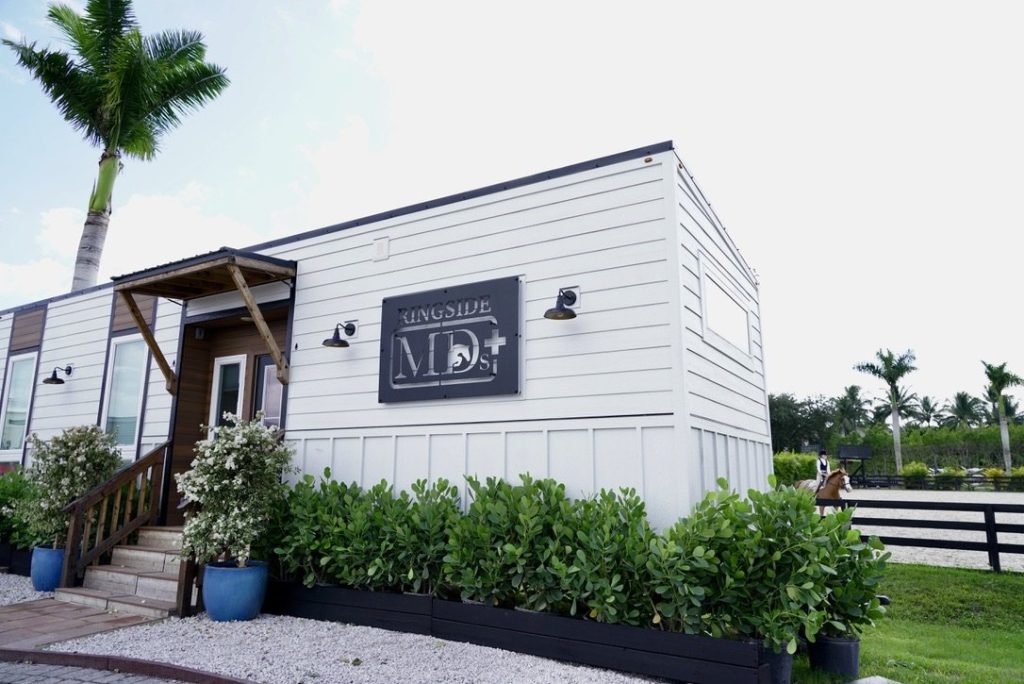
Ringside Health was built around the demands of the equestrian lifestyle, and women's health is no exception. Dr. Jill offers full women's wellness exams on-site at the Wellington location so you can take care of this between rings instead of carving out a separate day off the property. For riders, grooms and horse show families who are traveling or based elsewhere, telemedicine appointments are available to talk through screening schedules, family history and any other women's health questions that tend to get pushed to the bottom of the list during a busy season. Either way, there's no need to wait until the season winds down and no need to navigate it alone.
Whether it's your first mammogram, your annual woman’s wellness exam, or just a quick conversation about what's normal and what's not, the point is simple: take the five minutes. Your body—and everyone who depends on you being at your best—is worth it.
To schedule an in-person or telemedicine appointment with Dr. Jill Hechtman, call (561) 247-2373, email or visit www.RingsideHealth.com.


Sign up for our mailing list to stay up to date with all things Sidelines!