
By Cecilia Cole
Portraits by Kacy Brown
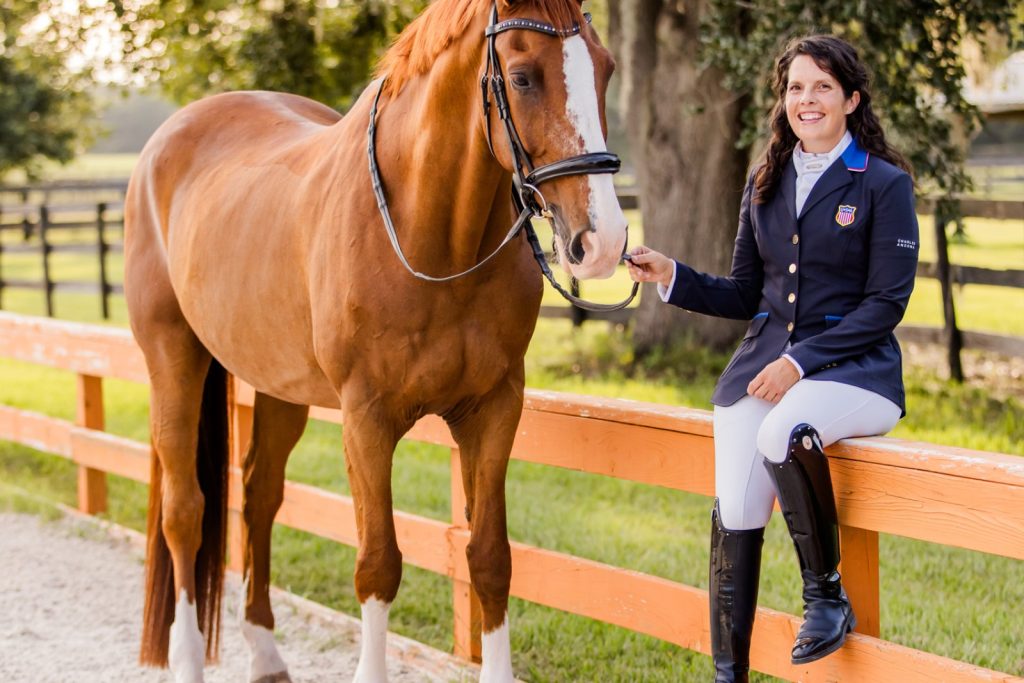
Para dressage rider Hannah Kingsley knows firsthand that life can change in an instant. A veterinarian from North Dakota, Hannah grew up riding horses and competing in a variety of disciplines before finding her way to para dressage following a cerebellar brain bleed, cerebral sepsis and a stroke in 2021. Today, with her horse Eragon VF, aka Danny, Hannah is pursuing her dream of representing the U.S. on the international stage as she works toward earning a spot on the World Championships team.
Over the past year, Hannah and Danny have continued to build an impressive partnership, highlighted by being named to her first U.S. Para Dressage Team, earning the title of 2025 USDF Para Dressage Grade III Champion and receiving an invitation to the 2026 World Equestrian Games Selection Trial in Tryon, North Carolina. Hannah's trainer, Amy Jones, credits much of that success to Hannah's ability to adapt and her commitment to putting the horse first. Amy described Hannah as “extremely sympathetic to the horse,” explaining that she is constantly searching for ways to ride with greater finesse and effectiveness while prioritizing the horse’s comfort, fitness and long-term soundness. Despite the lasting effects of her stroke, Amy said Hannah continually finds new ways to communicate with Danny and adapt to the challenges she faces as a rider.
Amy has also witnessed Hannah's determination outside of the arena. Just weeks before her push toward World Championship selection, Hannah suffered a ruptured Achilles tendon, creating another obstacle in an already remarkable journey. There were times when neither Hannah nor Danny's path forward was certain, but together they continued to progress one day at a time. “To me, Hannah and Danny have already won where it matters,” Amy said.
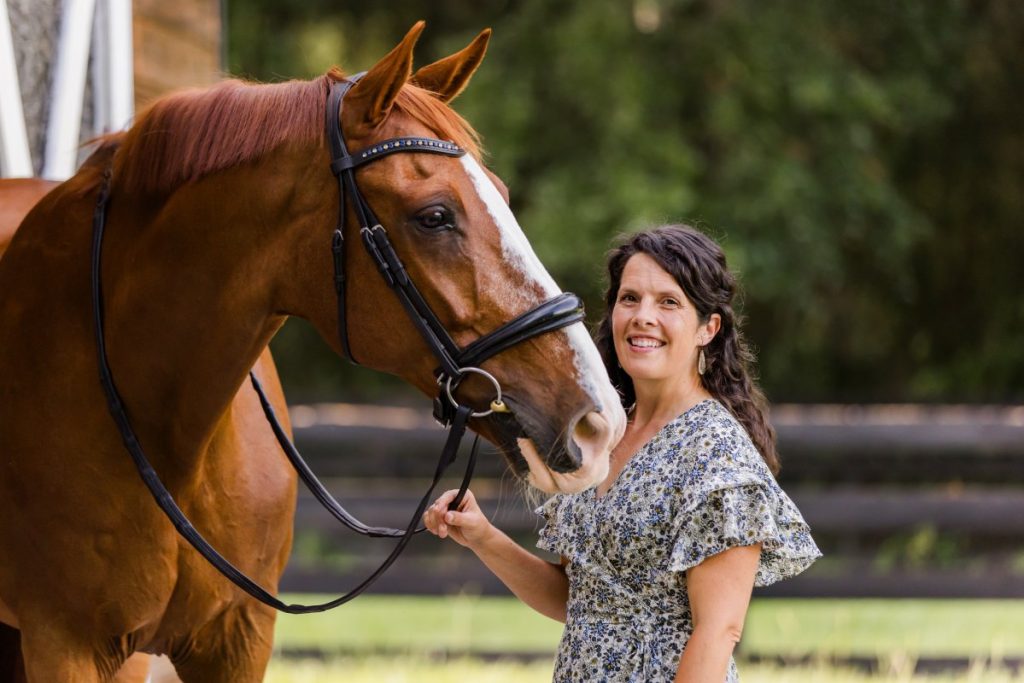
I was raised with horses—they were part of my daily life from a very young age. Initially, we had them to monitor cattle growing up, but that eventually morphed into jumpers, then eventing, and now para dressage.
I was lucky enough to ride before I could walk. My parents had a farm, and my dad would put me on Soxy while he worked. I spent much of my childhood on ranch horses, trail riding, team penning and doing Western fun shows. I was really fortunate that when I was 12, my parents found a great jumper trainer near Canada, and I spent several summers competing in Canadian jumper derbies.
I definitely had the horse bug—I’d rather be with a horse than doing anything else. Being from North Dakota and interested in English riding, I knew I needed more exposure, so I attended St. Andrews Presbyterian College in North Carolina on an equine and academic scholarship.
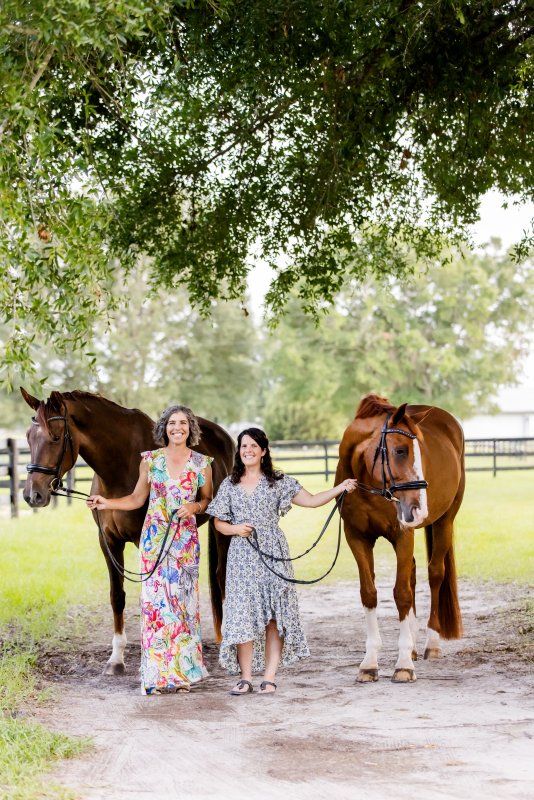
Six years ago, I suffered a cerebellar brain bleed, arteriovenous malformation (AVM), followed by cerebral sepsis. Thanks to my neurologist, therapists, family and friends, I was able to return to practicing veterinary medicine and riding within a few months.
However, my neurologist was monitoring another smaller, inactive AVM, and in June 2021 he told me it was growing and needed treatment. True horse girl fashion, I told him I had entered the Event at Rebecca Farms, so we could do something about it when I got back.
The following week I underwent what was supposed to be a short procedure. Unfortunately, I woke up unable to speak and unable to feel or use the right side of my body. My neurologist said I had a “small” stroke. After time in the ICU and two weeks in a rehabilitation unit, I had to learn a new “normal.” I was wheelchair-bound, had difficulty communicating and had no movement in my right arm or leg.
One of the biggest lessons I’ve learned is that you can push the envelope and change your outcome. While I’ve come a long way physically, healing mentally has been a huge part of my recovery. Working with Betsy Kudinski through Somatic Healing has made a big difference in both my riding and daily life.

Eragon VF, aka Danny, is my horse. I leased him for three years and was able to purchase him in October 2025.
Before I got him, he had been retired in a pasture for two years. He has a huge personality and absolutely loves to show—he lights up at competitions and enjoys showing off. He has so much knowledge and has really shown me the ropes. I rely on him tremendously, but I’ve also been able to give him another opportunity to compete as an FEI horse.
After my stroke, Henriette Borst, whom I knew through veterinary colleagues, took my eventing horses to lease out and sell. Several months later, my mother and I visited her, and her horses helped me rediscover my love of riding. I was fortunate enough to lease her jumper mare, Latina, who became my first para horse. Latina gave me wings and allowed me to begin my para dressage career.
Through Henriette, I met Cynthia Screnci, who allowed me to lease Danny and gave me a preview of international para dressage.
My current trainer, Amy Jones, has opened both her farm and her wealth of knowledge to help Danny and me become stronger mentally and physically. Her understanding of horse-and-rider biomechanics has helped us immensely.
I’ve also been fortunate to work with an incredible team, including Janek Vluggen, Michelle of The British Touch, and Kimberly Peverell of Empulse Training, who have helped Danny and me continue to improve and grow stronger.
It’s a huge honor and privilege. It gives me a greater purpose, and I hope it provides a larger platform to share my story with others. It reminds me to stand for the core values of inclusivity, equality and respect for all people and athletes.
Last fall at the Tryon CPEDI, Danny and I really stepped into a different level of partnership and feel. Other highlights include being named to my first U.S. Para Dressage Team, earning the title of 2025 USDF Para Dressage Grade III Champion, and being invited to the 2026 World Equestrian Games Selection Trial in Tryon, North Carolina.
As I work toward earning a spot on the World Championships team, my biggest goal is simple: no matter what, the horse comes first. I want Danny and me to continue getting stronger together as a team.
My biggest dream is to represent the United States in para dressage at LA28. I also hope to continue my dressage career while expanding my veterinary knowledge and learning more about craniosacral therapy.
Para is parallel, not paralyzed.
There is a wide range of classifications, from Grade 1 riders who are the most affected to Grade 5 riders who are the least affected. The horses are incredibly special. They need Olympic-level gaits but also exceptional minds. Many of them must adapt to different aids depending on how much use a rider has of their legs or hands.
The partnership with the horse is one of a kind. The connection and feel you can create together is amazing. To me, dressage is about using small aids, even body language, to create significant changes in your horse.
I enjoy spending time with my horse, relaxing in the ocean on a boat, snorkeling, and taking my boyfriend spearfishing.
If someone gives you a box, push the envelope. You can do whatever you put your mind to!
The body can recover in amazing ways, but remember that healing your mind is just as important as healing your body.
Photos by Kacy Brown, kacybrownphotography.com
Follow Asquare Equestrian on Instagram @asquaredequestrian
Sign up for our mailing list to stay up to date with all things Sidelines!