
By Laura Scaletti
Portraits by Isabel Kurek
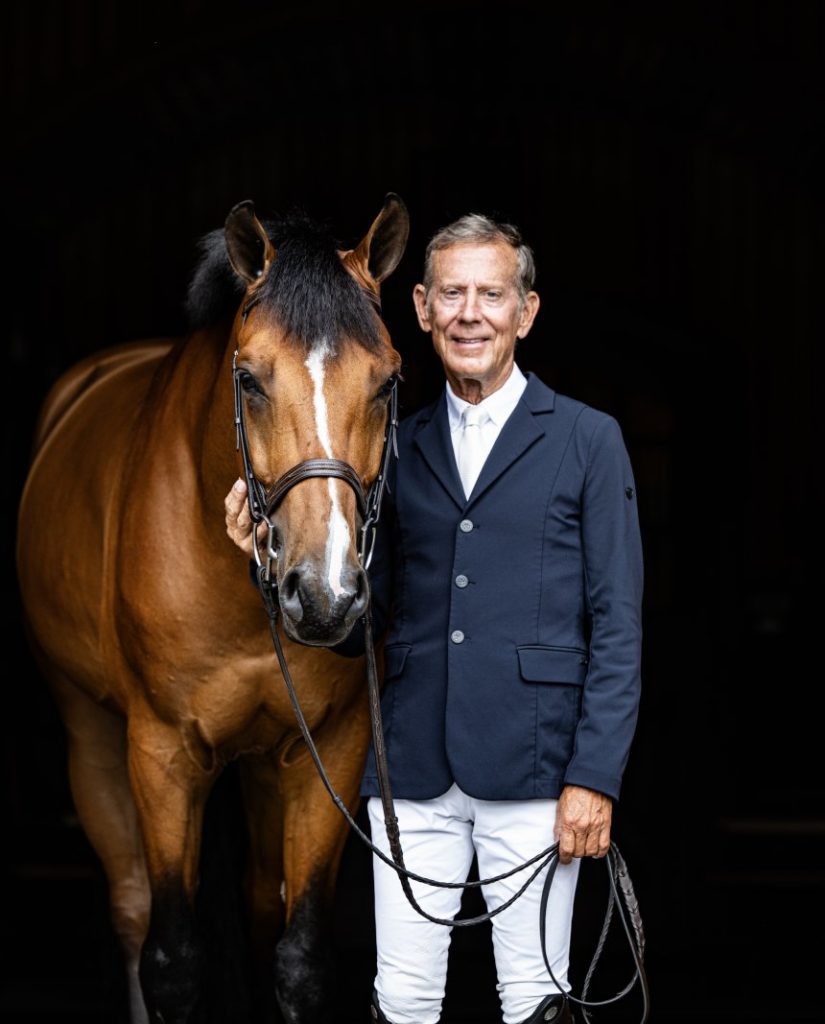
For more than four decades, John French has built a career on feel, patience and a rare ability to bring out the best in any horse he rides. Students know him as a gifted trainer; competitors and spectators admire his quiet command in the show ring; and owners trust him to make decisions that protect each horse’s future.
But when John thinks about the legacy he hopes to leave behind, ribbons, rankings and accolades aren’t at the top of his list. Instead, he measures his success in doing what’s best for each horse in his program.
“I want to be known as someone who was really good at finding the right path for the horse and doing it the right way, so the horse ended up with a good career,” John said. “Because all of us could go either way. I could have gone either way. Most people could go either way, the right path or the wrong path. The same is true with horses.”
Long before he became known as a magician in the show ring, John developed his love for horses outside of Baltimore, Maryland. “I spent my childhood riding out in the fields, riding cross-country, jumping field to field, foxhunting, doing Pony Club and hunter trials,” he said. “There’s so much more to being a horseman than just riding and showing. My foundation instilled the importance of getting to know my horses and ponies and being hands on.”
The time outside the ring helped John develop his feel and eye. “Out in the field, you’re not always riding on flat, even surfaces. This helps you learn about the kind of balance you need to ride to a jump and find the right distance. That, along with needing more pace to jump natural jumps cross-country, definitely helped me as far as developing an eye,” John said.
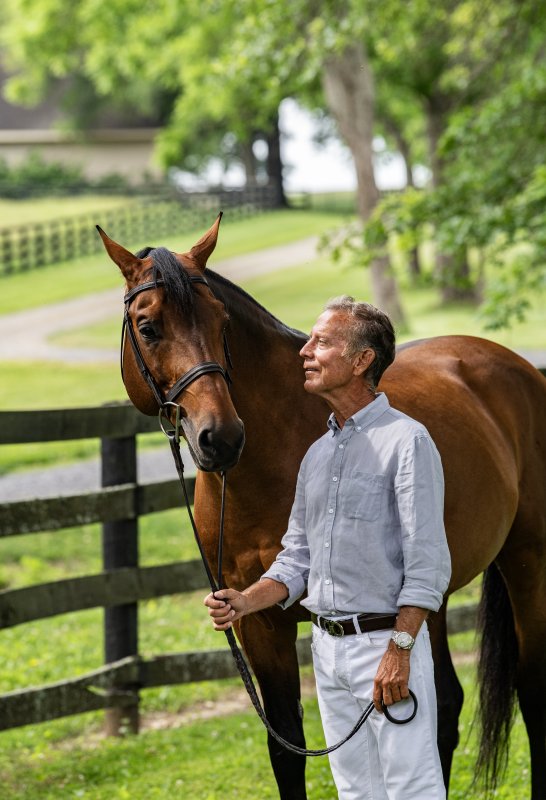
John didn’t just develop his skill as a child, he developed a true passion for horses by being a hands-on horseman. “The love for horses and knowing your horses well are what keeps you striving to do it throughout your career. I think that love is the big reason why I’ve stayed in it so long,” he said.
During John’s teenage years, his family moved to Columbia, Maryland, where his mom, Jill, managed the Columbia Horse Center and taught lessons. Serving as John’s first trainer, Jill was very tough on him. “If I made a mistake, when I came out of the ring Mom wasn’t telling me, ‘Too bad you messed up, better luck next time’,” he said. “If I fell off, it was, ‘Get back on, and what are you crying for?’ Then I’d just get back on and keep on going.”
While her approach could be demanding, the lessons she imparted stuck. John learned about responsibility, discipline and the importance of putting the horse first. If something went wrong in the ring, blaming the horse was never an option.
Though John had the benefit of Columbia Horse Center hosting schooling shows where he was often able to show the boarders’ horses, he soon got the itch to go to bigger A-rated shows. As John attended the bigger shows against George Morris’ Hunterdon students, he was struggling to understand why he and his 15.2-hand Palomino horse couldn’t win in the Junior Hunters.
“I was getting very discouraged and started to go down a bad path because I wasn’t happy. Showing at the big shows was what I wanted to do, but I knew we didn’t have the financial resources or kinds of horses to be competitive at those shows. I decided to take a step away from shows for a while and just focused on riding, working at the barn, cleaning the stalls and riding on the trails,” he said.
During John’s hiatus from showing, he sent in a photo to Practical Horseman for the George Morris critique feature that was in each issue. As he was cleaning stalls at the barn, he learned his photo had ended up in the magazine.
“I went and read the critique. George wrote that my hair was way too long for the show ring and my horse was not a very great jumper, but he was very complimentary of my riding. At the end of his critique, he said, ‘All in all, this is the best example of classic hunter seat equitation I’ve ever seen’,” John said. “So, I thought maybe I could do this if I had a different horse.”
Wanting to give showing a go again, John asked a friend at Columbia Horse Center, Ann Page, if there was any way he could ride her horse. Ann agreed, and John began putting in the hours to practice on his own.
All of John’s hard work culminated at the Maryland Equitation Finals. “I was 16 years old, had just gotten my license, trailered the horse to the show, braided him myself, trained myself and won. That win gave me the boost I needed to know that I could really do this. After that, people started to notice my hard work and gave me horses and ponies to catch ride,” John said. “If I hadn’t gotten that positive critique that pushed me to try again, I wouldn’t be here as a pro today.”

As soon as John aged out of the Junior Hunter division, he took a job with Daniel and Brian Lenehan in Southern Pines, North Carolina. “This opportunity helped open doors as I started off as a professional. I was riding, grooming and doing everything for different professionals like the Lenehans, Patty Heuckeroth and Gary Kunsman,” he said.
At 25, after spending several years working for others, John decided he was ready to open his own business. He moved to the area he loved the most, Bucks County, Pennsylvania, and slowly began building a program of his own.
“I had three horses at the time and was looking for a new Amateur horse for a client. I asked Pam Hall, who was from California and I had met at Patty’s, if she knew of any suitable Amateur horses. I set up a trip and before I flew out there, she asked if I’d be able to show some horses while I was out there, because their trainer was in the hospital,” John said.
Always one to say yes, John happily agreed. “I thought this was a great opportunity to go to California, try horses and make extra money. The trainer, Patrick Rostrom, had 15 horses going to the show and there was nobody to show them. While I was at the show, we found out Patrick was in the hospital because he had been diagnosed with full-blown AIDS,” John said.
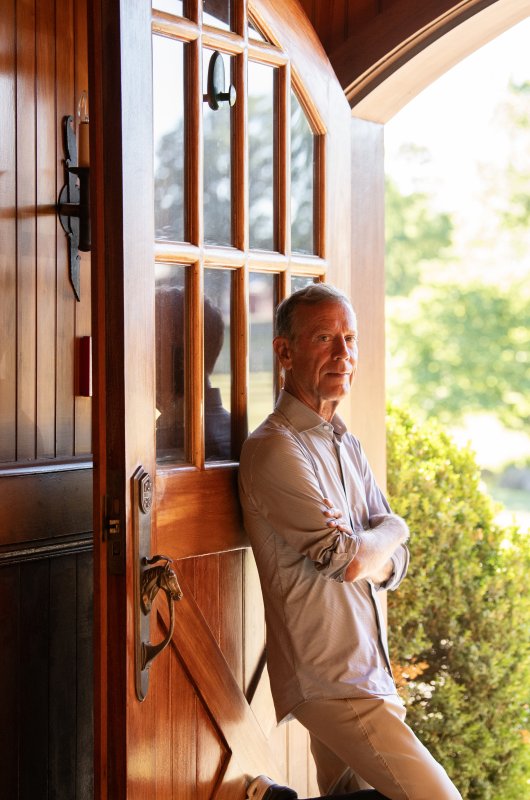
For several months, John would commute back and forth from Pennsylvania to California to show for Patrick’s clients. “Eventually they asked me if I’d move to California to be their trainer. I ended up moving there in 1987 and was there for over 30 years,” he said. “I had to figure out how to do it all on my own there, but it ended up being a great move for me. I’m not sure if I had stayed on the East Coast, I’d have been able to build up a business as quickly as the one I took over.”
With the barn in Northern California and most of the shows the barn attended in Southern California, John wasn’t always able to rally large amounts of customers to make the trip. “I would go there with a few of them and to make extra money, I’d do some catch riding for other trainers in the south,” John said.
At the height of John’s catch riding, when he was showing horses for Sandy Aston, Archie Cox, Liz Reilly, Corinne Bevis and more, John was doing 50 to 60 rounds a day at horse shows. “I appreciate all the horses they gave me to ride. Thanks to those catch rides and some of my own clients, I was able to come back to the East Coast and do some of the bigger shows while being active on the California circuit,” he said.
In the late ’90s, the barn John was working out of was sold. As John struggled to find another barn that could accommodate his 25 horses, one of his clients, the Mendez family, asked if he’d be interested in working exclusively for them. “I’d never really thought about doing the private training thing and this client was more into doing the jumpers, which I wasn’t doing at the time. But, I thought, I don’t really have many other options, so I decided to do it,” John said.
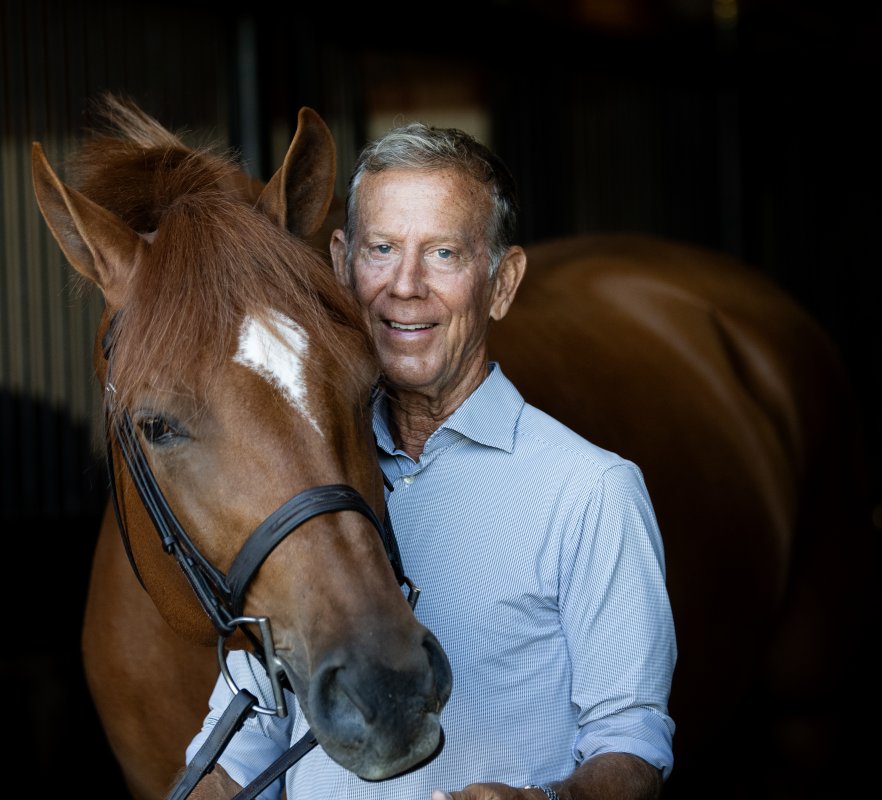
Shortly thereafter, while at a show, John spotted a young jumper who caught his eye. “He was just doing the schooling jumpers. I told my clients, ‘If I wanted to do jumpers, this is the kind of horse I’d like.’ They ended up buying the horse for me and we named him Millennium,” John said.
The next year, John was the Pacific Coast Horse Shows Association (PCHA) Rookie Grand Prix Rider of the Year. That was just the beginning of the duo’s success. They represented the United States on Nations Cup teams in Great Britain, Belgium, Spain and Sweden, competed at the 2003 World Cup Finals, qualified for the 2004 World Cup Finals and were one spot away from making the team for the 2004 Athens Olympics after selection trials.
“It was a different kind of feeling for me, because normally I go into the ring and I try to relax the horse. People say I’m kind of a human tranquilizer. But in the jumpers, it’s more fast paced,” he said. “I thought, God this is so hyper!”
With an initial goal of trying to see how far he could go in the jumpers, John more than made his mark going from Rookie of the Year to Olympic trials in five years. Though he was having success in the jumper ring, John missed the volume of rides he was accustomed to in the hunters.
“Going to some of the bigger shows in Europe, you could only take two horses and a lot of times you’d only show in two classes a week. I got bored not being able to ride as much and ended up leaving that job and going back to my own business again. Riding at that top level in the jumpers, you have to mostly focus on your own riding and not train others on the same day,” he said. “I was really happy for that experience, but ready to come back to the States and do a little bit of everything again.”
Before John switched his focus back to his beloved hunters, he began running into Kent Farrington at the jumper ring. While in Spruce Meadows, John ended up buying a horse, Thunderball, from Kent for his clients.
“I’ve always admired Kent as a rider and how he was able to have such a successful program at a young age. I sat down and talked to him once and asked him how he runs his operation, gets such top-quality horses and focuses on his riding,” John said. “He just had a focus of where he was going and how his program was going to work. It was very impressive that he had the business side figured out so early on.”
Back in California, John resumed his catch riding. Looking for an area of California where he could provide more turnout for his horses, he decided to move to Paso Robles. At the time, there was a grand plan for the area to grow into a more horse-oriented community. “I thought I’d get in early and buy a farm, be able to buy and sell horses because so many people were coming into the area for these horse shows. That plan for a new horse show circuit fell apart and I just ended up doing a lot of catch riding at that point,” he said.
After three years of trying to make it work in Paso Robles and a few accidents that occurred while catch riding, John realized he was getting to an age where he couldn’t keep getting on horses he didn’t know. “I wanted to try to develop my own business with clientele and focus on my own students. I ended up moving to Seattle, where my friend, Lauren Crooks, let me work from her barn,” he said.
Ironically, John found himself back in California for horse shows as there weren’t many opportunities to show in Washington, so it was either travel south to California or cross the border and compete in Canada. That fall after spending the summer in Seattle, John got a call from Kent.
“Kent told me he heard I’d left California and wanted to know if I wanted to work with him. I’d just moved to Seattle, had just bought a house, I didn’t want to relocate again. Undeterred, Kent told me, ‘Let’s talk about it some more when you get to indoors. We can meet up then,’” John said.
That chat at indoors intrigued John so much, he accepted Kent’s invitation to visit Team KPF at their Florida barn a few weeks later. It was during that visit John realized he’d be making another move, this time back to the East Coast. “I thought, This could be what I’m looking for. Kent had always outsourced his hunters but was now looking to keep it as an in-home business. He wanted someone who could do the hunters, equitation and the smaller-level jumpers. As the clients progressed in the jumpers they could move over to his side of the operation,” John said.
Freed from the administrative duties that come from running an entire operation, John could dedicate more energy to the things he does best: developing horses and riders. “Kent told me I wasn’t going to have to do all this other stuff if I joined Team KPF; he had people that handle and manage everything. I was at a point in my life where I thought that would be amazing, as I can’t do everything,” John said.
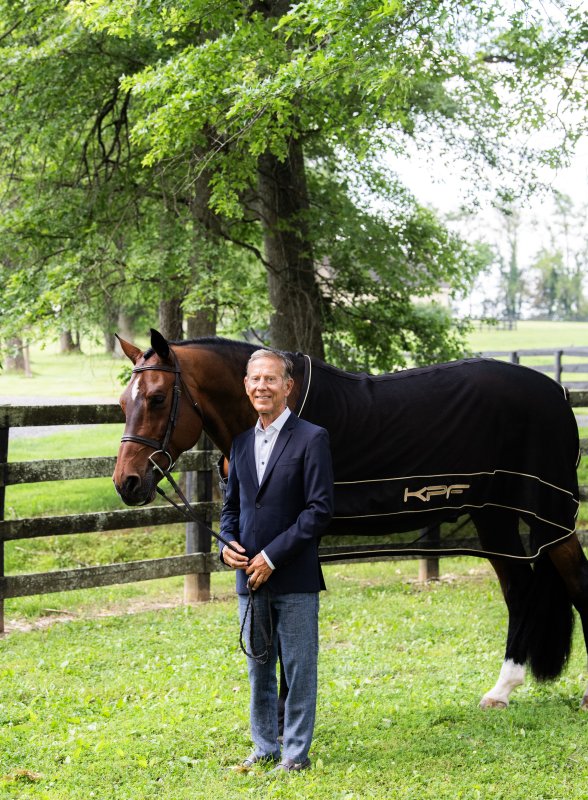
After admiring Kent from afar, joining forces with him in 2020 has reinvigorated John’s career. “I feel so lucky to be working with him and the team. I think I would have really slowed down if I hadn’t found the right people to work with and people who I enjoy working with. Instead, now that I’m part of the team, Kent helped me wind my career back up,” John said. “I’m also able to pursue the parts of the sport that make me happy.”
In Kent, John found not only a business partner, but he found someone who will look out for him. “I’m the kind of person who says yes to everyone, ‘Of course I can ride your horse.’ I knew if I couldn’t say no to someone, Kent could. By being able to focus on horses in our program, I wouldn’t get in a situation where a catch ride got me hurt and hopefully be able to keep doing this for more years,” he said.
Just as John’s managing the rest of his career, he’s enjoying being part of Team KPF and managing the careers of the horses in their program. Rather than rushing talented horses through their ranks, John and Kent carefully plan their development, instilling confidence that will serve them well throughout their careers. “Kent has always methodically planned how he brings his jumpers along to bring them to the top level. With the program now, I’m able to instill the same in the hunters. We’re able to take our time,” he said.
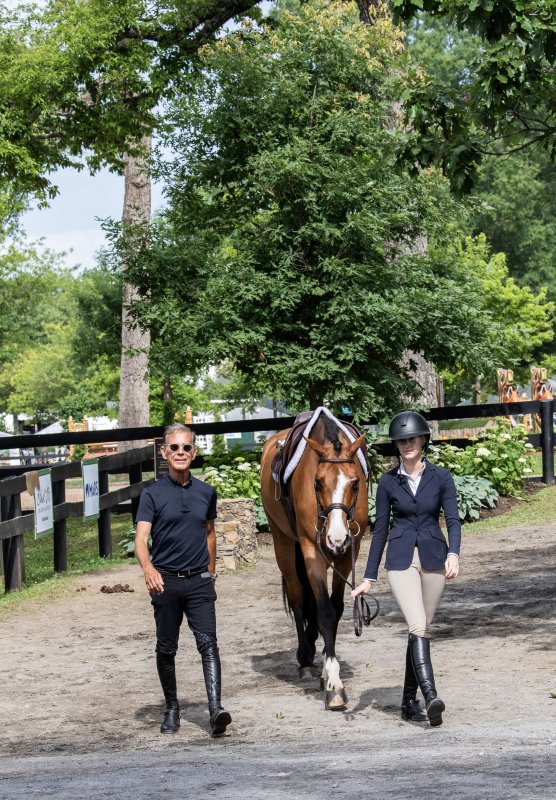
So often in today’s equestrian industry, there’s a push to develop a horse quicker; however, that’s in direct contrast to John’s beliefs. Just as it took him time to develop his skill as a young rider, John likes to allow horses to progress at their own pace.
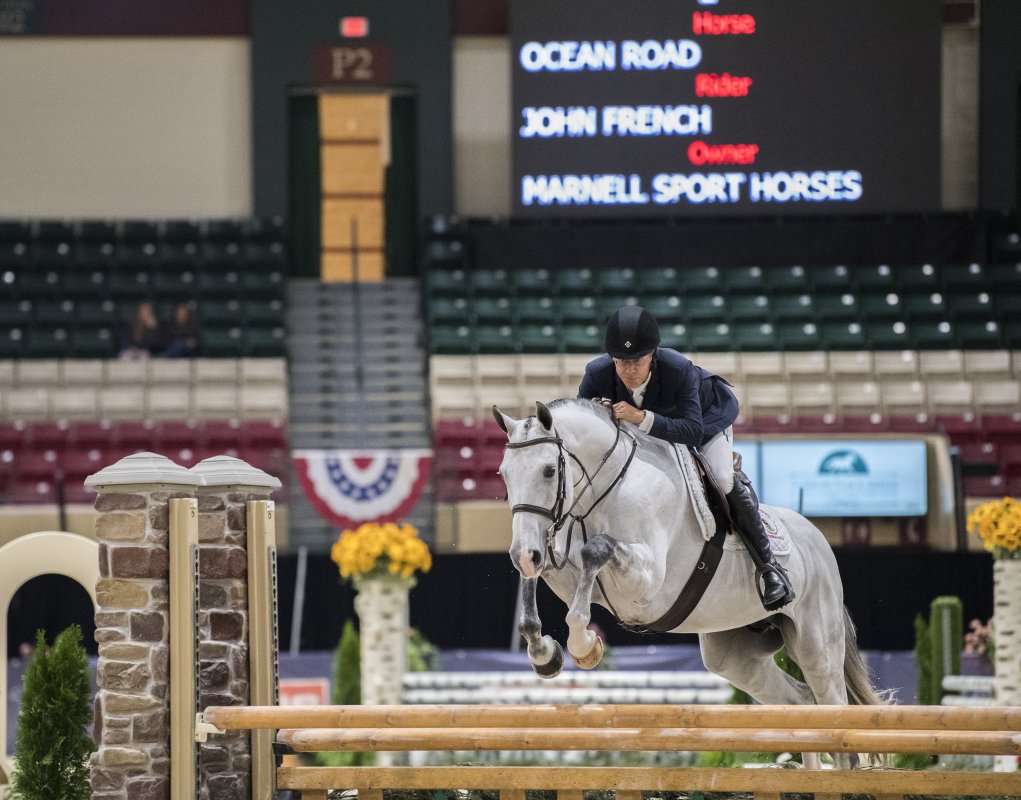
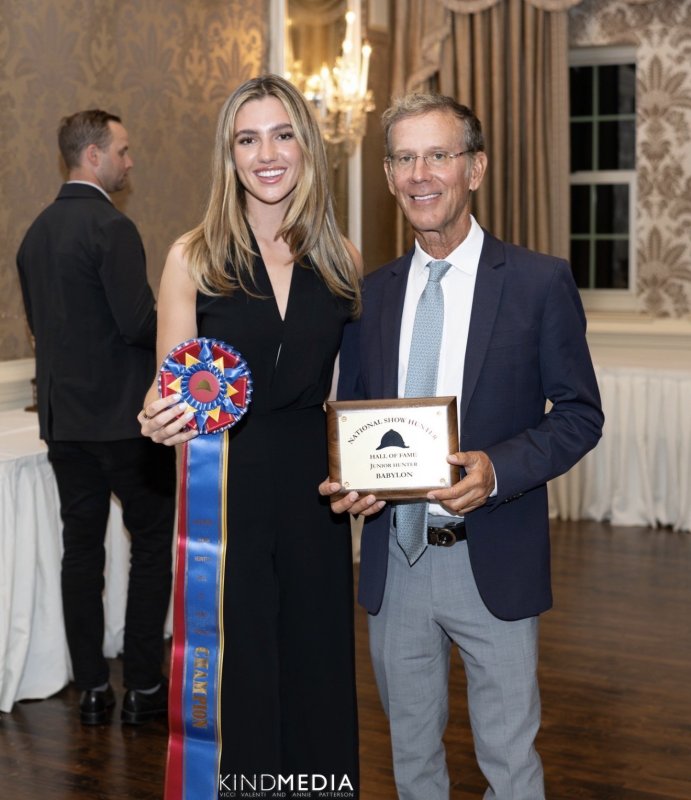
John’s philosophy is best illustrated through superstar hunter Babylon, whom John started as a 4-year-old. “I think he was very successful because we got to choose his path. Kent told his owners, the Marnells, that I would let them know when he was ready for their daughter Ariana to ride. The fact he had me to ride for that period of time, he grew up a lot faster and then with Ariana, who was a super-talented Junior rider, he just kept progressing and progressing,” John said.
Being the consummate horseman that John is made it easy for the Marnells to trust in the process when it came to developing Babylon. “My parents and I knew he prioritized Babylon’s well-being and care over any results, which was so important to us,” Ariana said. “He was really patient with Babylon and very conscientious about how much he showed, how many jumps were jumped in a week, and he would always have Babylon’s best interest first.”
Doing things the right way—making sure horses are happy and confident—is the reason John keeps going. “I think the track record of incredible horses that John has not only had immense success on but produced himself speaks volumes,” Ariana continued. “In addition to Babylon, John also started and had success with Boss, Millennium, Milagro, Paradigm, Soldier, Center Court, Illusion, Small Affair, Skyhawk, Wyatt, MTM Plus One, just to name some of them.”
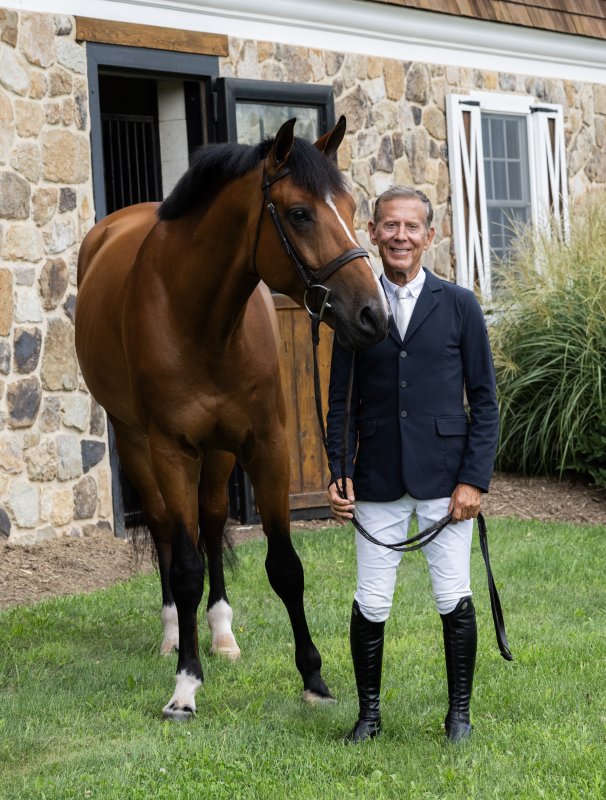
In August, John won the 2026 3’/3’3″ Platinum Performance/USHJA Green Hunter Incentive Championship aboard O’Rockstar when the duo recorded the highest score in the championship’s history. “It’s such a great feeling when you’ve prepared the horse the right way, haven’t overshown it and success happens. That’s what I’m always striving for,” John said.
John was also presented with the 2026 USHJA Green Hunter Incentive Championship’s Rider Style Award: He was recognized as the rider who best displayed the American style of riding and sportsmanship outside of the competition arena.
With a career like John’s, volumes could be written about all of his accolades. However, there are two moments that stand out to him over his storied career.
In 2009, when international hunter derbies were just being introduced to the hunter world, John won the inaugural $100,000 USHJA International Hunter Derby Finals aboard Rumba. John not only won but he gave a master class in how a derby horse should go. A full-circle moment for John, George Morris was part of the judging panel that week along with Jimmy Torano, John Roper, Danny Robertshaw, Linda Hough, Jim Clapperton, Julie Winkel and Ralph Caristo.
“I will never forget that experience. Rumba just puffed up that weekend like I’d never felt him. He wanted to win it so much for me,” John said. “To this day, everyone still talks about his round and the way he trotted out of the ring. He was so proud and confident in himself.”
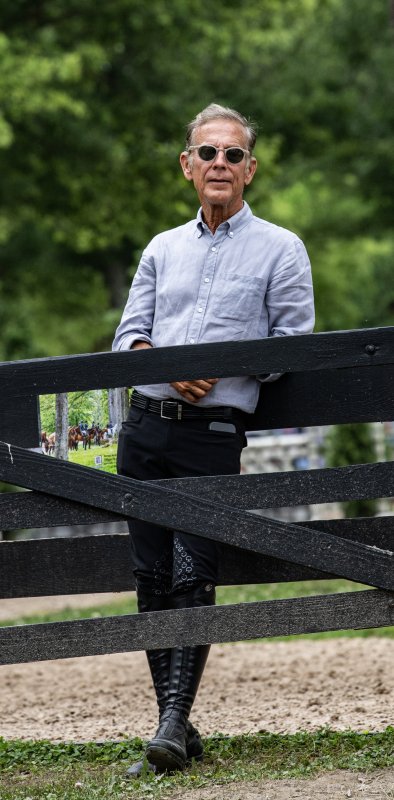
Winning the qualifying round, John hoped they didn’t peak too early. “I thought, I’m not going to reproduce another round like that. He had been amazing in the first round and got big scores,” he said. “But he went in and gave his all again. He wanted to win it all.”
At the beginning of his career in 1985, John had another memorable night aboard Ice Palace. John had gone back to the hotel before the night class and pouring rain caused delays as he returned. When he arrived back at the show, he’d missed his spot in the order.
“There were three left in the class; Gary Kunsman, for whom I was riding, was furious and I didn’t really get a chance to warm up. I had to quickly learn the handy course and jumped maybe one fence,” he said. “As I jumped around, all I was thinking about was trying to remember the course—there was a gate you had to do and all these things.”
When John jumped the last fence, the crowd erupted in cheers. Rodney Jenkins, who was sitting at the top of the class, was standing by the gate as John went by and muttered a profanity, as he knew John just laid down the winning ride.
“I ended up winning the class, Rodney Jenkins was second, Katie Monahan was third, Charlie Weaver was fourth. I couldn’t believe at 25 years old I had just won against those people,” John said. “They were the most famous hunter riders in the world.”
At the National Show Hunter Hall of Fame awards this past May, John was honored with the Trainer of the Year award for 2025. “I was so grateful that other professionals voted for me to be trainer of the year. It means a lot that people don’t just think of me as a rider,” he said.
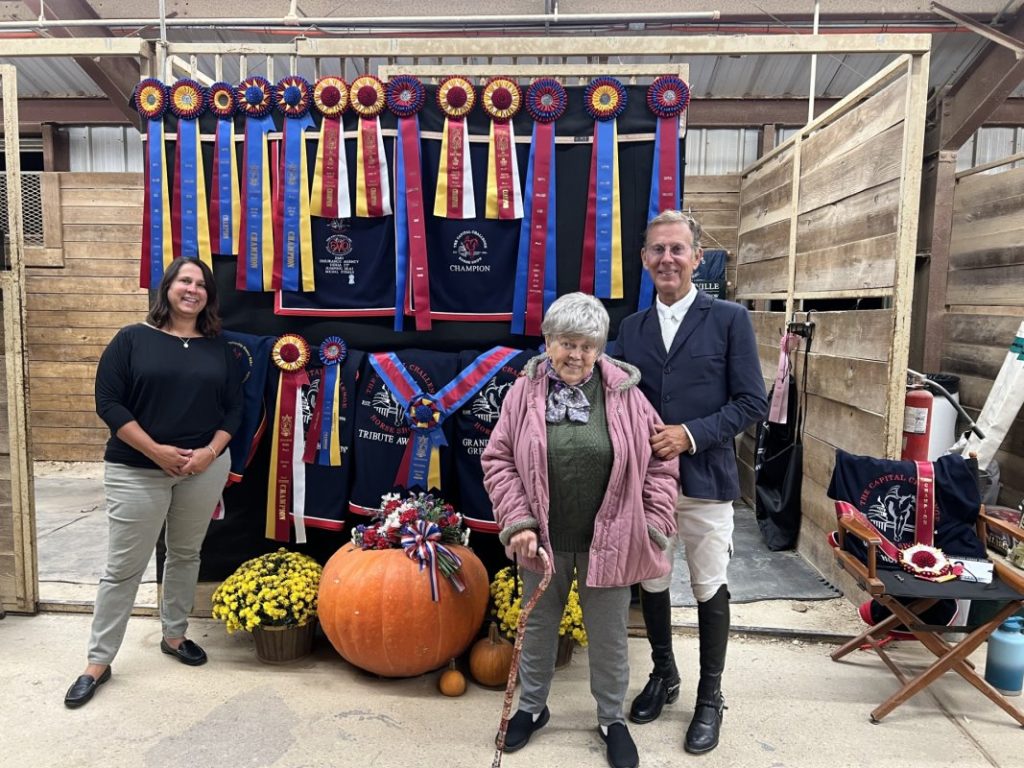
For Ariana, working with John was a once-in-a-lifetime experience. Knowing John believed in both her and her horses’ ability meant the world to her. “Even when I was very nervous, the confidence I got from knowing I had an all-time great coach, rider and person in my corner was huge. He’s extremely competitive, so we were always aligned on our goal of winning,” she said.
One of John’s greatest joys is watching his students shine in the show ring. “When you’re dealing with people who have nerves, I understand what they’re going through. So, when I can give them the confidence and they walk into the ring and have a good round, that makes me feel so good that I’ve helped them be able to do it,” John said.
Not only did John want to help Ariana win, but he also wanted her to understand why she should do certain things with the horses. “He would say, ‘We should try this bridle because X-Y-Z,’ or ‘Let’s do this exercise,’ and explain to me his thinking behind it. He really wanted me to learn the why behind every choice, which was hugely impactful and something that’s not super common in modern-day coaching,” Ariana said. “John is a true exception, as he’s as good a coach as he is a rider!”
Ariana credits John with her decision to do the jumpers. “At one of my first lessons with him, he told me I’d be a good jumper rider. He’s why I pursued doing the bigger jumpers. It’s so great we’re under the same umbrella at KPF, so I see and talk to him all the time. So much of what I learned from John I carry over to my jumpers today,” Ariana said. “I’m incredibly lucky to have worked with him in such valuable years—he is one of one!”
Beyond helping his clients succeed, John’s love of developing young professionals has become one of the most meaningful parts of this stage of his career. Giving these young professionals, especially those who haven’t had an easy path to become a pro, opportunities to sit on quality horses and learn the lessons and fundamentals that shaped John feels like a way of giving back to the sport he’s loved for decades.
“When I can see the raw talent and same love for the horses I have in my assistants, I want to do as much as I can to guide them. I had to learn a lot really quickly at the beginning of my career, so I want to give the next generation of riders and trainers the leg up I didn’t have,” he said. “I think that will help them stay in this business a nice, long time like I have.”
A treasure to the sport, John feels fortunate to still be doing what makes him happiest: developing horses and riders the right way. Whether he’s finding and bringing along his next superstar green horse, watching an assistant carve their own path in the show ring or helping a student step into a bigger division, the reward is the same. “Being part of Team KPF and watching my horses and riders turn out to be good, special and happy, that makes me happy,” John said.
After a lifetime spent choosing the right path for each horse and person in his program, John has found in Team KPF the support and purpose to keep doing what he loves for many years ahead. “I want to be part of this team as long as I can,” he said.
Follow John on Instagram @johnfrench_kpf and Facebook @johnfrenchkpf, or visit johnfrenchkpf.com
Photos by Isabel J. Kurek, isabeljkurekphotography.com
Sign up for our mailing list to stay up to date with all things Sidelines!